

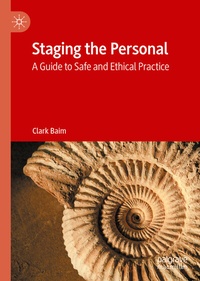
Staging the Personal
Description

This book examines the history, ethics, and intentions of staging personal stories and offers theatre makers detailed guidance and a practical model to support safe, ethical practice.
Contemporary theatre has crossed boldly into therapeutic terrain and is now the site of radical self-exposure. Performances that would once have seemed shockingly personal and exposing have become commonplace, as people reveal their personal stories to audiences with ever-increasing candor. This has prompted the need for a robust and pragmatic framework for safe, ethical practice in mainstream and applied theatre.
In order to promote a wider range of ethical risk-taking where practitioners negotiate blurred boundaries in safe and artistically creative ways, this book draws on relevant theory and practice from theatre and performance studies, psychodrama and attachment narrative therapy and provides detailed guidance supporting best practice in the theatre of personal stories. The guidance is structured within a four-part framework focused on history , ethics , praxis , and intentions . This includes a newly developed model for safe practice, called the Drama Spiral.
The book is for theatre makers in mainstream and applied theatre, educators, students, researchers, drama therapists, psychodramatists, autobiographical performers, and the people who support them.
More details
Other editions
Additional editions
Person
Clark Baim is the Director of the Birmingham Institute for Psychodrama and Honorary President of the British Psychodrama Association. After touring as a performer with the original USA company, in 1987 he was the founding Director of Geese Theatre Company UK, using applied theatre in criminal justice and social welfare settings. He is now on their Board of Trustees. Clark is co-author of the Geese Theatre Handbook (2002) and has published widely on applied theatre, psychodrama, criminal justice interventions and attachment-based practice. He does extensive international work and regularly teaches on university drama courses. He holds a PhD from the University of Exeter.
Content
1. Chapter One: Introduction.- 2. Chapter Two: History: An archeology of the theatre of personal stories.- 3.Chapter Three: Ethics: Principles and guidelines for ethical practice when using personal stories in the theatre.- 4. Chapter Four: Praxis: The Drama Spiral.- 5. Chapter Five: Intentions: The Integrative Imperative in the Theater of Personal Stories.
