

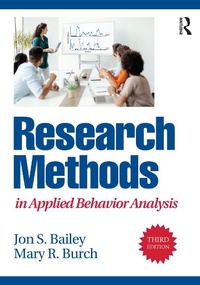
Research Methods in Applied Behavior Analysis
3rd Edition
Published on 30. September 2024
318 pages
978-1-040-10223-7 (ISBN)
Description

Research Methods in Applied Behavior Analysis, third edition, is a practical and accessible text that provides the beginning researcher with a clear description of how behavior analysts conduct applied research and submit it for publication.
In a sequence of ten logical steps, this text covers the elements of single-case research design and the practices involved in organizing, implementing, and evaluating research studies. This revision covers important new topics for consideration when designing a study, including ecological validity, procedural fidelity, and the consecutive controlled case series design, which includes replications of single-cases and the statistical analysis of accumulated studies. Also included are chapter summaries, specific tips for master's and doctoral researchers, and recommended procedures for BCBA consultants.
Rich with details from the authors' vast experience and numerous examples from published research, this text is an indispensable resource for students of applied behavior analysis and for practicing behavior analysts.
In a sequence of ten logical steps, this text covers the elements of single-case research design and the practices involved in organizing, implementing, and evaluating research studies. This revision covers important new topics for consideration when designing a study, including ecological validity, procedural fidelity, and the consecutive controlled case series design, which includes replications of single-cases and the statistical analysis of accumulated studies. Also included are chapter summaries, specific tips for master's and doctoral researchers, and recommended procedures for BCBA consultants.
Rich with details from the authors' vast experience and numerous examples from published research, this text is an indispensable resource for students of applied behavior analysis and for practicing behavior analysts.
Reviews / Votes
"Research Methods in Applied Behavior Analysis, 3rd edition, provides a step-by-step guide to the frequent and complex decisions involved in behavioral research. Bailey and Burch infuse their many years of research mentorship into this text, which is as relevant to the novice researcher as it is to the doctoral student honing their skills toward independent research. Uniquely, this text offers tips on navigating the organizational systems (clinical, educational, etc.) that serve as the backbone of behavioral research. Wisdom, logic, and good science fill the pages of this helpful guide."Tara Fahmie, PhD, Associate professor, University of Nebraska Medical Center, USA
"The 3rd edition of Research Methods in Applied Behavior Analysis is a goldmine of tactics and strategies for graduate students and behavior analysts in the roles of consultant and supervisor. Bailey and Burch present a 10-step sequence that sets the course for developing, implementing, and evaluating a successful research project. Other chapters outline steps towards selecting research design, overcoming procedural barriers, and publishing findings. A model of clarity and practical advice, the book is a one-of-a-kind resource to learn fundamental behavior analysis research skills."
James K. Luiselli, EdD, Director of Clinical Development and Research, Melmark New England, Andover, MA, USA
"This edition of Bailey and Burch builds upon the previous editions in delineating a clear path for conducting behavior analytic research. The application of science is the defining feature that distinguishes our field from others. This textbook guides the reader through the research process from how to formulate a question to eventual publication and dissemination. Their description of the research process, if followed, will make the research process both understandable and productive, and will most certainly benefit the students in understanding research both inside and outside our field."
Thomas Zane
"Bailey and Burch make the complex scientific process readily accessible to students and practitioners of all levels, covering every essential aspect of single-subject research design. The book takes a unique approach by tailoring the content to three targeted audiences -- master's students completing their theses, doctoral students completing their dissertations, and practitioners providing consultation services to organizations and agencies. From selecting a topic of study to disseminating research findings, the authors provide clear guidelines and cogent tactics for integrating research activities into clinical practice. Their engaging writing style and copious use of interesting examples bring excitement to the research process."
Dorothea C Lerman, Ph.D., BCBA-D, Professor and Program Director, Behavior Analysis Program, University of Houston, Clear Lake
More details
Edition
3rd edition
Language
English
Place of publication
London
United Kingdom
Publishing group
Taylor & Francis Ltd
Target group
College/higher education
Professional and scholarly
Illustrations
31 Tables, black and white; 67 Line drawings, black and white; 2 Halftones, color; 2 Illustrations, color; 67 Illustrations, black and white
ISBN-13
978-1-040-10223-7 (9781040102237)
Copyright in bibliographic data and cover images is held by Nielsen Book Services Limited or by the publishers or by their respective licensors: all rights reserved.
Schweitzer Classification
Other editions
Additional editions
Jon S. Bailey | Mary R. Burch
Research Methods in Applied Behavior Analysis
Book
09/2024
3rd Edition
Routledge
€89.20
Shipment within 10-20 days
Jon S. Bailey | Mary R. Burch
Research Methods in Applied Behavior Analysis
Book
09/2024
3rd Edition
Routledge
€209.60
Shipment within 10-20 days

Jon S. Bailey
Research Methods in Applied Behavior Analysis
Book
08/2024
Routledge
Unfortunately, price unknown
Available (delivery time upon request)
Persons
Jon S. Bailey, is Emeritus Professor of Psychology at Florida State University, Ret., where he taught graduate courses for behavior analysts. Dr. Bailey is a founding director of the Behavior Analyst Certification Board (R), and he is past president of the Association of Professional Behavior Analysts.
Mary R. Burch, is a Board Certified Behavior Analyst (R). Dr. Burch has more than twenty-five years of experience in developmental disabilities. She has been a behavior specialist, QMRP, unit director, and consulting behavior analyst in developmental disabilities, mental health, and preschool settings.
Mary R. Burch, is a Board Certified Behavior Analyst (R). Dr. Burch has more than twenty-five years of experience in developmental disabilities. She has been a behavior specialist, QMRP, unit director, and consulting behavior analyst in developmental disabilities, mental health, and preschool settings.
Content
Part I: Introduction to Behavior Analysis Research
Part II: Research Methods in Applied Behavior Analysis: Ten Steps for Successful Research
Step 1. How to Develop a Good Idea
Step 2. How to Focus Your Research Question
Step 3. How to Develop Your Dependent and Independent Variables
Step 4. How to Design Your Experiment Including Ecological and Social Validity
Step 5. How to Design Your Data Collection Systems
Step 6. How to Pilot Test Your Key Variables
Step 7. How to Find the Appropriate Research Design for Your Study
Step 8. How To Conduct an Ethics Check
Step 9. How To Successfully Carry Out Your Research Project
Step 10. How To Graph and Analyze Your Data
Part III: How to Evaluate Published Research
Part IV: How to Use Applied Research Methods in Clinical and Educational Settings
Part V: How to Go Public With Your Research
Appendix A: Generating Graphs in Numbers by Casey Copeland
Index
About the Authors
Part II: Research Methods in Applied Behavior Analysis: Ten Steps for Successful Research
Step 1. How to Develop a Good Idea
Step 2. How to Focus Your Research Question
Step 3. How to Develop Your Dependent and Independent Variables
Step 4. How to Design Your Experiment Including Ecological and Social Validity
Step 5. How to Design Your Data Collection Systems
Step 6. How to Pilot Test Your Key Variables
Step 7. How to Find the Appropriate Research Design for Your Study
Step 8. How To Conduct an Ethics Check
Step 9. How To Successfully Carry Out Your Research Project
Step 10. How To Graph and Analyze Your Data
Part III: How to Evaluate Published Research
Part IV: How to Use Applied Research Methods in Clinical and Educational Settings
Part V: How to Go Public With Your Research
Appendix A: Generating Graphs in Numbers by Casey Copeland
Index
About the Authors
