

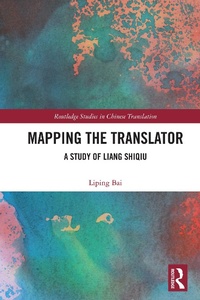
Mapping the Translator
A Study of Liang Shiqiu
1st Edition
Published on 19. April 2022
216 pages
978-1-000-56441-9 (ISBN)
Description

In Mapping the Translator: A Study of Liang Shiqiu, the writer studies Liang Shiqiu (1903-1987), who was not only a famous writer and important critic but also one of the most prominent translators in China in the 20th century, most notably the first Chinese to finish a translation of The Complete Works of William Shakespeare.
Based on primary sources, this research covers issues related to the historical, cultural, cognitive and sociological dimensions of translator studies. It investigates Liang's translation poetics; the influences of possible patrons and professionals on him; the relationship between Liang's ideology, the dominant ideology and his translation; Liang's debates with Lu Xun about and beyond translation criteria, and whether there is inconsistency or possible contradiction in Liang's translation poetics. This book also analyses the similarities and differences between Liang Shiqiu and Wu Mi-two followers of Irving Babbitt-in terms of translation poetics, and further explores the reasons leading to such differences.
This book is targeted at scholars and students, both undergraduate and postgraduate, in the fields of translation studies, Asian studies, Chinese studies, and literary studies.
Based on primary sources, this research covers issues related to the historical, cultural, cognitive and sociological dimensions of translator studies. It investigates Liang's translation poetics; the influences of possible patrons and professionals on him; the relationship between Liang's ideology, the dominant ideology and his translation; Liang's debates with Lu Xun about and beyond translation criteria, and whether there is inconsistency or possible contradiction in Liang's translation poetics. This book also analyses the similarities and differences between Liang Shiqiu and Wu Mi-two followers of Irving Babbitt-in terms of translation poetics, and further explores the reasons leading to such differences.
This book is targeted at scholars and students, both undergraduate and postgraduate, in the fields of translation studies, Asian studies, Chinese studies, and literary studies.
More details
Series
Edition
1. Auflage
Language
English
Place of publication
London
United Kingdom
Publishing group
Taylor & Francis Ltd
Target group
College/higher education
Product notice
Reflowable
Illustrations
4 Line drawings, black and white; 8 Halftones, black and white; 12 Illustrations, black and white
ISBN-13
978-1-000-56441-9 (9781000564419)
Copyright in bibliographic data and cover images is held by Nielsen Book Services Limited or by the publishers or by their respective licensors: all rights reserved.
Schweitzer Classification
Other editions
Additional editions
Book
01/2024
1st Edition
Routledge
€62.80
Shipment within 10-20 days
Book
04/2022
1st Edition
Routledge
€205.90
Shipment within 10-20 days
Person
Liping Bai is an assistant professor at the Department of Translation of Lingnan University. His research papers appear in international journals including Across Languages and Cultures, Archiv Orientalni/Oriental Archive, Babel, Perspectives, The Translator, Neohelicon, Humanitas, Tsing Hua Journal of Chinese Studies, and Translation Quarterly. He is also interested in practical translation and has published a number of translations between Chinese and English.
Content
Contents
List of Figures
Acknowledgements
Chapter I Introduction
1.1 Liang Shiqiu as a Translator
1.2 "Translator Studies" as an "Emerging Subfield" of Translation Studies
1.3 Chapter Summary
Chapter II Patronage in Liang's Shakespeare Translation
2.1 Patronage and Translation
2.2 Hu Shi's Influence on Liang's Translation of Shakespeare
2.2.1 Hu as the Initiator of Liang's Translation of Shakespeare
2.2.2 The Consensus between Liang and Hu in Terms of Translation Strategies
2.3 Conclusion
Chapter III The Influence of Irving Babbitt
3.1 Professionals & Translation
3.2 Babbitt's Influence upon Liang's Literary Poetics
3.3 Babbitt's Influence upon Liang's Selection of Works for Translation
3.4 Conclusion
Chapter IV Liang Shiqiu's Translation Poetics
4.1 A "Serious" Attitude
4.2 The Function of Translation and the Responsibility of the Translator
4.2.1 The Function of Translation
4.2.2 An "Academic Translation" for the Purpose of "Introduction"
4.2.3 The Invisibility of "Zijia" in Liang's Translation
4.3 The Criteria of Translation
4.4 An Appropriate Degree of Literalism: The Debate with Lu Xun
4.5 Rethinking Chinese Tradition: Babbitt, a Two-way Mirror
4.6 Conclusion
Chapter V The Performability of Shakespeare
5.1 Liang's Views on Drama and Stage
5.1.1 The Definition of Drama
5.1.2 The Relationship between Drama and Stage
5.2 Liang's Translation Methods
5.3 Conclusion
Chapter VI The Translation of Strindberg's Married
6.1 Introduction to Liang's Translation of Strindberg's Married
6.2 The Reasons for Liang's Choice
6.3 An Analysis of the Themes of the Stories not Translated by Liang
6.4 Conclusion
Chapter VII The Translation of George Orwell's Animal Farm
7.1 Ideology, Translation and the Use of Pseudonym
7.2 The Similarities and Differences between Li Qichun's Translation of Animal Farm and Liang's Version of Shakespeare
7.3 The Translator's Ideology and the Dominant Ideology
7.4 Conclusion
Chapter VIII The Use of Translations for the War of Words
8.1 The Use of the Works of Rousseau, Sinclair and More for the Debates
8.1.1 Rousseau's Emile and Sinclair's Mammonart
8.1.2 Paul Elmer More's "Property and Law"
8.1.3 The Proletarian Works
8.2 Vyacheslav Polonsky's "Lenin's Views of Art and Culture"
8.3 Conclusion
Chapter IX The Differences between Liang Shiqiu and Wu Mi in Terms of Translation Poetics
9.1. Wu Mi's Translation Poetics
9.1.1 The Definition and Purpose of Translation
9.1.2 The Relationship between Translation and Imitation
9.1.3 The Selection of Materials for Translation
9.1.4 The Criteria of Translation
9.1.5 The Method of Translation
9.2 Irving Babbitt's Influence on Wu Mi
9.3 A Summary on Wu's Translation Poetics
9.4 The Reasons for the Differences between Liang and Wu in Terms of Literary and Translation Poetics
Chapter X General Conclusion
References
Index
List of Figures
Acknowledgements
Chapter I Introduction
1.1 Liang Shiqiu as a Translator
1.2 "Translator Studies" as an "Emerging Subfield" of Translation Studies
1.3 Chapter Summary
Chapter II Patronage in Liang's Shakespeare Translation
2.1 Patronage and Translation
2.2 Hu Shi's Influence on Liang's Translation of Shakespeare
2.2.1 Hu as the Initiator of Liang's Translation of Shakespeare
2.2.2 The Consensus between Liang and Hu in Terms of Translation Strategies
2.3 Conclusion
Chapter III The Influence of Irving Babbitt
3.1 Professionals & Translation
3.2 Babbitt's Influence upon Liang's Literary Poetics
3.3 Babbitt's Influence upon Liang's Selection of Works for Translation
3.4 Conclusion
Chapter IV Liang Shiqiu's Translation Poetics
4.1 A "Serious" Attitude
4.2 The Function of Translation and the Responsibility of the Translator
4.2.1 The Function of Translation
4.2.2 An "Academic Translation" for the Purpose of "Introduction"
4.2.3 The Invisibility of "Zijia" in Liang's Translation
4.3 The Criteria of Translation
4.4 An Appropriate Degree of Literalism: The Debate with Lu Xun
4.5 Rethinking Chinese Tradition: Babbitt, a Two-way Mirror
4.6 Conclusion
Chapter V The Performability of Shakespeare
5.1 Liang's Views on Drama and Stage
5.1.1 The Definition of Drama
5.1.2 The Relationship between Drama and Stage
5.2 Liang's Translation Methods
5.3 Conclusion
Chapter VI The Translation of Strindberg's Married
6.1 Introduction to Liang's Translation of Strindberg's Married
6.2 The Reasons for Liang's Choice
6.3 An Analysis of the Themes of the Stories not Translated by Liang
6.4 Conclusion
Chapter VII The Translation of George Orwell's Animal Farm
7.1 Ideology, Translation and the Use of Pseudonym
7.2 The Similarities and Differences between Li Qichun's Translation of Animal Farm and Liang's Version of Shakespeare
7.3 The Translator's Ideology and the Dominant Ideology
7.4 Conclusion
Chapter VIII The Use of Translations for the War of Words
8.1 The Use of the Works of Rousseau, Sinclair and More for the Debates
8.1.1 Rousseau's Emile and Sinclair's Mammonart
8.1.2 Paul Elmer More's "Property and Law"
8.1.3 The Proletarian Works
8.2 Vyacheslav Polonsky's "Lenin's Views of Art and Culture"
8.3 Conclusion
Chapter IX The Differences between Liang Shiqiu and Wu Mi in Terms of Translation Poetics
9.1. Wu Mi's Translation Poetics
9.1.1 The Definition and Purpose of Translation
9.1.2 The Relationship between Translation and Imitation
9.1.3 The Selection of Materials for Translation
9.1.4 The Criteria of Translation
9.1.5 The Method of Translation
9.2 Irving Babbitt's Influence on Wu Mi
9.3 A Summary on Wu's Translation Poetics
9.4 The Reasons for the Differences between Liang and Wu in Terms of Literary and Translation Poetics
Chapter X General Conclusion
References
Index
