

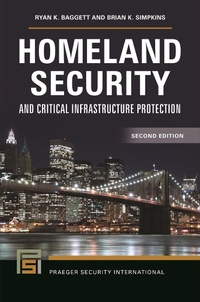
Homeland Security and Critical Infrastructure Protection
2nd Edition
Published on 11. July 2018
432 pages
979-8-216-09874-4 (ISBN)
Description

A compelling overview of systems and strategies implemented to safeguard U.S. resources from a plethora of threats, the vulnerabilities and security gaps in these infrastructure systems, and options to enable the future security of the homeland.
Since the first edition of this book was published in 2009, significant changes have occurred in the security landscape, both domestically and internationally. This second edition is thoroughly updated to reflect those changes, offering a complete review of the various security and resilience measures currently in place and potential strategies to safeguard life and property within the U.S. homeland.
As noted in the U.S. Department of Homeland Security's National Preparedness Goal, the mission area of protection is vital to the homeland in its focus on actions to protect people, vital interests, and our nation's way of life. With that in mind, this book discusses strategies such as risk analysis and assessment, information sharing, and continuity planning. The authors focus on relevant and timely threats and hazards facing specific infrastructure components including, but not limited to, agriculture and food, banking and finance, water, energy, telecommunications, and transportation.
The dynamic posture of critical infrastructure security and resilience (CISR) underscores the importance of an integrated, layered all-hazards approach. In describing this approach, the book includes new chapters on planning and guidance, public and private partnerships, cyber issues and threats, and careers in infrastructure protection. Additions such as discussion questions, learning objectives, and fundamental concepts for each chapter provide additional direction for instructors and students alike.
Since the first edition of this book was published in 2009, significant changes have occurred in the security landscape, both domestically and internationally. This second edition is thoroughly updated to reflect those changes, offering a complete review of the various security and resilience measures currently in place and potential strategies to safeguard life and property within the U.S. homeland.
As noted in the U.S. Department of Homeland Security's National Preparedness Goal, the mission area of protection is vital to the homeland in its focus on actions to protect people, vital interests, and our nation's way of life. With that in mind, this book discusses strategies such as risk analysis and assessment, information sharing, and continuity planning. The authors focus on relevant and timely threats and hazards facing specific infrastructure components including, but not limited to, agriculture and food, banking and finance, water, energy, telecommunications, and transportation.
The dynamic posture of critical infrastructure security and resilience (CISR) underscores the importance of an integrated, layered all-hazards approach. In describing this approach, the book includes new chapters on planning and guidance, public and private partnerships, cyber issues and threats, and careers in infrastructure protection. Additions such as discussion questions, learning objectives, and fundamental concepts for each chapter provide additional direction for instructors and students alike.
More details
Series
Edition
2nd edition
Language
English
Place of publication
New York
United States
Publishing group
Bloomsbury Publishing Plc
Target group
Interest Age: From 7 to 17 years
ISBN-13
979-8-216-09874-4 (9798216098744)
Copyright in bibliographic data and cover images is held by Nielsen Book Services Limited or by the publishers or by their respective licensors: all rights reserved.
Schweitzer Classification
Other editions
Additional editions
Ryan K. Baggett | Brian K. Simpkins
Homeland Security and Critical Infrastructure Protection
Book
07/2018
2nd Edition
Praeger Publishers Inc
€90.30
Shipment within 10-20 days
Persons
Ryan K. Baggett, EdD, is associate professor of homeland security at Eastern Kentucky University (EKU) in Richmond, KY.
Brian K. Simpkins, PhD, serves as associate director of the Justice and Safety Center and the Bluegrass State Intelligence Community Center of Academic Excellence, both of which are located at Eastern Kentucky University (EKU).
Brian K. Simpkins, PhD, serves as associate director of the Justice and Safety Center and the Bluegrass State Intelligence Community Center of Academic Excellence, both of which are located at Eastern Kentucky University (EKU).
Content
- Cover
- Title Page
- Copyright
- Dedication
- Contents
- Acknowledgments
- Acronyms
- 1. Introduction to Critical Infrastructure Security and Resilience
- 2. Aging and Failing Critical Infrastructure: Causes, Impacts, and the Path Forward
- 3. Legislation, Acts, and Presidential Actions
- 4. Federal Plans, Strategies, and Guidance
- 5. Risk Management for Infrastructure Security and Resilience
- 6. Critical Infrastructure Threats and Hazards
- 7. Infrastructure Partnerships and Information Sharing
- 8. Energy System Sectors
- 9. Transportation Systems
- 10. Environmental Sectors: Chemical, Food and Agriculture, and Water and Wastewater Systems
- 11. Facilities and Manufacturing: Commercial Facilities, Critical Manufacturing, and Government Facilities
- 12. Cyber and Financial Sectors
- 13. Health, Safety, and Security: Defense Industrial Base, Emergency Services, and Healthcare and Public Health
- 14. The Convergence of Physical and Cybersecurity: The Path Forward for Secure and Resilient Infrastructure
- Bibliography
- Index
- About the Authors
