

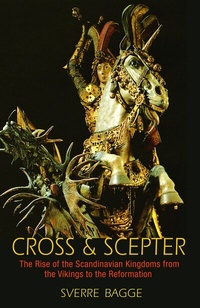
Cross and Scepter
The Rise of the Scandinavian Kingdoms from the Vikings to the Reformation
1st Edition
Published on 28. July 2015
336 pages
978-1-4008-5010-5 (ISBN)
Description

A concise history of medieval Scandinavia
Christianity and European-style monarchy-the cross and the scepter-were introduced to Scandinavia in the tenth century, a development that was to have profound implications for all of Europe. Cross and Scepter is a concise history of the Scandinavian kingdoms from the age of the Vikings to the Reformation, written by Scandinavia's leading medieval historian. Sverre Bagge shows how the rise of the three kingdoms not only changed the face of Scandinavia, but also helped make the territorial state the standard political unit in Western Europe. He describes Scandinavia's momentous conversion to Christianity and the creation of church and monarchy there, and traces how these events transformed Scandinavian law and justice, military and administrative organization, social structure, political culture, and the division of power among the king, aristocracy, and common people. Bagge sheds important new light on the reception of Christianity and European learning in Scandinavia, and on Scandinavian history writing, philosophy, political thought, and courtly culture. He looks at the reception of European impulses and their adaptation to Scandinavian conditions, and examines the relationship of the three kingdoms to each other and the rest of Europe, paying special attention to the inter-Scandinavian unions and their consequences for the concept of government and the division of power.
Cross and Scepter provides an essential introduction to Scandinavian medieval history for scholars and general readers alike, offering vital new insights into state formation and cultural change in Europe.
Christianity and European-style monarchy-the cross and the scepter-were introduced to Scandinavia in the tenth century, a development that was to have profound implications for all of Europe. Cross and Scepter is a concise history of the Scandinavian kingdoms from the age of the Vikings to the Reformation, written by Scandinavia's leading medieval historian. Sverre Bagge shows how the rise of the three kingdoms not only changed the face of Scandinavia, but also helped make the territorial state the standard political unit in Western Europe. He describes Scandinavia's momentous conversion to Christianity and the creation of church and monarchy there, and traces how these events transformed Scandinavian law and justice, military and administrative organization, social structure, political culture, and the division of power among the king, aristocracy, and common people. Bagge sheds important new light on the reception of Christianity and European learning in Scandinavia, and on Scandinavian history writing, philosophy, political thought, and courtly culture. He looks at the reception of European impulses and their adaptation to Scandinavian conditions, and examines the relationship of the three kingdoms to each other and the rest of Europe, paying special attention to the inter-Scandinavian unions and their consequences for the concept of government and the division of power.
Cross and Scepter provides an essential introduction to Scandinavian medieval history for scholars and general readers alike, offering vital new insights into state formation and cultural change in Europe.
All prices
More details
Edition
Course Book
Language
English
Place of publication
Princeton, NJ
United States
Publishing group
De Gruyter
Target group
Professional and scholarly
Edition type
Digital original
Product notice
Reflowable
Illustrations
20 halftones.
File size
3,28 MB
ISBN-13
978-1-4008-5010-5 (9781400850105)
Schweitzer Classification
Other editions
Additional editions
Sverre Bagge
Cross and Scepter
The Rise of the Scandinavian Kingdoms from the Vikings to the Reformation
Book
02/2016
Princeton University Press
€28.50
Article not available at the moment
Sverre Bagge
Cross and Scepter
The Rise of the Scandinavian Kingdoms from the Vikings to the Reformation
Book
04/2014
Princeton University Press
€43.40
Article not available at the moment
Person
Sverre Bagge is professor emeritus of medieval history at the University of Bergen in Norway. His books include Kings, Politics, and the Right Order of the World in German Historiography.
Content
Acknowledgments vii
Introduction 1
CHAPTER ONE 9
The Origins of the Scandinavian Kingdoms
Early Scandinavian Society 9
Scandinavian Expansion: The Viking Expeditions 21
The Division of Scandinavia into Three Kingdoms 27
The Continued Division of Scandinavia: Foreign Policy until around 1300 38
CHAPTER TWO 50
The Consolidation of the Scandinavian Kingdoms, c. 1050-1350
The Dynasty and the Royal Office 50
Religion: The Introduction of Christianity 60
The Development of the Ecclesiastical Organization 70
Justice: Royal and Ecclesiastical Legislation and Courts of Law 86
War and the Preparation for War: From
Leding to Professional Forces 107
CHAPTER THREE 119
State Formation, Social Change, and the Division of Power
Social Structure in the High Middle Ages 120
Royal and Ecclesiastical Revenues 124
Towns and Trade 131
Bureaucracy or Feudalism? 139
The Court 152
The Division of Power: Monarchy, Aristocracy, and the Church 157
The State and the People: Nationalism and Loyalty 169
CHAPTER FOUR 174
Royal, Aristocratic, and Ecclesiastical Culture
Scandinavians and European Learning 176
The Rules and the Hearts: Scandinavian Christianity 187
A Scandinavian Saint 196
The Writing of History 203
Political Thought 218
The Courtly Culture 222
CHAPTER FIVE 232
The Later Middle Ages: Agrarian Crisis, Constitutional Conflicts, and Scandinavian Unions
Towards Renewed Scandinavian Integration, 1261-1397 236
The Kalmar Union 248
The Struggle over the Kalmar Union, 1434-1523 250
Why Was the Union Dissolved? 260
State Formation in the Later Middle Ages 268
The Reformation and Its Consequences, 1523-1537 283
CONCLUSION 290
Scandinavian State Formation, 900-1537: Break and Continuity
Literature 293
The Historiography of the Scandinavian Countries 293
The Sources for Scandinavian History 297
References and Guide to Further Reading 301
Index 315
Introduction 1
CHAPTER ONE 9
The Origins of the Scandinavian Kingdoms
Early Scandinavian Society 9
Scandinavian Expansion: The Viking Expeditions 21
The Division of Scandinavia into Three Kingdoms 27
The Continued Division of Scandinavia: Foreign Policy until around 1300 38
CHAPTER TWO 50
The Consolidation of the Scandinavian Kingdoms, c. 1050-1350
The Dynasty and the Royal Office 50
Religion: The Introduction of Christianity 60
The Development of the Ecclesiastical Organization 70
Justice: Royal and Ecclesiastical Legislation and Courts of Law 86
War and the Preparation for War: From
Leding to Professional Forces 107
CHAPTER THREE 119
State Formation, Social Change, and the Division of Power
Social Structure in the High Middle Ages 120
Royal and Ecclesiastical Revenues 124
Towns and Trade 131
Bureaucracy or Feudalism? 139
The Court 152
The Division of Power: Monarchy, Aristocracy, and the Church 157
The State and the People: Nationalism and Loyalty 169
CHAPTER FOUR 174
Royal, Aristocratic, and Ecclesiastical Culture
Scandinavians and European Learning 176
The Rules and the Hearts: Scandinavian Christianity 187
A Scandinavian Saint 196
The Writing of History 203
Political Thought 218
The Courtly Culture 222
CHAPTER FIVE 232
The Later Middle Ages: Agrarian Crisis, Constitutional Conflicts, and Scandinavian Unions
Towards Renewed Scandinavian Integration, 1261-1397 236
The Kalmar Union 248
The Struggle over the Kalmar Union, 1434-1523 250
Why Was the Union Dissolved? 260
State Formation in the Later Middle Ages 268
The Reformation and Its Consequences, 1523-1537 283
CONCLUSION 290
Scandinavian State Formation, 900-1537: Break and Continuity
Literature 293
The Historiography of the Scandinavian Countries 293
The Sources for Scandinavian History 297
References and Guide to Further Reading 301
Index 315

