


The CSCE and the End of the Cold War
Diplomacy, Societies and Human Rights, 1972-1990
1st Edition
Published on 16. November 2018
380 pages
978-1-78920-027-0 (ISBN)
Description

From its inception, the Conference on Security and Cooperation in Europe (CSCE) provoked controversy. Today it is widely regarded as having contributed to the end of the Cold War. Bringing together new and innovative research on the CSCE, this volume explores questions key to understanding the Cold War: What role did diplomats play in shaping the 1975 Helsinki Final Act? How did that agreement and the CSCE more broadly shape societies in Europe and North America? And how did the CSCE and activists inspired by the Helsinki Final Act influence the end of the Cold War?
Reviews / Votes
"The authors add to the significant literature available on the Cold War, its history, and explanations for how it ended. In the contested debate over the CSCE's contribution, these authors add evidence to the side arguing its significant role in ending the Cold War...This is a fundamental book for historians, diplomats, and political scientists who would like a reference of how international organizations come out of diplomatic negotiations and seemingly temporary gatherings." * Canadian Slavonic Papers"The volume is of the highest importance, which manages to encompass some of the most significant positions and strategies, compared to the respective political context, which explains very well the evolution and political context of today." * Journal of Global Politics & Current Diplomacy
"The various chapters in this book provide useful additional insight on the CSCE and especially the human dimension of the process, including some issues that have not really been significantly studied to date and new data from archives on a number of issues." * H-Net
"The contributions, without exception based on sound sources, some of them of extraordinary originality and very inspirational for research, make the reading of them for everybody interested in the KSZE and East-West detente very rewarding." * Sehepunkte
"This excellent volume stands at the forefront of scholarship in the field and will certainly make an important contribution to our understanding of the complex developments that led to the end of the Cold War." * Aryo Makko, Stockholm University and Swedish Collegium for Advanced Study
"The essays in this volume illuminate just what the Helsinki process entailed and help explain the multidimensional ways in which it facilitated the end of the Cold War-everything from building bridges between groups to keeping dialogue going when the Cold War refroze in the early 1980s and connecting lower-level politics to high politics." * Jaclyn Stanke, Campbell University
"Bold in ambition and scope, this collection highlights transnational history at its finest. It covers an impressive amount of terrain, allowing for a more layered and nuanced understanding of the CSCE." * Garret Martin, American University
More details
Edition
1. Auflage
Language
English
Place of publication
Oxford
United Kingdom
Target group
Professional and scholarly
Illustrations
Bibliography; Index; 1 Illustrations
ISBN-13
978-1-78920-027-0 (9781789200270)
DOI
10.3167/9781789200263
Copyright in bibliographic data and cover images is held by Nielsen Book Services Limited or by the publishers or by their respective licensors: all rights reserved.
Schweitzer Classification
Other editions
Additional editions
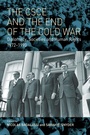
Nicolas Badalassi | Sarah B. Snyder
The CSCE and the End of the Cold War
Diplomacy, Societies and Human Rights, 1972-1990
Book
07/2020
1st Edition
Berghahn Books
€47.80
Shipment within 3-4 weeks
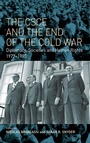
Nicolas Badalassi | Sarah B. Snyder
The CSCE and the End of the Cold War
Diplomacy, Societies and Human Rights, 1972-1990
Book
11/2018
1st Edition
Berghahn Books
€163.80
Shipment within 3-4 weeks
Persons
Nicolas Badalassi is Associate Professor of Contemporary History at the Institut d'Etudes politiques d'Aix-en-Provence (Sciences Po Aix). He is the author of the award-winning En finir avec la guerre froide: La France, l'Europe et le processus d'Helsinki, 1965-1975 (Rennes: Presses Universitaires de Rennes, 2014). He has also co-edited with H. Ben Hamouda the publication Les pays d'Europe orientale et la Mediterranee, 1967-1989 (Paris: Cahiers Irice, 2013).
Content
Acknowledgements
List of Abbreviations
Chronology of CSCE Meetings
Introduction
Nicolas Badalassi and Sarah B. Snyder
PART I: DIPLOMATS, DIPLOMACIES AND THE MAKING OF THE CSCE
Chapter 1. The Human Dimension of the CSCE, 1975-1990
Andrei Zagorski
Chapter 2. Executors or Creative Deal-Makers?: The Role of the Diplomats in the Making of the Helsinki CSCE
Martin D. Brown and Angela Romano
Chapter 3. From Talleyrand to Sakharov: French Diplomacy in Search of a 'Helsinki Effect'
Nicolas Badalassi
Chapter 4. 'Human Rights, Peace and Security Are Inseparable': Max Kampelman and the Helsinki Process
Stephan Kieninger
PART II: THE TRANSNATIONAL PROMOTION OF HUMAN RIGHTS AND THE ROLE OF DISSIDENCE
Chapter 5. The Committee of Concerned Scientists and the Helsinki Final Act: 'Refusenik' Scientists, Detente and Human Rights
Elisabetta Vezzosi
Chapter 6. Seeing the Value of the Helsinki Accords: Human Rights, Peace and Transnational Debates about Detente, 1981-1988
Christian P. Peterson
Chapter 7. The Importance of the Helsinki Process for the Opposition in Central and Eastern Europe and the Western Peace Movements in the 1980s
Jacek Czaputowicz
Chapter 8. The Limits of Repression: Soviet-Bloc Security Services vs. Transnational Helsinki Networks, 1976-1986
Douglas Selvage
Chapter 9. Helsinki at Home: NGOs, the Helsinki Final Act and Politics in the United States, 1975-1985
Carl J. Bon Tempo
PART III: THE POLITICS OF THE CSCE IN EUROPE
Chapter 10. European Detente and the CSCE: Austria and the East-Central European Theatre in the 1970s and 1980s
Maximilian Graf
Chapter 11. Saving Detente: The Federal Republic of Germany and the CSCE in the 1980s
Matthias Peter
Chapter 12. Transformation by Linkage?: Arms Control, Human Rights and the Rift between Moscow and East Berlin in the Late 1980s
Oliver Bange
Chapter 13. CSCE: Albania the Outsider in European Political Life
Hamit Kaba
Conclusion
Nicolas Badalassi and Sarah B. Snyder
Index
List of Abbreviations
Chronology of CSCE Meetings
Introduction
Nicolas Badalassi and Sarah B. Snyder
PART I: DIPLOMATS, DIPLOMACIES AND THE MAKING OF THE CSCE
Chapter 1. The Human Dimension of the CSCE, 1975-1990
Andrei Zagorski
Chapter 2. Executors or Creative Deal-Makers?: The Role of the Diplomats in the Making of the Helsinki CSCE
Martin D. Brown and Angela Romano
Chapter 3. From Talleyrand to Sakharov: French Diplomacy in Search of a 'Helsinki Effect'
Nicolas Badalassi
Chapter 4. 'Human Rights, Peace and Security Are Inseparable': Max Kampelman and the Helsinki Process
Stephan Kieninger
PART II: THE TRANSNATIONAL PROMOTION OF HUMAN RIGHTS AND THE ROLE OF DISSIDENCE
Chapter 5. The Committee of Concerned Scientists and the Helsinki Final Act: 'Refusenik' Scientists, Detente and Human Rights
Elisabetta Vezzosi
Chapter 6. Seeing the Value of the Helsinki Accords: Human Rights, Peace and Transnational Debates about Detente, 1981-1988
Christian P. Peterson
Chapter 7. The Importance of the Helsinki Process for the Opposition in Central and Eastern Europe and the Western Peace Movements in the 1980s
Jacek Czaputowicz
Chapter 8. The Limits of Repression: Soviet-Bloc Security Services vs. Transnational Helsinki Networks, 1976-1986
Douglas Selvage
Chapter 9. Helsinki at Home: NGOs, the Helsinki Final Act and Politics in the United States, 1975-1985
Carl J. Bon Tempo
PART III: THE POLITICS OF THE CSCE IN EUROPE
Chapter 10. European Detente and the CSCE: Austria and the East-Central European Theatre in the 1970s and 1980s
Maximilian Graf
Chapter 11. Saving Detente: The Federal Republic of Germany and the CSCE in the 1980s
Matthias Peter
Chapter 12. Transformation by Linkage?: Arms Control, Human Rights and the Rift between Moscow and East Berlin in the Late 1980s
Oliver Bange
Chapter 13. CSCE: Albania the Outsider in European Political Life
Hamit Kaba
Conclusion
Nicolas Badalassi and Sarah B. Snyder
Index
