

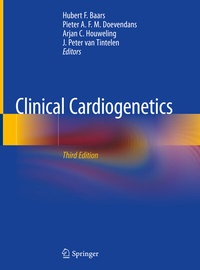
Clinical Cardiogenetics
Description

This thoroughly revised third edition provides a comprehensive grounding on hereditary heart diseases with special emphasis on the genetic aspects of these conditions. It continues to provide the expertise that all cardiologists, clinical and molecular geneticists, and related medical professionals require to provide optimal care for patients with cardiac disease of genetic origin and for their relatives. Topics covered include the different cardiomyopathies, the primary arrhythmia syndromes and the hereditary thoracic aortic disorders. In addition other topics such as cardiac involvement in hereditary neuromuscular diseases, the clinical policy for sudden cardiac death and the possibilities of pre-implantation genetic diagnosis are included to extend the discussion.
Clinical Cardiogenetics compiles current knowledge on the topic in an easy to understand reference. It provides a practical clinical primer for cardiologists, clinical geneticists, trainees and other physicians involved in the management of these patients.
More details
Other editions
Additional editions
Persons
Hubert F. Baars has been a general and genetic cardiologist in the Elisabeth-Tweesteden Hospital Tilburg, The Netherlands, for over 20 years. He has a particular interest in hereditary heart diseases and founded the Brabant outpatient clinic for cardiogenetics. At present he is the director of the DNA clinic in the Netherlands, a chain of outpatient clinics for cardiogenetics. In addition he is a consultant cardiologist at the OLVG Hospital in Amsterdam.
Pieter A. F. M. Doevendans completed his training as a cardiologist in Maastricht. In 2004 he was appointed Professor of Translational Cardiology in the UMC Utrecht, the Netherlands. His research focus is on cardiac failure, cardiac stem cells and cardiogenetics.
Arjan C Houweling is a clinical geneticist at the VU Medical Center in Amsterdam. He has been working in the field of cardiogenetics since 2007. His research in the field of cardiogenetics has been mainly focused on genetic aspects of Pulmonary Arterial Hypertension and on the genetic aspects of aortic disease.J. Peter van Tintelen is clinical geneticist and head of the department of Genetics at the UMC Utrecht, the Netherlands. His research focuses on identifying novel genes and mutations, early detection and understanding clinical variability in inherited cardiac diseases. In 2019 he was appointed Professor of Cardiogenetics.
Content
Molecular Genetics.- Clinical genetics.- Differential diagnosis of cardiomyopathies.- Hypertrophic Cardiomyopathy.- Dilated Cardiomyopathy.- Arrhythmogenic Cardiomyopathy.- Non-Compaction Cardiomyopathy.- Hereditary neuromuscular diseases and cardiac involvement.- Fabry disease.- Long QT Syndrome.- Brugada Syndrome.- Short QT Syndrome.- Cathecholaminergic Polymorphic VT.- Sudden death and Idiopathic Ventricular Fibrillation.- Thoracic Aortic Aneurysm Dissection.- Bicuspid aortic valve.- Premature coronary artery disease.- Differential diagnosis of left ventricular hypertrophy.- Differential diagnosis of dilated cardiomyopathy.- Preimplantation genetic diagnostics.
