

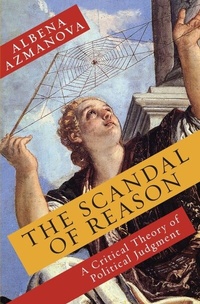
The Scandal of Reason
A Critical Theory of Political Judgment
1st Edition
Published on 25. September 2015
296 pages
978-0-231-52728-6 (ISBN)
Description

Theories of justice are haunted by a paradox: the more ambitious the theory of justice, the less applicable and useful the model is to political practice; yet the more politically realistic the theory, the weaker its moral ambition, rendering it unsound and equally useless. Brokering a resolution to this "judgment paradox," Albena Azmanova advances a "critical consensus model" of judgment that serves the normative ideals of a just society without the help of ideal theory.
Tracing the evolution of two major traditions in political philosophy-critical theory and philosophical liberalism-and the way they confront the judgment paradox, Azmanova critiques prevailing models of deliberative democracy and their preference for ideal theory over political applicability. Instead, she replaces the reliance on normative models of democracy with an account of the dynamics of reasoned judgment produced in democratic practices of open dialogues. Combining Hannah Arendt's study of judgment with Pierre Bourdieu's social critique of power relations, and incorporating elements of political epistemology from Kant, Wittgenstein, H. L. A. Hart, Max Weber, and American philosophical pragmatism, Azmanova centers her inquiry on the way participants in moral conflicts attribute meaning to their grievances of injustice. She then demonstrates the emancipatory potential of the model of critical deliberative judgment she forges and its capacity to guide policy making.
This model's critical force yields from its capacity to disclose the common structural sources of injustice behind conflicting claims to justice. Moving beyond the conflict between universalist and pluralist positions, Azmanova grounds the question of "what is justice?" in the empirical reality of "who suffers?" in order to discern attainable possibilities for a less unjust world.
Tracing the evolution of two major traditions in political philosophy-critical theory and philosophical liberalism-and the way they confront the judgment paradox, Azmanova critiques prevailing models of deliberative democracy and their preference for ideal theory over political applicability. Instead, she replaces the reliance on normative models of democracy with an account of the dynamics of reasoned judgment produced in democratic practices of open dialogues. Combining Hannah Arendt's study of judgment with Pierre Bourdieu's social critique of power relations, and incorporating elements of political epistemology from Kant, Wittgenstein, H. L. A. Hart, Max Weber, and American philosophical pragmatism, Azmanova centers her inquiry on the way participants in moral conflicts attribute meaning to their grievances of injustice. She then demonstrates the emancipatory potential of the model of critical deliberative judgment she forges and its capacity to guide policy making.
This model's critical force yields from its capacity to disclose the common structural sources of injustice behind conflicting claims to justice. Moving beyond the conflict between universalist and pluralist positions, Azmanova grounds the question of "what is justice?" in the empirical reality of "who suffers?" in order to discern attainable possibilities for a less unjust world.
All prices
More details
Other editions
Additional editions
Book
06/2021
Columbia University Press
€37.20
Shipment within 10-20 days
Book
03/2012
Columbia University Press
€76.86
Shipment within 10-20 days
Person
Albena Azmanova teaches political theory at the University of Kent in Brussels and is senior associate researcher at the Institute for European Studies of the Vrije Universiteit Brussel. Born in Bulgaria and educated in France and the United States, she lives in Belgium. Her writing focuses on political judgment and social justice; the transformation of capitalism and the emergence of new political ideologies; and Eastern Europe's postcommunist metamorphosis.
Content
Preface
Introduction: The Scandal of Reason and the Paradox of Judgment
1. Political Judgment and the Vocation of Critical Theory
2. Critical Theory: Political Judgment as Ideologiekritik
3. Philosophical Liberalism: Reasonable Judgment
4. Liberalism and Critical Theory in Dispute
5. Judgment Unbound: Arendt
6. From Critique of Power to a Theory of Critical Judgment
7. The Political Epistemology of Judgment
8. The Critical Consensus Model
9. Judgment, Criticism, Innovation
Conclusion: Letting Go of Ideal Theory
Glossary of Terms and Abbreviations
References
Index
Introduction: The Scandal of Reason and the Paradox of Judgment
1. Political Judgment and the Vocation of Critical Theory
2. Critical Theory: Political Judgment as Ideologiekritik
3. Philosophical Liberalism: Reasonable Judgment
4. Liberalism and Critical Theory in Dispute
5. Judgment Unbound: Arendt
6. From Critique of Power to a Theory of Critical Judgment
7. The Political Epistemology of Judgment
8. The Critical Consensus Model
9. Judgment, Criticism, Innovation
Conclusion: Letting Go of Ideal Theory
Glossary of Terms and Abbreviations
References
Index

