

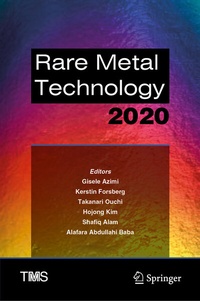
Rare Metal Technology 2020
1st Edition
Published on 20. January 2020
XV, 384 pages
978-3-030-36758-9 (ISBN)
Description

This collection presents papers from a symposium on extraction of rare metals as well as rare extraction processing techniques used in metal production. Rare metals include strategic metals that are in increasing demand and subject to supply risks. Metals represented include neodymium, dysprosium, scandium and others; platinum group metals including platinum, palladium, iridium, and others; battery related metals including lithium, cobalt, nickel, and aluminum; electronics-related materials including copper and gold; and refectory metals including titanium, niobium, zirconium, and hafnium. Other critical materials such as gallium, germanium, indium and silicon are also included. Papers cover various processing techniques, including but not limited to hydrometallurgy (solvent extraction, ion exchange, precipitation, and crystallization), electrometallurgy (electrorefining and electrowinning), pyrometallurgy, and aeriometallurgy (supercritical fluid extraction). Contributions are focusedon primary production as well as secondary production through urban mining and recycling to enable a circular economy.
A useful resource for all involved in commodity metal production, irrespective of the major metal
Provides knowledge of cross-application among industries
Extraction and processing of rare metals that are the main building block of many emerging critical technologies have been receiving significant attention in recent years.
The technologies that rely on critical metals are prominent worldwide, and finding a way to extract and supply them effectively is highly desirable and beneficial.
A useful resource for all involved in commodity metal production, irrespective of the major metal
Provides knowledge of cross-application among industries
Extraction and processing of rare metals that are the main building block of many emerging critical technologies have been receiving significant attention in recent years.
The technologies that rely on critical metals are prominent worldwide, and finding a way to extract and supply them effectively is highly desirable and beneficial.
More details
Series
Language
English
Place of publication
Cham
Switzerland
Publishing group
Springer International Publishing
Product notice
Reflowable
Illustrations
XV, 384 p. 178 illus., 121 illus. in color.
File size
16,20 MB
ISBN-13
978-3-030-36758-9 (9783030367589)
DOI
10.1007/978-3-030-36758-9
Schweitzer Classification
Other editions
Additional editions

Gisele Azimi | Kerstin Forsberg | Takanari Ouchi
Rare Metal Technology 2020
Book
01/2020
Springer
€160.49
Shipment within 7-9 days
Content
1 - Preface [Seite 5]
2 - Contents [Seite 7]
3 - About the Editors [Seite 11]
4 - Part I Lithium, Cobalt, Rare Earth Metals [Seite 16]
5 - 1 Development of a Physiochemical Model Combined with an Engineering Model for Predicting Solvent Extraction Performances Within the Context of Lithium-Ion Battery Recycling [Seite 17]
6 - 2 A Fundamental Investigation of Li?CO? Crystallization from Li?SO? System [Seite 24]
7 - 3 Recycling of End-of-Life Lithium-Ion Battery of Electric Vehicles [Seite 35]
8 - 4 Optimal Hydrometallurgical Extraction Conditions for Lithium Extraction from a Nigerian Polylithionite Ore for Industrial Application [Seite 45]
9 - 5 Selective Lithium Recovery from Brines Using Hydrothermally Treated Titania Slag [Seite 58]
10 - 6 Molecular Recognition Approach to REE Extraction, Separation, and Recycling [Seite 68]
11 - 7 Production of Energy Saving Materials from the Waste Mixtures of REEs [Seite 78]
12 - 8 Selective Recovery of Scandium from Nickel Laterite Ore by Acid Roasting-Water Leaching [Seite 88]
13 - Part II Rare Earth Metals [Seite 102]
14 - 9 Supercritical Fluid Extraction of Rare Earth Elements from Waste Fluorescent Lamp [Seite 103]
15 - 10 Supercritical Fluid Extraction of Rare-Earth Elements from a Canadian Ore [Seite 116]
16 - 11 Optimizing Zr and REE Recovery from Zircon Through a Better Understanding of the Mechanisms Governing Its Decomposition in Alkali Media [Seite 128]
17 - 12 An Innovative Process for Extracting Scandium from Nickeliferous Laterite Ore [Seite 137]
18 - 13 Recovery of Strategic Materials from Canadian Bauxite Residue by Smelting Followed by Acid Baking-Water Leaching [Seite 146]
19 - 14 Separation of Neodymium and Dysprosium by Molten Salt Electrolysis Using an Alloy Diaphragm [Seite 158]
20 - Part III PGM, Zn, V, Ti, U, Th, In, Ag, Fe [Seite 164]
21 - 15 Electrodialysis in Hydrometallurgical Processes [Seite 165]
22 - 16 Leaching of Eudialyte-The Silicic Acid Challenge [Seite 174]
23 - 17 Co-precipitation of Impurity (Ti, Fe, Al, Zr, U, Th) Phases During the Recovery of (NH?)?ScF? from Strip Liquors by Anti-solvent Crystallization [Seite 181]
24 - 18 Impurity Uptake During Cooling Crystallization of Nickel Sulfate [Seite 194]
25 - 19 Potential of a Nigerian Cassiterite Ore for Industrial Steel Coatings [Seite 203]
26 - 20 The Iron Precipitate from Primary Zinc Production: A Potential Future Source for Indium and Silver [Seite 211]
27 - 21 Recovery of Platinum Group Metals From Secondary Sources by Selective Chlorination from Molten Salt Media [Seite 223]
28 - 22 Study on the Mechanisms for Vanadium Phases' Transformation of Vanadium Slag Non-salt Roasting Process [Seite 236]
29 - 23 Reclamation of Precious Metals from Small Electronic Components of Computer Hard Disks [Seite 244]
30 - Part IV V, Mn, Co, Zn, Mo, Cu, REEs [Seite 252]
31 - 24 Study on Vanadium Phase Evolution Law in Vanadium Slag During the Interface Reaction Process of Sodium Roasting [Seite 253]
32 - 25 Indian Coal Ash: A Potential Alternative Resource for Rare Earth Metals (REMs) [Seite 265]
33 - 26 Recovery of Manganese and Cobalt from Discarded Batteries of Toys [Seite 274]
34 - 27 Zinc in Secondary Dust of Rotary Hearth Furnace Recovered by Water Leaching and Acid Leaching [Seite 281]
35 - 28 Phosphate-Intensified Alkali Leaching to Recover Molybdenum from a Volatilizing Residue [Seite 293]
36 - 29 Extraction of Rare and High-Valued Metals from Blast Furnace Dust [Seite 303]
37 - 30 Mechanism of Extraction of Vanadium from Vanadium Slag with MgO [Seite 314]
38 - 31 Effect of Sulfuric Acid Concentration on Marmatite Dissolution in the Presence of Cupric Ions [Seite 322]
39 - 32 Recovery of Rare Earth Elements from Waste Permanent Magnets Leach Liquors [Seite 332]
40 - Part V Poster Session [Seite 343]
41 - 33 A Novel Depressant of Sodium Polyacrylate for Magnesite Flotation [Seite 344]
42 - 34 Dissolution Behavior of Calcium Vanadates and Magnesium Vanadates in Sulfuric Acid [Seite 352]
43 - 35 PRICE-PRocess Industries in the Circular Economy [Seite 360]
44 - 36 Reductive Leaching of Indium-Bearing Zinc Leaching Residue in Sulfuric Acid and Sulfur Dioxide [Seite 364]
45 - Author Index [Seite 374]
46 - Subject Index [Seite 376]
2 - Contents [Seite 7]
3 - About the Editors [Seite 11]
4 - Part I Lithium, Cobalt, Rare Earth Metals [Seite 16]
5 - 1 Development of a Physiochemical Model Combined with an Engineering Model for Predicting Solvent Extraction Performances Within the Context of Lithium-Ion Battery Recycling [Seite 17]
6 - 2 A Fundamental Investigation of Li?CO? Crystallization from Li?SO? System [Seite 24]
7 - 3 Recycling of End-of-Life Lithium-Ion Battery of Electric Vehicles [Seite 35]
8 - 4 Optimal Hydrometallurgical Extraction Conditions for Lithium Extraction from a Nigerian Polylithionite Ore for Industrial Application [Seite 45]
9 - 5 Selective Lithium Recovery from Brines Using Hydrothermally Treated Titania Slag [Seite 58]
10 - 6 Molecular Recognition Approach to REE Extraction, Separation, and Recycling [Seite 68]
11 - 7 Production of Energy Saving Materials from the Waste Mixtures of REEs [Seite 78]
12 - 8 Selective Recovery of Scandium from Nickel Laterite Ore by Acid Roasting-Water Leaching [Seite 88]
13 - Part II Rare Earth Metals [Seite 102]
14 - 9 Supercritical Fluid Extraction of Rare Earth Elements from Waste Fluorescent Lamp [Seite 103]
15 - 10 Supercritical Fluid Extraction of Rare-Earth Elements from a Canadian Ore [Seite 116]
16 - 11 Optimizing Zr and REE Recovery from Zircon Through a Better Understanding of the Mechanisms Governing Its Decomposition in Alkali Media [Seite 128]
17 - 12 An Innovative Process for Extracting Scandium from Nickeliferous Laterite Ore [Seite 137]
18 - 13 Recovery of Strategic Materials from Canadian Bauxite Residue by Smelting Followed by Acid Baking-Water Leaching [Seite 146]
19 - 14 Separation of Neodymium and Dysprosium by Molten Salt Electrolysis Using an Alloy Diaphragm [Seite 158]
20 - Part III PGM, Zn, V, Ti, U, Th, In, Ag, Fe [Seite 164]
21 - 15 Electrodialysis in Hydrometallurgical Processes [Seite 165]
22 - 16 Leaching of Eudialyte-The Silicic Acid Challenge [Seite 174]
23 - 17 Co-precipitation of Impurity (Ti, Fe, Al, Zr, U, Th) Phases During the Recovery of (NH?)?ScF? from Strip Liquors by Anti-solvent Crystallization [Seite 181]
24 - 18 Impurity Uptake During Cooling Crystallization of Nickel Sulfate [Seite 194]
25 - 19 Potential of a Nigerian Cassiterite Ore for Industrial Steel Coatings [Seite 203]
26 - 20 The Iron Precipitate from Primary Zinc Production: A Potential Future Source for Indium and Silver [Seite 211]
27 - 21 Recovery of Platinum Group Metals From Secondary Sources by Selective Chlorination from Molten Salt Media [Seite 223]
28 - 22 Study on the Mechanisms for Vanadium Phases' Transformation of Vanadium Slag Non-salt Roasting Process [Seite 236]
29 - 23 Reclamation of Precious Metals from Small Electronic Components of Computer Hard Disks [Seite 244]
30 - Part IV V, Mn, Co, Zn, Mo, Cu, REEs [Seite 252]
31 - 24 Study on Vanadium Phase Evolution Law in Vanadium Slag During the Interface Reaction Process of Sodium Roasting [Seite 253]
32 - 25 Indian Coal Ash: A Potential Alternative Resource for Rare Earth Metals (REMs) [Seite 265]
33 - 26 Recovery of Manganese and Cobalt from Discarded Batteries of Toys [Seite 274]
34 - 27 Zinc in Secondary Dust of Rotary Hearth Furnace Recovered by Water Leaching and Acid Leaching [Seite 281]
35 - 28 Phosphate-Intensified Alkali Leaching to Recover Molybdenum from a Volatilizing Residue [Seite 293]
36 - 29 Extraction of Rare and High-Valued Metals from Blast Furnace Dust [Seite 303]
37 - 30 Mechanism of Extraction of Vanadium from Vanadium Slag with MgO [Seite 314]
38 - 31 Effect of Sulfuric Acid Concentration on Marmatite Dissolution in the Presence of Cupric Ions [Seite 322]
39 - 32 Recovery of Rare Earth Elements from Waste Permanent Magnets Leach Liquors [Seite 332]
40 - Part V Poster Session [Seite 343]
41 - 33 A Novel Depressant of Sodium Polyacrylate for Magnesite Flotation [Seite 344]
42 - 34 Dissolution Behavior of Calcium Vanadates and Magnesium Vanadates in Sulfuric Acid [Seite 352]
43 - 35 PRICE-PRocess Industries in the Circular Economy [Seite 360]
44 - 36 Reductive Leaching of Indium-Bearing Zinc Leaching Residue in Sulfuric Acid and Sulfur Dioxide [Seite 364]
45 - Author Index [Seite 374]
46 - Subject Index [Seite 376]
