

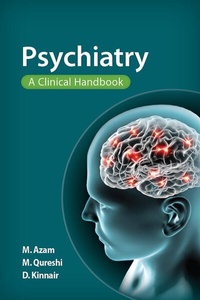
Psychiatry
A Clinical Handbook
Published on 15. February 2016
282 pages
978-1-911510-13-0 (ISBN)
Description

Psychiatry: a clinical handbook provides all the essential information required for a successful psychiatry rotation.
Written by two recently qualified junior doctors and a consultant psychiatrist, the book offers an exam-centred, reader-friendly style backed up with concise clinical guidance.
The book covers diagnosis and management based upon the ICD-10 Classification and the latest NICE guidelines. For every psychiatric condition:
- the diagnostic pathway is provided with suggested phrasing for sensitive questions
- the relevant clinical features to look out for in the mental state examination are listed
- a concise definition and basic pathophysiology/aetiology is outlined.
The book also boasts a range of features to test your understanding of the subject:
- Self-assessment questions are provided at the end of each chapter.
- A common OSCE scenarios chapter with mark schemes, to aid practising with colleagues in preparation for exams.
- An exam-style questions chapter with detailed answers written by a Consultant Psychiatrist.
Printed with an attractive full colour design, the book includes mnemonics, clinical photos, diagrams, OSCE tips and key fact boxes.
Psychiatry: a clinical handbook is ideal for medical students, junior doctors and psychiatry trainees.
From reviews:
"This book excels as a guide for studying, for a variety of reasons. Notably, the pedagogic quality truly benefits from the authors' deliberate use of a variety of formats for presenting information. As a result, nearly any medical student could find this book easy to use." Doody, July 2016
"One of the best psychiatry books I have ever read. It is organised in a neat, concise manner with tables, colours, mnemonics, OSCE tips to name but a few." Amazon reviewer
Written by two recently qualified junior doctors and a consultant psychiatrist, the book offers an exam-centred, reader-friendly style backed up with concise clinical guidance.
The book covers diagnosis and management based upon the ICD-10 Classification and the latest NICE guidelines. For every psychiatric condition:
- the diagnostic pathway is provided with suggested phrasing for sensitive questions
- the relevant clinical features to look out for in the mental state examination are listed
- a concise definition and basic pathophysiology/aetiology is outlined.
The book also boasts a range of features to test your understanding of the subject:
- Self-assessment questions are provided at the end of each chapter.
- A common OSCE scenarios chapter with mark schemes, to aid practising with colleagues in preparation for exams.
- An exam-style questions chapter with detailed answers written by a Consultant Psychiatrist.
Printed with an attractive full colour design, the book includes mnemonics, clinical photos, diagrams, OSCE tips and key fact boxes.
Psychiatry: a clinical handbook is ideal for medical students, junior doctors and psychiatry trainees.
From reviews:
"This book excels as a guide for studying, for a variety of reasons. Notably, the pedagogic quality truly benefits from the authors' deliberate use of a variety of formats for presenting information. As a result, nearly any medical student could find this book easy to use." Doody, July 2016
"One of the best psychiatry books I have ever read. It is organised in a neat, concise manner with tables, colours, mnemonics, OSCE tips to name but a few." Amazon reviewer
More details
Other editions
Additional editions
Book
02/2016
Scion Publishing Ltd
€35.00
Shipment within 3-4 weeks
Persons
Content
Preface; Acknowledgements; Abbreviations; Outline of the book
1: Introduction to psychiatry
2: Assessment in psychiatry
2.1 Psychiatric history taking
2.2 Mental state examination
3: Mood disorders
3.1 Overview of mood disorders
3.2 Depressive disorder
3.3 Bipolar affective disorder
4: Psychotic disorders
4.1 Overview of psychosis
4.2 Schizophrenia
5: Neurotic, stress-related and somatoform disorders
5.1 Overview of anxiety disorders
5.2 Generalized anxiety disorder
5.3 Phobic anxiety disorders
5.4 Panic disorder
5.5 Post-traumatic stress disorder
5.6 Obsessive-compulsive disorder
5.7 Medically unexplained symptoms
6: Eating disorders
6.1 Anorexia nervosa
6.2 Bulimia nervosa
7: Alcohol and substance misuse
7.1 Substance misuse
7.2 Alcohol abuse
8: Personality disorders
9: Suicide and self-harm
9.1 Deliberate self-harm
9.2 Suicide and risk assessment
10: Old age psychiatry
10.1 Delirium
10.2 Dementia
11: Child psychiatry
11.1 Autism
11.2 Hyperkinetic disorder
11.3 Learning disability
12: Management
12.1 Psychotherapies
12.2 Antidepressants
12.3 Antipsychotics
12.4 Mood stabilizers
12.5 Anxiolytics and hypnotics
12.6 Electroconvulsive therapy (ECT)
12.7 Mental health and the law (England and Wales)
13: Forensic psychiatry
14: Common OSCE scenarios and mark schemes
15: Exam-style questions
Glossary of terms
Appendix A: Answers to exam-style questions
Appendix B: Answers to self-assessment questions
Appendix C: Figure acknowledgements
Index
1: Introduction to psychiatry
2: Assessment in psychiatry
2.1 Psychiatric history taking
2.2 Mental state examination
3: Mood disorders
3.1 Overview of mood disorders
3.2 Depressive disorder
3.3 Bipolar affective disorder
4: Psychotic disorders
4.1 Overview of psychosis
4.2 Schizophrenia
5: Neurotic, stress-related and somatoform disorders
5.1 Overview of anxiety disorders
5.2 Generalized anxiety disorder
5.3 Phobic anxiety disorders
5.4 Panic disorder
5.5 Post-traumatic stress disorder
5.6 Obsessive-compulsive disorder
5.7 Medically unexplained symptoms
6: Eating disorders
6.1 Anorexia nervosa
6.2 Bulimia nervosa
7: Alcohol and substance misuse
7.1 Substance misuse
7.2 Alcohol abuse
8: Personality disorders
9: Suicide and self-harm
9.1 Deliberate self-harm
9.2 Suicide and risk assessment
10: Old age psychiatry
10.1 Delirium
10.2 Dementia
11: Child psychiatry
11.1 Autism
11.2 Hyperkinetic disorder
11.3 Learning disability
12: Management
12.1 Psychotherapies
12.2 Antidepressants
12.3 Antipsychotics
12.4 Mood stabilizers
12.5 Anxiolytics and hypnotics
12.6 Electroconvulsive therapy (ECT)
12.7 Mental health and the law (England and Wales)
13: Forensic psychiatry
14: Common OSCE scenarios and mark schemes
15: Exam-style questions
Glossary of terms
Appendix A: Answers to exam-style questions
Appendix B: Answers to self-assessment questions
Appendix C: Figure acknowledgements
Index
