

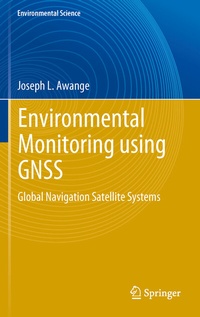
Environmental Monitoring using GNSS
Global Navigation Satellite Systems
1st Edition
Published on 15. May 2012
XVIII, 382 pages
978-3-540-88256-5 (ISBN)
Description

Global Navigation Satellite Systems (GNSS) are revolutionizing the world in a way their original developers never envisaged. From being military "war" tools, GNSS satellites are rapidly becoming "peace" tools that play a potentially critical role in enabling changing environmental phenomenon that do not permit direct measurements to be remotely observed via their all-weather, highly accurate and continuously updatable positional time series. This is evident, for example, in their use in emerging environmental monitoring methods that are considered in this book. These include: GPS-based radio telemetry, which is enhancing ecological and conservation monitoring by more accurately mapping animal movements, their behaviours, and their impact on the environment; GNSS-meteorology, which is contributing to weather and climate change studies; GNSS-remote sensing, which, for example, allows the rapid monitoring of changes in fresh water resources and cryosphere; Geosensor network techniques, which are earning a crucial role in disaster response management; Epidemiology, for improved efficiency in tracking and studying the spread of infectious diseases and climate change effects on vector-borne diseases; and Economics, to provide data for the econometric modelling of casual impact of policies. In Environmental Impact Assessments (EIA), Strategic Environmental Assessments (SEA), and Sustainability Assessments (SA), GNSS, together with other spaced-based remote sensing techniques, are emerging, not only as modern tools that connect the developers to the community, but also provide information that support Multi-Criteria Analysis (MCA) methods, which inform decision making and policy formulations. By bringing the two fields of geodesy (the parent of GNSS technology) and environmental studies (potential users of this technology), this bookpresents the concepts of GNSS in a simplified way that can, on the one hand, be understood and utilised by environmentalists, while on the other, outlines its potential applications to environmental monitoring and management for those engaged more with its technology, which hopefully will further energise the already innovative research that is being carried out. Lastly, this book is most relevant to all the professionals whose work is related to the environment such as hydrologists, meteorologists, epidemiologists, economist, and engineers, to name just a few.A comprehensive yet candid and compelling presentation of Global Navigation Satellite Systems and its application to environmental monitoring and a host of other socio-economic activities. This is an essential and new ground breaking reading for all professional practitioners and even academics seeking to study and become involved in using Global Navigation Satellite Systems in diverse fields ranging from environmental monitoring to economic activities such as monitoring weather and climate in order to design crop failure insurance. Nathaniel O. Agola, Professor of Business and Financial Economics, Ritsumeikan University, Japan
Reviews / Votes
From the reviews:
"Author Joseph L. Awange opens by providing readers with a summary of what GNSS involves in terms environmental monitoring. . chapters of the book include a summary of GNSS technology, how it operates and comparisons between different systems. This information provides enough detail to allow both professional and non-professional GNSS readers to maintain interest . . Readers can learn in this book about designing monitoring surveys and mission planning for their field operations." (Jeff Thurston, 3D Visualization World Magazine, 3dvisworld.com, July, 2012)More details
Series
Language
English
Place of publication
Berlin
Germany
Publishing group
Springer Berlin
Target group
Professional and scholarly
Product notice
Reflowable
Illustrations
XVIII, 382 p.
File size
18,99 MB
ISBN-13
978-3-540-88256-5 (9783540882565)
DOI
10.1007/978-3-540-88256-5
Schweitzer Classification
Other editions
Additional editions
Book
05/2012
Springer
€223.63
Article exhausted; check for reprint
Content
- Intro
- Environmental Monitoring Using GNSS
- Foreword
- Preface
- Contents
- 1 Environmental Monitoring
- 1.1 Monitoring
- 1.2 Satellite Monitoring
- 1.3 Integration of GNSS With Remote Sensing Satellites
- 1.4 Objectives and Aims of the Book
- References
- Part I Global Navigation Satellite Systems (GNSS)
- 2 Modernization of GNSS
- 2.1 Introductory Remarks
- 2.2 GNSS Family and the Future
- 2.3 Benefits of the Expanding GNSS Family
- 2.4 Concluding Remarks
- References
- 3 The Global Positioning System
- 3.1 Introductory Remarks
- 3.2 GPS Design and Operation
- 3.2.1 Space Segment
- 3.2.2 Control Segment
- 3.2.3 User Segment
- 3.3 GPS Observation Principles
- 3.3.1 GPS Signals
- 3.3.2 Measuring Principle
- 3.4 Errors in GPS Measurements
- 3.4.1 Ephemeris Errors
- 3.4.2 Clock Errors
- 3.4.3 Atmospheric Errors
- 3.4.4 Multipath
- 3.4.5 Satellite Constellation ``Geometry''
- 3.4.6 Other Sources of Errors
- 3.5 Concluding Remarks
- References
- 4 Mathematical Modelling
- 4.1 Introductory Remarks
- 4.2 Observation Equations
- 4.3 Models
- 4.3.1 Static and Kinematic Positioning
- 4.3.2 Differential GPS (DGPS)
- 4.3.3 Relative Positioning
- 4.4 Concluding Remarks
- References
- 5 Environmental Surveying and Surveillance
- 5.1 Environmental Monitoring Parameters
- 5.2 Design of GNSS Monitoring Survey
- 5.3 Mission Planning and Reconnaissance
- 5.4 GNSS Field Procedures
- 5.4.1 Single Point Positioning
- 5.4.2 Static Relative Positioning
- 5.4.3 Real-Time GNSS (RTGNSS)
- 5.4.4 Differential and Augmented GNSS
- 5.4.5 Rapid Positioning Methods
- 5.4.6 Real-Time Kinematic (RTK)
- 5.4.7 Precise Point Positioning (PPP)
- 5.5 Environmental Surveillance: CORS Monitoring
- 5.6 Coordinate Reference System
- 5.6.1 Datum
- 5.6.2 Coordinate Systems
- 5.6.3 Map Projection
- 5.7 Concluding Remarks
- References
- 6 Data Processing and Adjustment
- 6.1 Introductory Remarks
- 6.2 Processing of Observations
- 6.2.1 Data
- 6.2.2 Baseline Processing
- 6.2.3 Solution Types
- 6.2.4 Quality Assessment
- 6.2.5 Adjustment of GNSS Network Surveys
- 6.3 Least Squares Solution
- 6.4 Online Processing
- 6.5 Concluding Remarks
- References
- 7 Basics of Galileo Satellites
- 7.1 Introductory Remarks
- 7.2 Galileo Design and Operation
- 7.2.1 User Component
- 7.2.2 Global Component
- 7.2.3 Regional Component
- 7.2.4 Local Component
- 7.3 Galileo Signals
- 7.4 Concluding Remarks
- References
- Part II Applications to Environmental Monitoring
- 8 GNSS Maps in Environmental Monitoring
- 8.1 Maps and Their Environmental Applications
- 8.2 Types of Maps
- 8.2.1 Thematic Maps
- 8.2.2 Topographical Maps
- 8.2.3 GNSS-Derived Topographical Maps
- 8.2.4 Application to the Monitoring of Lake Jack Finney
- 8.3 Concluding Remarks
- References
- 9 GNSS Remote Sensing of the Environment
- 9.1 Introductory Remarks
- 9.2 GNSS Remote Sensing of the Atmosphere
- 9.2.1 Background to GNSS-Meteorology
- 9.2.2 GNSS-Derived Atmospheric Parameters
- 9.2.3 GNSS Remote Sensing Techniques
- 9.3 GNSS Contribution to Remote Sensing of Gravity Variations
- 9.3.1 Mass Variation and Gravity
- 9.3.2 High and Low Earth Orbiting Satellites
- 9.3.3 Gravity Recovery and Climate Experiment
- 9.4 Satellite Altimetry
- 9.4.1 Remote Sensing With Satellite Altimetry
- 9.4.2 Satellite Altimetry Missions
- 9.5 Remote Sensing Using GNSS Reflected Signals
- 9.6 Concluding Remarks
- References
- 10 Climate Change and Weather Related Impacts
- 10.1 Weather, Climate, and Global Warming
- 10.2 Impacts of Weather and the Changing Climate
- 10.2.1 Weather Related Impacts
- 10.2.2 Climate Related Impacts
- 10.3 Water Vapour
- 10.3.1 Significance
- 10.3.2 Numerical Weather Prediction
- 10.4 Environmental Monitoring Applications
- 10.4.1 GNSS Applications to Weather Monitoring
- 10.4.2 GNSS Applications to Climate Change Monitoring
- 10.4.3 Monitoring of Global Warming
- 10.4.4 Monitoring Cryospheric Changes
- 10.4.5 Possible Contributions of GNSS to International Protocols
- 10.5 Concluding Remarks
- References
- 11 Water Resources
- 11.1 Why Monitor Variation in Fresh Water Resources?
- 11.2 Gravity Field and Changes in Stored Water
- 11.2.1 Gravity Field Changes and the Hydrological Processes
- 11.2.2 Monitoring Variation in Stored Water Using Temporal Gravity Field
- 11.3 Examples of Space Monitoring of Changes in Stored Water
- 11.3.1 The Nile Basin
- 11.3.2 Understanding the Decline of Lake Naivasha
- 11.3.3 Water, a Critical Dwindling Australian Resource
- 11.4 Concluding Remarks
- References
- 12 Coastal Resources
- 12.1 Marine Habitat
- 12.1.1 Background
- 12.1.2 Satellites Monitoring of Marine Habitats
- 12.2 Shoreline Monitoring and Prediction
- 12.2.1 Definition and Need for Monitoring
- 12.2.2 Monitoring
- 12.2.3 Prediction
- 12.3 Concluding Remarks
- References
- 13 Land Management
- 13.1 Introductory Remarks
- 13.2 GNSS for Reconnaissance and Validation
- 13.3 Monitoring of Land Conditions
- 13.3.1 Soil Landscape Mapping
- 13.3.2 Provision of Point Data
- 13.3.3 Provision of Polygon Data
- 13.4 Monitoring of Land Degradation
- 13.4.1 Soil Erosion Monitoring
- 13.4.2 Salinity Monitoring: The Catchment Approach
- 13.5 GNSS Support of Precise Farming
- 13.5.1 Precise Farming
- 13.5.2 Farm Topographical Maps
- 13.6 Concluding Remarks
- References
- 14 Disaster Management
- 14.1 Geosensor Networks in Disaster Monitoring
- 14.1.1 Disasters and Their Impacts
- 14.1.2 GNSS in Support of Geosensor Networks
- 14.2 Changing Sea Levels
- 14.2.1 Impacts of Rise in Sea Level
- 14.2.2 Tide Gauge Monitoring
- 14.2.3 GNSS Monitoring
- 14.3 Tsunami Early Warning System
- 14.4 Land Subsidence and Landslides
- 14.5 Earthquakes
- 14.6 Floods
- 14.6.1 Flood Forecasting and Warning
- 14.6.2 Mapping of Flood Events and Damage Assessment
- 14.6.3 Flood Plain Management
- 14.6.4 GNSS Monitoring of ENSO and IOD
- 14.7 Droughts
- 14.7.1 Early Warning of Drought
- 14.7.2 Monitoring and Assessment
- 14.7.3 Combating Drought
- 14.8 Vector-Borne Diseases and Outbreak
- 14.9 Concluding Remarks
- References
- 15 Environmental Pollution
- 15.1 The Concept of Pollution and Applications of GNSS
- 15.2 Water Pollution
- 15.2.1 Point and Non-point Sources
- 15.2.2 Eutrophication of the Lakes
- 15.3 Air Pollution
- 15.3.1 Background
- 15.3.2 Pollution from Transportation Sector
- 15.4 Land Pollution
- 15.4.1 Solid Waste Collection and Management
- 15.4.2 GNSS Support of Solid Waste Management
- 15.4.3 Solid Waste from Transportation Sector
- 15.4.4 Acid Mine Deposit Sites
- 15.5 Concluding Remarks
- References
- 16 Animals and Vegetation Protection and Conservation
- 16.1 Introductory Remarks
- 16.2 GNSS Animal Telemetry
- 16.2.1 Benefits and Background
- 16.2.2 Observation and Data Management Techniques
- 16.2.3 Applications
- 16.3 Vegetation
- 16.3.1 Forests
- 16.3.2 Wetlands
- 16.4 Concluding Remarks
- References
- 17 Environmental Impact Assessment
- 17.1 GNSS Support of EIA, SEA, and SA
- 17.1.1 Impact Assessments and the Need for Monitoring
- 17.1.2 Applications of GNSS
- 17.2 Impact Monitoring to Detect Change
- 17.3 Project EIA
- 17.3.1 GNSS in Support of EIA Process
- 17.3.2 GNSS in Support of Multi-Criteria Analysis
- 17.3.3 Example of Gnangara Mound Groundwater Resources
- 17.4 Strategic Environmental Assessment
- 17.4.1 GNSS Role in Supporting Cumulative Impacts Assessments
- 17.4.2 Example of Marillana Creek (Yandi) Mine
- 17.5 Sustainability Assessment
- 17.6 Concluding Remarks
- References
- Index
