


Radicalisation
A Global and Comparative Perspective
1st Edition
Published on 7. December 2023
424 pages
978-1-80526-351-7 (ISBN)
Description

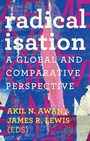
Radicalisation has become an important part of the twenty-first-century security and political landscape. It is a seemingly ubiquitous term, employed by academics, policymakers, civil society actors, practitioners and media alike, in ever-expanding ways--describing everything from changing domestic social movements to the growth of international terrorism. This volume provides a comprehensive treatment of 'radicalisation': the processes during which individuals or groups adopt increasingly extreme political, social or religious beliefs, positions or aspirations, particularly in cases associated with the use of violence. Adopting a multifaceted and comparative approach, the contributors interrogate this phenomenon from wide-ranging social, ideological, religious and historical angles.
The first part of the book explores how academia has engaged with the concept of radicalisation, including the ontological and epistemological concerns of Critical Terrorism Studies; theoretical models for understanding radicalisation; and approaches to radicalisation through the various lenses of identity, gender, youth and media. The second part explores manifestations of radicalisation through a range of diverse case studies, including the Falun Gong movement; Aum Shinrikyo; Far-Right trans-nationalism; white nationalist lone wolves and the 'Great Replacement' thesis; ISIS and Western jihadists; deradicalisation programmes; hero myths; the Extreme Right in Eastern Europe; and the dark side of globalisation.
The first part of the book explores how academia has engaged with the concept of radicalisation, including the ontological and epistemological concerns of Critical Terrorism Studies; theoretical models for understanding radicalisation; and approaches to radicalisation through the various lenses of identity, gender, youth and media. The second part explores manifestations of radicalisation through a range of diverse case studies, including the Falun Gong movement; Aum Shinrikyo; Far-Right trans-nationalism; white nationalist lone wolves and the 'Great Replacement' thesis; ISIS and Western jihadists; deradicalisation programmes; hero myths; the Extreme Right in Eastern Europe; and the dark side of globalisation.
Reviews / Votes
'"Radicalisation" is a first-class, innovative and highly constructive study of one of the most important issues relating to extremism, with insights from the top names in the field. This book is a must-read for anyone interested in the topic.' -- Michelle Bentley, Director of the Centre for International Security, Royal Holloway, University of London 'This wide-angled book offers a welcome pluralistic and global perspective on the concept of radicalisation. It is destined to become essential reading for scholars and students interested in the multiple ways radicalisation has been deployed in public and academic discourse.' -- Sarah Marsden, Senior Lecturer, Handa Centre for the Study of Terrorism and Political Violence, University of St Andrews 'An in-depth and up-to-date account of some of the ongoing challenges and concerns relating to radicalisation. Original and bold in its scope, this volume will be one of the most important in the field.' -- Tahir Abbas, Professor of Radicalisation Studies, Institute of Security and Global Affairs, Leiden University 'Presenting a range of international case studies and taking a critical approach, the authors provide authoritative accounts of their chosen topics. An original and welcome contribution to the literature.' -- John Morrison, Assistant Professor in Criminology, Maynooth University, and co-editor of 'Radicalization and Deradicalization: Processes and Contexts'All prices
More details
Language
English
Place of publication
La Vergne
United Kingdom
Target group
Professional and scholarly
ISBN-13
978-1-80526-351-7 (9781805263517)
Copyright in bibliographic data and cover images is held by Nielsen Book Services Limited or by the publishers or by their respective licensors: all rights reserved.
Schweitzer Classification
Other editions
Additional editions
Book
12/2023
C Hurst & Co Publishers Ltd
€74.50
Shipment within 3-4 weeks
Persons
Akil N. Awan is Associate Professor of Modern History and Terrorism and Director of the Conflict, Violence and Terrorism Research Centre at Royal Holloway, University of London.
Content
- Cover
- Half title
- Title
- Copyright
- Dedication
- Contents
- Contributors
- Introduction: Akil N. Awan and James R. Lewis
- Section I Approaches to Radicalisation
- 1. Problematising Radicalisation: Kieran Ford and Richard Jackson
- 2. The Social Ecology Model of "Homegrown" Jihadist Radicalisation: Lorne L. Dawson
- 3. Routes to Terrorism: A Rational Choice Perspective to Radicalisation: Stephen C. Nemeth
- 4. Radicalisation as Identity Reconfiguration and Narrative Resonance: The Case of IS in Europe: Akil N. Awan
- 5. Processes of Radicalisation Onscreen: How We Canonisethe White Saints of Freedom: Christopher Hartney
- 6. Interpreting the Radicalisation of Youth: What Can Researchon NRM Converts Tell Us About Westerners Who Join Radical Islamic Groups?: Margrethe Løøv
- 7. Myths of Heroes and Radicalisation: Heather S. Gregg
- 8. Beyond Women: Rethinking Gender and Radicalisation: Elizabeth Pearson
- Section II Prisms of Radicalisation
- 9. Falun Gong: The Radicalisation of a Religious Movement: Xudong Ning and James R. Lewis
- 10. Aum Shinrikyo and the "Aum Incident": The Radicalisation of a Young Japanese Religious Group: Martin Repp
- 11. Creating the Discourse of Religious Radicalisation in Kyrgyzstan: Meerim Aitkulova
- 12. Transnational Far-Right Digital Publics and Radicalisation: Bharath Ganesh and Caterina Froio
- 13. Between Offline and Online Violent Radicalisation:Repertoires of Action of the Extreme Right in Eastern and Central Europe: Manuela Caiani
- 14. 'The Radicalisation of Western Man': The Great Replacement, White Radical Nationalism, and Lone Wolf Violence: Mattias Gardell
- 15. The Collapse of Cultures: Jihadis, the Alt-Right and the Dark Side of Globalization: Scott Atran
- 16. Making De-Radicalisation: The Framing of De-Radicalisationin the UK and Nigeria: Gordon Clubb, Daniel Koehler, Ryan O'Connor and Jonatan Schewe
- 17. Counter-Radicalisation Surveillance as a Public Health Measure: Counterterrorism in the Public Sector: Charlotte Heath-Kelly
- Notes
- Index
- Back cover
