

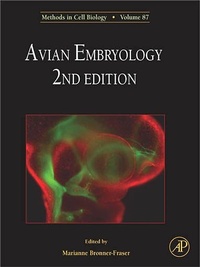
Avian Embryology
Academic Press
2nd Edition
Published on 21. September 2011
432 pages
978-0-08-092529-5 (ISBN)
Description

This revised edition will continue to serve as the most complete and up-to-date guide to the use of the avian embryo in studies of vertebrate development. It will include new approaches to analysis of the chick genome, gene knock-out studies using RNA interference, morpholinos, and other cutting edge techniques. As with the original edition, emphasis has been placed on providing practical guidance, highlighting potentials and pitfalls of all key cell biological and embryological techniques.
- Fully revised second edition
- Organized into basic and advanced Methods
- New section on Functional Genomics
More details
Other editions
Additional editions
Marianne Bronner-Fraser
Avian Embryology: Volume 87
Book
07/2008
2nd Edition
Academic Press
€163.41
Shipment within 15-20 days
Person
Content
- Front Cover
- Methods in Cell Biology
- Copyright Page
- Contents
- Contributors
- Preface
- Part I: Embryological Microsurgery and Tissue Culture Methods
- Chapter 1: Operations on Primitive Streak Stage Avian Embryos
- I. Introduction
- II. Staging of Embryos
- III. Anatomy of the Primitive Streak Stage Embryo
- IV. New Culture
- V. Hensen's Node Grafts and Other Induction Assays
- VI. Other Types of Graft
- VII. Fixing Operated Embryos for Analysis
- References
- Chapter 2: Quail-Chick Transplantations
- I. Introduction
- II. Differential Diagnosis of Quail and Chick Cells
- III. Material and Equipment
- IV. Egg Holders
- V. Preparation and Sealing of Eggs
- VI. Neural Tissue Transplantations
- VII. Early Transplantations in Blastodiscs
- VIII. Transplantation of Epiblast or Primitive Streak Fragments
- IX. Hemopoietic Organ Rudiment Transplantations
- X. Genetic Manipulation by Electroporation in the Quail-Chick System
- XI. Results, Discussion, and Perspectives
- Acknowledgments
- References
- Chapter 3: Other Chimeras: Quail-Duck and Mouse-Chick
- I. Introduction
- II. Preparation of Quail, Duck, Chick, and Mouse Embryos
- III. Generation and Analysis of Quail-Duck Chimeras
- IV. Generation and Analysis of Mouse-Chick Chimeras
- V. Conclusion
- References
- Chapter 4: Manipulations of Neural Crest Cells or Their Migratory Pathways
- I. Introduction
- II. Preparation of Avian Neural Crest Cultures
- III. Induction and Specification Assays for Neural Crest Cells
- IV. Microinjection of Cells and Antibodies into Embryos
- V. Labeling of Neural Crest Cells In Vivo with Vital Dyes
- VI. Grafting Techniques
- VII. Conclusions
- References
- Chapter 5: Embryo Slices and Strips: Guidance and Adhesion Assays in the Avian Embryo
- I. Introduction
- II. Preparing and Culturing Embryo Slices
- III. Preparing and Culturing Somite Strips
- IV. Perspectives
- References
- Chapter 6: Neural Crest, Sensory Neuron, and Muscle Cultures
- I. Introduction
- II. Materials
- III. Methods
- IV. Neural Crest Culture
- V. Sensory Neuron Culture
- VI. Pectoral Muscle Culture
- VII. Results and Discussions
- References
- Chapter 7: Methods in Avian Embryology Experimental and Molecular Manipulation of the Embryonic Chick Limb
- I. Introduction
- II. Visualization of the Limb Bud and Analysis of the Experimental Outcome
- III. Proximal-Distal Limb Development
- IV. Anterior-Posterior Patterning
- V. Dorsal-Ventral (D-V) Patterning
- References
- Chapter 8: Cell Division, Differentiation, and Death in Avian Embryos
- I. Introduction
- II. Studies in Cell Death
- III. Studies in Cell Proliferation and Differentiation
- IV. Selected Protocols
- References
- Part II: Labeling and Transgenesis Approaches
- Chapter 9: In Situ Hybridization Analysis of Chick Embryos in Whole-Mount and Tissue Sections
- I. Introduction
- II. Solutions
- III. Single and Multiple Detection of RNA in Floating Sections or Whole-Mount Embryos
- IV. Photography and Sectioning
- V. Whole-Mount Fluorescent In Situ Hybridization
- VI. Photography and Sectioning
- VII. In Situ Hybridization to Tissue Sections
- References
- Chapter 10: Vital Labeling of Embryonic Cells Using Fluorescent Dyes and Proteins
- I. Introduction
- II. Iontophoretic Microinjection of Lineage Tracers
- III. Iontophoretic Application of DiI
- IV. Relative Advantages of Dextran and DiI
- V. Photoactivation of Fluorescent Proteins in Single Cells
- VI. Conclusions and Emerging Technologies
- References
- Chapter 11: Time-Lapse Imaging of the Early Avian Embryo
- I. Introduction
- II. The Technology of Time-Lapse Imaging
- III. Considerations Before Time-Lapse Imaging
- IV. Methods
- References
- Chapter 12: Gain- and Loss-of-Function Approaches in the Chick Embryo
- I. Gain-of-Function by Electroporation
- II. Loss-of-Function by Electroporation
- III. Retrovirus-Mediated Protein Expression
- References
- Chapter 13: Manipulation and Electroporation of the Avian Segmental Plate and Somites In Vitro
- I. Introduction
- II. Rationale
- III. Methods
- IV. Materials
- V. Discussion
- VI. Summary
- Acknowledgments
- References
- Chapter 14: Transposon-Mediated Stable Integration and Tetracycline-Inducible Expression of Electroporated Transgenes in Chicken Embryos
- I. Introduction
- II. Tet-Inducible Expression of Electroporated Transgenes
- III. Stable Integration of Electroporated Transgenes
- IV. Stage-Specific Manipulation of Stably Integrated Transgenes
- V. Summary
- Acknowledgments
- References
- Chapter 15: Generating Transgenic Quail using Lentiviruses
- I. Introduction
- II. Experimental Procedures
- III. Concluding Remarks
- Acknowledgments
- References
- Part III: Functional Genomics
- Chapter 16: Gene Discovery: Macroarrays and Microarrays
- I. Introduction
- II. Chicken as a Model System: Integrating Embryology and Genomics
- III. The Array: Choosing a Platform
- IV. Strategy: Devising the Best Screen Possible
- V. Analysis: Sorting through Several Thousand Data Points
- VI. Protocol: Macroarray Screening
- References
- Chapter 17: Dissection of Chick Genomic Regulatory Regions
- I. Introduction
- II. Rationale
- III. Methods
- IV. Discussion
- Acknowledgments
- References
- Chapter 18: Computational Approaches to Finding and Analyzing cis-Regulatory Elements
- I. Structure and Function of cis-Regulatory Elements
- II. Effective cis-Regulatory Sequence Analysis
- III. Approaches and Tools for Finding Conserved Sequence Elements
- IV. Identifying Transcription Factor Binding Sites Computationally
- Acknowledgments
- References
- Chapter 19: Investigating Regulatory Factors and Their DNA Binding Affinities Through Real Time Quantitative PCR (RT-QPCR) and Chromatin Immunoprecipitation (ChIP) Assays
- I. Introduction
- II. Materials for RT-QPCR
- III. General Principles and Definitions
- IV. Types of Assays
- V. Methods of Analysis
- VI. Assay Setup
- VII. ChIP and RT-QPCR
- VIII. Conclusions and Perspectives
- Acknowledgements
- References
- Relevant Websites
- Index
- Volumes in Series
