

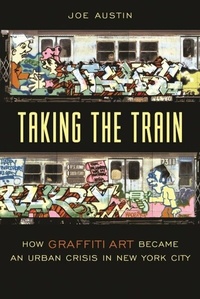
Taking the Train
How Graffiti Art Became an Urban Crisis in New York City
1st Edition
Published on 25. September 2015
400 pages
978-0-231-53388-1 (ISBN)
Description

In the 1960s and early 1970s, young people in New York City radically altered the tradition of writing their initials on neighborhood walls. Influenced by the widespread use of famous names on billboards, in neon, in magazines, newspapers, and typographies from advertising and comics, city youth created a new form of expression built around elaborately designed names and initials displayed on public walls, vehicles, and subways. Critics called it "graffiti," but to the practitioners it was "writing."
Taking the Train traces the history of "writing" in New York City against the backdrop of the struggle that developed between the city and the writers. Austin tracks the ways in which "writing"- a small, seemingly insignificant act of youthful rebellion-assumed crisis-level importance inside the bureaucracy and the public relations of New York City mayoral administrations and the Metropolitan Transportation Authority for almost two decades. Taking the Train reveals why a global city short on funds made "wiping out graffiti" an expensive priority while other needs went unfunded. Although the city eventually took back the trains, Austin eloquently shows how and why the culture of "writing" survived to become an international art movement and a vital part of hip-hop culture.
Taking the Train traces the history of "writing" in New York City against the backdrop of the struggle that developed between the city and the writers. Austin tracks the ways in which "writing"- a small, seemingly insignificant act of youthful rebellion-assumed crisis-level importance inside the bureaucracy and the public relations of New York City mayoral administrations and the Metropolitan Transportation Authority for almost two decades. Taking the Train reveals why a global city short on funds made "wiping out graffiti" an expensive priority while other needs went unfunded. Although the city eventually took back the trains, Austin eloquently shows how and why the culture of "writing" survived to become an international art movement and a vital part of hip-hop culture.
More details
Other editions
Additional editions
Book
01/2002
Columbia University Press
€123.80
Article not available at the moment
Person
Joe Austin, assistant professor in the Department of Popular Culture at Bowling Green State University, is coeditor of Generations of Youth: Youth and Youth Cultures in the 20th Century.
Content
Prologue
1. A Tale of Two Cities
2. Taking the Trains: The Formation and Structure of "Writing Culture'' in the Early 1970s
3. Writing "Graffiti'' in the Public Sphere: The Construction of Writing as an Urban Problem
4. Repainting the Trains: The New York School of the 1970s
5. The State of the Subways: The Transit Crisis, the Aesthetics of Fear, and the Second "War on Graffiti''
6. Writing Histories
7. Retaking the Trains
8. The Walls and the World: Writing Culture, 1982-1990
Conclusion: A Spot on the Wall
Appendix: Sources from Writers
Notes
Selected Bibliography
Acknowledgments
Index
1. A Tale of Two Cities
2. Taking the Trains: The Formation and Structure of "Writing Culture'' in the Early 1970s
3. Writing "Graffiti'' in the Public Sphere: The Construction of Writing as an Urban Problem
4. Repainting the Trains: The New York School of the 1970s
5. The State of the Subways: The Transit Crisis, the Aesthetics of Fear, and the Second "War on Graffiti''
6. Writing Histories
7. Retaking the Trains
8. The Walls and the World: Writing Culture, 1982-1990
Conclusion: A Spot on the Wall
Appendix: Sources from Writers
Notes
Selected Bibliography
Acknowledgments
Index
