


Electronic Instrumentation with MATLAB (R)
1st Edition
Will be published approx. on 11. August 2026
306 pages
E-Book
978-1-040-93684-9 (ISBN)
Description

Electronic instrumentation systems are electronic systems for implementing specific desired functions such as measurement, control, and monitoring. This book discusses sensors and conditioning circuits for electronic instrumentation. This book is unique. It is the first time MATLAB (R) computational powers are being used to describe and explore various aspects of electronic instrumentation, including electronic signal conditioning circuits and instrumentation sensors. In addition, it is the first time an electronic instrumentation system is written to introduce the Internet of Things (IoT) and popular sensors for IoT applications.
MATLAB is used for computations, plotting, curve fitting, statistical analysis and parameters identification of instrumentation systems.
There is in-depth presentation of signals conditioning circuits for instrumentation sensors, such as amplifiers, filters, analog to digital conversion circuits.
There are broad descriptions of the underlying principles of temperature, displacement, pressure, flow and electro-optical sensors. In addition, the book discusses popular sensors for Internet-of-Things applications.
There are several worked examples for solving electronic instrumentation problems by using MATLAB. The examples help the reader to understand the operations of signal conditioning circuits, and explore the characteristics of various instrumentation sensors.
The book has end-of-chapter problems that test and help solidify the reader's understanding of the material.
The book can be used by students, professional engineers and technicians who want knowledge of signal conditioning circuits used in instrumentation systems, and detailed description of instrumentation sensors.
MATLAB is used for computations, plotting, curve fitting, statistical analysis and parameters identification of instrumentation systems.
There is in-depth presentation of signals conditioning circuits for instrumentation sensors, such as amplifiers, filters, analog to digital conversion circuits.
There are broad descriptions of the underlying principles of temperature, displacement, pressure, flow and electro-optical sensors. In addition, the book discusses popular sensors for Internet-of-Things applications.
There are several worked examples for solving electronic instrumentation problems by using MATLAB. The examples help the reader to understand the operations of signal conditioning circuits, and explore the characteristics of various instrumentation sensors.
The book has end-of-chapter problems that test and help solidify the reader's understanding of the material.
The book can be used by students, professional engineers and technicians who want knowledge of signal conditioning circuits used in instrumentation systems, and detailed description of instrumentation sensors.
More details
Edition
1. Auflage
Language
English
Place of publication
London
United Kingdom
Publishing group
Taylor & Francis Ltd
Target group
Professional and scholarly
Product notice
Reflowable
Illustrations
87 Tables, black and white; 249 Line drawings, black and white; 249 Illustrations, black and white
ISBN-13
978-1-040-93684-9 (9781040936849)
Copyright in bibliographic data is held by Nielsen Book Services Limited or its licensors: all rights reserved.
Schweitzer Classification
Other editions
Additional editions
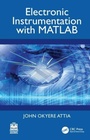
John Okyere Attia
Electronic Instrumentation with MATLAB (R)
Book
approx. 08/2026
1st Edition
CRC Press
€105.50
Not yet published
Person
John Okyere Attia is Professor Emeritus of Electrical and Computer Engineering at Prairie View A&M University. He was the Department Head of the Electrical and Computer Engineering Department from 1997 to 2013. He earned a Ph.D. in Electrical Engineering from the University of Houston, an M.S. from the University of Toronto, and a B.S. from the Kwame Nkrumah University of Science and Technology.
He has taught graduate and undergraduate courses in Electrical and Computer Engineering in the field of Electronics, Circuit Analysis, Electronic Instrumentation Systems, Digital Signal Processing, and VLSI & ULSI Design. His research interests include hands-on learning, power electronics for microgrid, innovative electronic circuit designs for radiation environment, and radiation testing methodologies of electronic devices and circuits.
He has worked on projects funded by the National Science Foundation, NASA, Texas Higher Education Coordinating Board, the Texas Workforce Commission, and Apple Inc. Attia has more than 100 technical publications. He has published refereed journal papers and refereed conference papers. In addition, he is the author
of six books published by the CRC Press. His most recent books are Electronics and Circuit Analysis Using MATLAB (R), 2nd Edition, PSPICE and MATLAB (R) for Electronics: An Integrated Approach, 2nd Edition, and Circuits and Electronics: Hands-on Learning with Analog Discovery.
He has received several honors, including the Most Outstanding Senior in the Graduating Class, the Outstanding Teacher Award, Exemplary University Achiever, and the University Leader Award. He is a member of the following honor societies: Sigma Xi, Tau Beta Pi, Kappa Alpha Kappa, and Eta Kappa Nu. In addition, he is an ABET program evaluator for Electrical and Computer Engineering programs. Furthermore, he is a senior member of the Institute of Electrical and Electronics Engineers and a registered professional engineer in the State of Texas.
He has taught graduate and undergraduate courses in Electrical and Computer Engineering in the field of Electronics, Circuit Analysis, Electronic Instrumentation Systems, Digital Signal Processing, and VLSI & ULSI Design. His research interests include hands-on learning, power electronics for microgrid, innovative electronic circuit designs for radiation environment, and radiation testing methodologies of electronic devices and circuits.
He has worked on projects funded by the National Science Foundation, NASA, Texas Higher Education Coordinating Board, the Texas Workforce Commission, and Apple Inc. Attia has more than 100 technical publications. He has published refereed journal papers and refereed conference papers. In addition, he is the author
of six books published by the CRC Press. His most recent books are Electronics and Circuit Analysis Using MATLAB (R), 2nd Edition, PSPICE and MATLAB (R) for Electronics: An Integrated Approach, 2nd Edition, and Circuits and Electronics: Hands-on Learning with Analog Discovery.
He has received several honors, including the Most Outstanding Senior in the Graduating Class, the Outstanding Teacher Award, Exemplary University Achiever, and the University Leader Award. He is a member of the following honor societies: Sigma Xi, Tau Beta Pi, Kappa Alpha Kappa, and Eta Kappa Nu. In addition, he is an ABET program evaluator for Electrical and Computer Engineering programs. Furthermore, he is a senior member of the Institute of Electrical and Electronics Engineers and a registered professional engineer in the State of Texas.
Content
1. Introduction 2. Amplifiers 3. Filters 4. Analog Signal Processing Circuits 5. Analog-to-Digital Conversion 6. Temperature Sensors 7. Displacement Sensors 8. Pressure and Force Sensors 9. Flow Sensors 10. lectro-Optical Sensors 11. Sensors for Internet of Things
