

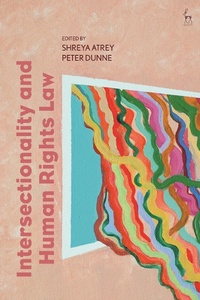
Intersectionality and Human Rights Law
1st Edition
Published on 10. December 2020
208 pages
978-1-5099-3530-7 (ISBN)
Description

This collection of essays analyses how diversity in human identity and disadvantage affects the articulation, realisation, violation and enforcement of human rights.
The question arises from the realisation that people, who are severally and severely disadvantaged because of their race, religion, gender, age, disability, sexual orientation, class etc, often find themselves at the margins of human rights; their condition seldom improved and sometimes even worsened by the rights discourse. How does one make sense of this relationship between the complexity of people's disadvantage and violation of their human rights? Does the human rights discourse, based on its universal and common values, have tools, methods or theories to capture and respond to the difference in people's lived experience of rights? Can intersectionality help in that quest? This book seeks to inaugurate this line of inquiry.
The question arises from the realisation that people, who are severally and severely disadvantaged because of their race, religion, gender, age, disability, sexual orientation, class etc, often find themselves at the margins of human rights; their condition seldom improved and sometimes even worsened by the rights discourse. How does one make sense of this relationship between the complexity of people's disadvantage and violation of their human rights? Does the human rights discourse, based on its universal and common values, have tools, methods or theories to capture and respond to the difference in people's lived experience of rights? Can intersectionality help in that quest? This book seeks to inaugurate this line of inquiry.
More details
Edition
1. Auflage
Language
English
Place of publication
London
United Kingdom
Publishing group
Bloomsbury Publishing PLC
Target group
Professional and scholarly
ISBN-13
978-1-5099-3530-7 (9781509935307)
Copyright in bibliographic data and cover images is held by Nielsen Book Services Limited or by the publishers or by their respective licensors: all rights reserved.
Schweitzer Classification
Other editions
Additional editions
Shreya Atrey | Peter Dunne
Intersectionality and Human Rights Law
Book
06/2022
Hart Publishing
€55.89
Shipment within 15-20 days
Persons
Shreya Atrey is an Associate Professor in International Human Rights Law at the University of Oxford.
Peter Dunne is a Senior Lecturer at the University of Bristol.
Peter Dunne is a Senior Lecturer at the University of Bristol.
Content
Introduction: Intersectionality from Equality to Human Rights
Shreya Atrey, University of Oxford, UK
1. Beyond Universality: An Intersectional Justification of Human Rights
Shreya Atrey, University of Oxford, UK
2. Harnessing the Full Potential of Intersectionality Theory in International Human Rights Law: Lessons from Disabled Children's Right to Education
Gauthier de Beco, University of Huddersfield, UK
3. The Potential and Pitfalls of Intersectionality in the Context of Social Rights Adjudication
Colm O'Cinneide, University College London, UK
4. The Right to Education and Substantive Equality: An Intersectional Reading
Sandra Fredman, University of Oxford, UK
5. Class, Intersectionality, the Right to Housing and the Avoidable Tragedy of Grenfell Tower
Geraldine Van Bueren QC, Queen Mary, University of London, UK
6. Intersectionality, Repeal and Reproductive Rights in Ireland
Fiona de Londras, University of Birmingham, UK
7. The Distance Between Us: Sexual and Reproductive Health Rights of Rural Women and Girls
Meghan Campbell, University of Birmingham, UK
Shreya Atrey, University of Oxford, UK
1. Beyond Universality: An Intersectional Justification of Human Rights
Shreya Atrey, University of Oxford, UK
2. Harnessing the Full Potential of Intersectionality Theory in International Human Rights Law: Lessons from Disabled Children's Right to Education
Gauthier de Beco, University of Huddersfield, UK
3. The Potential and Pitfalls of Intersectionality in the Context of Social Rights Adjudication
Colm O'Cinneide, University College London, UK
4. The Right to Education and Substantive Equality: An Intersectional Reading
Sandra Fredman, University of Oxford, UK
5. Class, Intersectionality, the Right to Housing and the Avoidable Tragedy of Grenfell Tower
Geraldine Van Bueren QC, Queen Mary, University of London, UK
6. Intersectionality, Repeal and Reproductive Rights in Ireland
Fiona de Londras, University of Birmingham, UK
7. The Distance Between Us: Sexual and Reproductive Health Rights of Rural Women and Girls
Meghan Campbell, University of Birmingham, UK
