

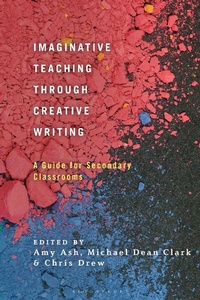
Imaginative Teaching through Creative Writing
A Guide for Secondary Classrooms
1st Edition
Published on 25. March 2021
280 pages
978-1-350-15269-4 (ISBN)
Description

Growing out of recent pedagogical developments in creative writing studies and perceived barriers to teaching the subject in secondary education schools, this book creates conversations between secondary and post-secondary teachers aimed at introducing and improving creative writing instruction in teaching curricula for young people. Challenging assumptions and lore regarding the teaching of creative writing, this book examines new and engaging techniques for infusing creative writing into all types of language arts instruction, offering inclusive and pedagogically sound alternatives that consider the needs of a diverse range of students.
With careful attention given to creative writing within current standards-based educational systems, Imaginative Teaching through Creative Writing confronts and offers solutions to the perceived difficulty of teaching the subject in such environments. Divided into two sections, section one sees post-secondary instructors address pedagogical techniques and concerns such as workshop, revision, and assessment before section two explores hands-on activities and practical approaches to instruction.
Focusing on an invaluable and underrepresented area of creative writing studies, this book begins a much-needed conversation about the future of creative writing instruction at all levels and the benefits of collaboration across the secondary/post-secondary divide.
With careful attention given to creative writing within current standards-based educational systems, Imaginative Teaching through Creative Writing confronts and offers solutions to the perceived difficulty of teaching the subject in such environments. Divided into two sections, section one sees post-secondary instructors address pedagogical techniques and concerns such as workshop, revision, and assessment before section two explores hands-on activities and practical approaches to instruction.
Focusing on an invaluable and underrepresented area of creative writing studies, this book begins a much-needed conversation about the future of creative writing instruction at all levels and the benefits of collaboration across the secondary/post-secondary divide.
More details
Edition
1. Auflage
Language
English
Place of publication
London
United Kingdom
Publishing group
Bloomsbury Publishing PLC
Target group
College/higher education
Illustrations
11 bw illus
ISBN-13
978-1-350-15269-4 (9781350152694)
Copyright in bibliographic data and cover images is held by Nielsen Book Services Limited or by the publishers or by their respective licensors: all rights reserved.
Schweitzer Classification
Other editions
Additional editions
Amy Ash | Michael Dean Clark | Chris Drew
Imaginative Teaching through Creative Writing
A Guide for Secondary Classrooms
Book
09/2022
Bloomsbury Academic
€45.20
Shipment within 15-20 days
Persons
Amy Ash is an Assistant Professor of English at Indiana State University, USA and Director of the Indiana State University Creative Writing Program. She specializes in poetry and creative writing. The author of The Open Mouth of the Vase, winner of the 2013 Cider Press Review Book Award and the 2016 Etchings Press Whirling Prize post-publication award for poetry, her work has been published in various journals and anthologies.
Michael Dean Clark is an Associate Professor of Writing at Azusa Pacific University, USA. An author of fiction and nonfiction primarily, his work has appeared in Pleiades, Jabberwock Review, The Other Journal, Angel City Review, and a number of other publications. Formerly an award-winning journalist, he is also the co-editor of Creative Writing in the Digital Age and Creative Writing Innovations (Bloomsbury, 2015).
Chris Drew is an Associate Professor of English at Indiana State University, USA, where he specializes in creative writing and secondary English teaching methods. He is an editor of Dispatches from the Classroom: Graduate Students on Creative Writing Pedagogy (Bloomsbury, 2011). His creative work has been published in Bellevue Literary Review, Quarterly West, and Mad River Review. His scholarly articles have appeared in English Leadership Quarterly, Wisconsin English Journal, Minnesota English Journal, and The Journal of Creative Writing Studies.
Michael Dean Clark is an Associate Professor of Writing at Azusa Pacific University, USA. An author of fiction and nonfiction primarily, his work has appeared in Pleiades, Jabberwock Review, The Other Journal, Angel City Review, and a number of other publications. Formerly an award-winning journalist, he is also the co-editor of Creative Writing in the Digital Age and Creative Writing Innovations (Bloomsbury, 2015).
Chris Drew is an Associate Professor of English at Indiana State University, USA, where he specializes in creative writing and secondary English teaching methods. He is an editor of Dispatches from the Classroom: Graduate Students on Creative Writing Pedagogy (Bloomsbury, 2011). His creative work has been published in Bellevue Literary Review, Quarterly West, and Mad River Review. His scholarly articles have appeared in English Leadership Quarterly, Wisconsin English Journal, Minnesota English Journal, and The Journal of Creative Writing Studies.
Content
List of Figures
List of Tables
List of Contributors
Foreword, Janelle Adsit, Humboldt State University, USA
Acknowledgements
Introduction
Part One
1. Finding Our Angels in Ourselves: Overcoming Lore and Myth to Teach Creative Writing, Stephanie Vanderslice, University of Central Arkansas, USA
2. Creativity and "Common" Sense: The Standardization of Creative Writing in the Secondary Classroom, Chris Drew, Indiana State University, USA
3. The Creative Writing Process: A View from the Classroom, Alexa Garvoille, Virginia Polytechnic Institute and State University, USA
4. "Workshop" as Verb and Environment: Imagining New Possibilities and Approaches, Amy Ash, Indiana State University, USA
5. Collaborative Worldbuilding: Bridging Critical Thinking and Creative Production, Trent Hergenrader, Rochester Institute of Technology, USA
6. Our Hidden Prime Directive: How Classism Teaches People to Leave Spaceships and Wizards Out of the Classroom, Jennifer Pullen, Ohio Northern University, USA
7. Break Stuff: The Necessity of Mistakes and the Risks that Cause Them in Creative Writing, Michael Dean Clark, Azusa Pacific University, USA
8. Freedom in Limits: Using Demi-Rubrics to Evaluate Creative Work, John Belk, Southern Utah University, USAPart Two
9. Creative Foundations: The Benefits of Prioritizing Creative Nonfiction in the Secondary Standards-Based Classroom, Sara C. Pendleton, Grace Brethren Senior High School, USA
10. Unruining Poetry, Tim Staley, Oñate High School, USA
11. The Poetry of Math and Science, Kelli Krieger, Union-Endicott Central School District, USA
12. Making Writers Out of Readers: Using Creative Writing to Deepen Literary Analysis in Secondary Settings, Heather J. Clark, Covina Unified School District, USA
1. Responsive Freedom: Creative Writing in the Advanced Placement English Literature and Composition Classroom, Amanda Clarke and Nan Cohen, Viewpoint School, USA
14. From Queen to Court Jester: Writing Multigenre Papers alongside My Students, Oona Marie Abrams, Chatham High School, USA
15. Crafting Online Story Worlds as Literary Response, Stacy Haynes-Moore, The University of Iowa and the Cedar Rapids Community School District, USA
16. Capturing Flash Fiction: Utilizing Graphics, Family, and Friends to Engage ELL Students, Mark Esperanza, Northwest Vista College and Northside Independent School District, USA
17. Yours, Mine, Ours: Collaboration and Differentiated Learning in the Creative Writing Classroom, Tanya Perkins and Josh Tolbert, Indiana University East, USA
18. NaNoWriMo and Young Writers: Using a Novel Approach to Push Students' Writing, Erik Burgeson and Tom Strous, Worthington City School District, USA
19. Beyond Brick Walls and Computer Screens: The Story of a University/Middle School Writing Partnership, Dana VanderLugt, Hudsonville Public Schools, USA and Erica Hamilton, Grand Valley State University, USA
20. Beyond the Desk: Fostering Community Engagement through Authentic Writing Experiences In and Out of the Classroom, Justin Longacre, Toledo School for the Arts, USA
Appendix
Index
List of Tables
List of Contributors
Foreword, Janelle Adsit, Humboldt State University, USA
Acknowledgements
Introduction
Part One
1. Finding Our Angels in Ourselves: Overcoming Lore and Myth to Teach Creative Writing, Stephanie Vanderslice, University of Central Arkansas, USA
2. Creativity and "Common" Sense: The Standardization of Creative Writing in the Secondary Classroom, Chris Drew, Indiana State University, USA
3. The Creative Writing Process: A View from the Classroom, Alexa Garvoille, Virginia Polytechnic Institute and State University, USA
4. "Workshop" as Verb and Environment: Imagining New Possibilities and Approaches, Amy Ash, Indiana State University, USA
5. Collaborative Worldbuilding: Bridging Critical Thinking and Creative Production, Trent Hergenrader, Rochester Institute of Technology, USA
6. Our Hidden Prime Directive: How Classism Teaches People to Leave Spaceships and Wizards Out of the Classroom, Jennifer Pullen, Ohio Northern University, USA
7. Break Stuff: The Necessity of Mistakes and the Risks that Cause Them in Creative Writing, Michael Dean Clark, Azusa Pacific University, USA
8. Freedom in Limits: Using Demi-Rubrics to Evaluate Creative Work, John Belk, Southern Utah University, USAPart Two
9. Creative Foundations: The Benefits of Prioritizing Creative Nonfiction in the Secondary Standards-Based Classroom, Sara C. Pendleton, Grace Brethren Senior High School, USA
10. Unruining Poetry, Tim Staley, Oñate High School, USA
11. The Poetry of Math and Science, Kelli Krieger, Union-Endicott Central School District, USA
12. Making Writers Out of Readers: Using Creative Writing to Deepen Literary Analysis in Secondary Settings, Heather J. Clark, Covina Unified School District, USA
1. Responsive Freedom: Creative Writing in the Advanced Placement English Literature and Composition Classroom, Amanda Clarke and Nan Cohen, Viewpoint School, USA
14. From Queen to Court Jester: Writing Multigenre Papers alongside My Students, Oona Marie Abrams, Chatham High School, USA
15. Crafting Online Story Worlds as Literary Response, Stacy Haynes-Moore, The University of Iowa and the Cedar Rapids Community School District, USA
16. Capturing Flash Fiction: Utilizing Graphics, Family, and Friends to Engage ELL Students, Mark Esperanza, Northwest Vista College and Northside Independent School District, USA
17. Yours, Mine, Ours: Collaboration and Differentiated Learning in the Creative Writing Classroom, Tanya Perkins and Josh Tolbert, Indiana University East, USA
18. NaNoWriMo and Young Writers: Using a Novel Approach to Push Students' Writing, Erik Burgeson and Tom Strous, Worthington City School District, USA
19. Beyond Brick Walls and Computer Screens: The Story of a University/Middle School Writing Partnership, Dana VanderLugt, Hudsonville Public Schools, USA and Erica Hamilton, Grand Valley State University, USA
20. Beyond the Desk: Fostering Community Engagement through Authentic Writing Experiences In and Out of the Classroom, Justin Longacre, Toledo School for the Arts, USA
Appendix
Index
