

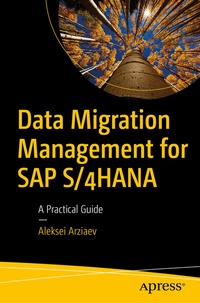
Data Migration Management for SAP S/4HANA
Description

Enhance your data transfer and storage skills with this comprehensive step-by-step guide to managing data migration for new on-premises SAP S/4HANA implementations. This book is tailored towards small to large projects, with a focus on the managerial aspects of the data migration process rather than the technical details.
You'll follow a project-led approach, enriched with a practical case study, and a comprehensive methodology for data migration planning and documentation. Athen traverse through a detailed plan on managing and documenting data migration throughout the project lifecycle. This book utilizes the general SAP Activate methodology for on-premises solutions as its foundational framework, enhancing it with specific strategies for data migration.
Structured in alignment with the project phases of the SAP Activate methodology, Data Migration Management for SAP S/4HANA methodically covers planning, organizing, and controlling the data migration process. It serves as an essential guide for professionals tasked with implementing SAP S/4HANA in their business, ensuring a thorough understanding of each data migration phase on the project.
What You'll Learn
- Significantly decrease the time needed for both the preparation and execution of data migration activities.
- Foster clear transparency in data migration processes for all stakeholders, including the customer and the project team.
- Facilitate a seamless and timely data migration process.
- Establish a benchmark for data migration management in future projects.
- Address and remedy any deficiencies in the SAP Activate methodology pertaining to data migration.
Who This Book Is For
SAP projects and data migration workstreams leads, already well-versed in SAP Activate methodology and possessing moderate experience in project and workstream management, who are seeking to enhance their skills in professionally managing data migration in implementation projects.
More details
Other editions
Additional editions
Person
Aleksei Arziaev is a senior manager at KPMG AG, where he provides expert consultancy in SAP and Financial transformation. Aleksei specializes in SAP FI/CO, SAP EPPM, data migration and cutover management. He is certified in the SAP Activate methodology and also holds the SAP FI/CO professional certification. Prior to his career in IT and SAP, Aleksei worked for 10 years in the field of strategic and operational planning in government organizations. He holds degrees in Management and Development Economics.
Content
Chapter 1: Introduction.- Chapter 2: Data Migration Scoping.- Chapter 3: Data Migration Planning and Preparation.- Chapter 4: Data Migration Design.- Chapter 5: Data Migration Testing and Validation.- Chapter 6: Actual Data Migration and Data Acceptance.- Chapter 7: Post Data Migration Activities.- Chapter 8: Conclusion.
