

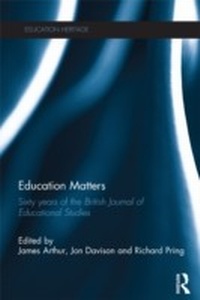
Education Matters
60 years of the British Journal of Educational Studies
1st Edition
Published on 13. February 2012
304 pages
978-1-136-34159-5 (ISBN)
Description

Education Matters draws together a selection of the most influential papers published in the British Journal of Educational Studies by many of the leading scholars in the field over the past sixty years. This unique collection of seminal articles published since the first issue of the Journal provides students and researchers in education with an informed insight and understanding of the nature the development of the field of Educational Studies in the United Kingdom since the Second World War. It also assesses the current position of Educational Studies and explores the possibilities for the development of the field in coming years.
Compiled by the journal's editors, past and present, James Arthur, Jon Davison and Richard Pring, the book illustrates the development of the field of educational studies, and the specially written Introduction contextualises the selection, whilst introducing students to the main issues and current thinking in the field.
Each of the twenty articles includes a preface which highlights the changing conceptions and development of, or consistency in, educational thought over time, as well as debates and conflicts in the seminal articles by key educational thinkers that have been published in the Journal.
Compiled by the journal's editors, past and present, James Arthur, Jon Davison and Richard Pring, the book illustrates the development of the field of educational studies, and the specially written Introduction contextualises the selection, whilst introducing students to the main issues and current thinking in the field.
Each of the twenty articles includes a preface which highlights the changing conceptions and development of, or consistency in, educational thought over time, as well as debates and conflicts in the seminal articles by key educational thinkers that have been published in the Journal.
More details
Series
Language
English
Place of publication
London
United Kingdom
Publishing group
Taylor & Francis Ltd
Target group
College/higher education
ISBN-13
978-1-136-34159-5 (9781136341595)
Copyright in bibliographic data and cover images is held by Nielsen Book Services Limited or by the publishers or by their respective licensors: all rights reserved.
Schweitzer Classification
Other editions
Additional editions
James Arthur | Jon Davison | Richard Pring
Education Matters
60 years of the British Journal of Educational Studies
Book
06/2017
1st Edition
Routledge
€75.79
Shipment within 10-20 days
James Arthur | Jon Davison | Richard Pring
Education Matters
60 years of the British Journal of Educational Studies
Book
02/2012
1st Edition
Routledge
€223.21
Shipment within 15-20 days
Persons
James Arthur is Professor of Education and Head of the School of Education, University of Birmingham, UK
Jon Davison has been professor of teacher education in four UK universities including the Institute of Education, University of London, UK where he was also Dean.
Richard Pring is Emeritus Professor of Education, Department of Education, University of Oxford, UK
Jon Davison has been professor of teacher education in four UK universities including the Institute of Education, University of London, UK where he was also Dean.
Richard Pring is Emeritus Professor of Education, Department of Education, University of Oxford, UK
Content
Introduction
Professor Richard Pring, University of Oxford, former editor of the BJES.
Part 1. The Society for Educational Studies and the BJES
James Arthur, editor of the BJES and Jon Davison, chair of the SES
Part 2. The Field of Educational Studies
James Arthur and Jon Davison
Part 3. Key articles 1952 - 2011
a) W. A. C. Stewart, 'Karl Mannheim and the Sociology of Education' (1952/3 1)
b) A. V. Judges, 'Tradition and the Comprehensive School' (1953/4 1)
c) G. Bantock, 'Fact and Value in Education' (1956/7 5,1)
d) C. Burt, 'The Examination at 11+' (1958/9 7, 2)
e) A. J. Peters, 'The Changing Idea of Technical Education' (1962/3 11, 2)
f) P. S. Wilson 'In Defence of Bingo' plus R. S. Peters 'A Rejoinder' (1967, 15, 1&2)
g) W. H. G. Armitage 'The 1870 Education Act' (1970, 18, 2)
h) J. Hull 'Christian Theology and Educational Theory: Can there be Connections? (1976 24, 2)
i) P. Broadfoot and J. Nisbet 'The Impact of Research on Educational Studies' (1981 29, 2)
j) R. F. Dearden 'Philosophy of Education 1952-1982' (1982 30, 1)
k) O. Banks, 'The Sociology of Education, 1952-1982' (1982 30, 1)
l) M. Sutherland, 'The Place of Theory of Education in Teacher Education' (1985 23, 3)
m) A. O'Hear, 'The Importance of Traditional Learning' (1987 35, 2)
n) G. McCulloch, 'City Technology Colleges: an Old Choice of School' (1989 37, 1) o) D. Carr, 'Education and Values' (1991 39, 3)
p) J. Wilson, 'Value Judgements and Educational Research' (1992 40, 4)
q) P. Scott, 'The Idea of a University in the 21st Century: A British Perspective' (1993 41, 1)
r) P. Davies, 'What is Evidence Based Education?' (1999 47, 2)
s) C. and D. Torgerson, 'The Need for Randomised Control Trials in Educational Research' (2001 49, 3)
t) T. McLaughlin, 'The Educational Importance of Ethos' (2005 53, 3)
u) A. McIntyre, 'The Very Idea of a University: Aristotle, Newman and Us' (2009 57, 4)
v) J. S. Kaminsky, 'John Dewey, Gothic and Modern' (2010 58, 3)
Afterword
James Arthur and Jon Davison
Professor Richard Pring, University of Oxford, former editor of the BJES.
Part 1. The Society for Educational Studies and the BJES
James Arthur, editor of the BJES and Jon Davison, chair of the SES
Part 2. The Field of Educational Studies
James Arthur and Jon Davison
Part 3. Key articles 1952 - 2011
a) W. A. C. Stewart, 'Karl Mannheim and the Sociology of Education' (1952/3 1)
b) A. V. Judges, 'Tradition and the Comprehensive School' (1953/4 1)
c) G. Bantock, 'Fact and Value in Education' (1956/7 5,1)
d) C. Burt, 'The Examination at 11+' (1958/9 7, 2)
e) A. J. Peters, 'The Changing Idea of Technical Education' (1962/3 11, 2)
f) P. S. Wilson 'In Defence of Bingo' plus R. S. Peters 'A Rejoinder' (1967, 15, 1&2)
g) W. H. G. Armitage 'The 1870 Education Act' (1970, 18, 2)
h) J. Hull 'Christian Theology and Educational Theory: Can there be Connections? (1976 24, 2)
i) P. Broadfoot and J. Nisbet 'The Impact of Research on Educational Studies' (1981 29, 2)
j) R. F. Dearden 'Philosophy of Education 1952-1982' (1982 30, 1)
k) O. Banks, 'The Sociology of Education, 1952-1982' (1982 30, 1)
l) M. Sutherland, 'The Place of Theory of Education in Teacher Education' (1985 23, 3)
m) A. O'Hear, 'The Importance of Traditional Learning' (1987 35, 2)
n) G. McCulloch, 'City Technology Colleges: an Old Choice of School' (1989 37, 1) o) D. Carr, 'Education and Values' (1991 39, 3)
p) J. Wilson, 'Value Judgements and Educational Research' (1992 40, 4)
q) P. Scott, 'The Idea of a University in the 21st Century: A British Perspective' (1993 41, 1)
r) P. Davies, 'What is Evidence Based Education?' (1999 47, 2)
s) C. and D. Torgerson, 'The Need for Randomised Control Trials in Educational Research' (2001 49, 3)
t) T. McLaughlin, 'The Educational Importance of Ethos' (2005 53, 3)
u) A. McIntyre, 'The Very Idea of a University: Aristotle, Newman and Us' (2009 57, 4)
v) J. S. Kaminsky, 'John Dewey, Gothic and Modern' (2010 58, 3)
Afterword
James Arthur and Jon Davison
