

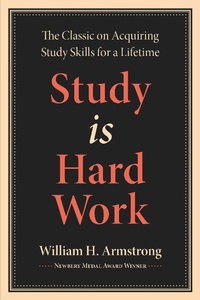
Study Is Hard Work
Description

The classic guide for the college-bound student on how to acquire and maintain good study skills. Originally published in 1956, but just as useful and relevant today, this book covers everything from developing a vocabulary to taking tests and using libraries.
Acquiring and maintaining good study skills is, as the author says, hard work. But it is also the only way to succeed. William H. Armstrong was himself a teacher (as well as author of the Newbery Medal-winning novel Sounder) and this book comes from his own experience in the classroom. Only a teacher would make the observation, "It is paradoxical that listening is the easiest way to learn but the hardest study skill to master."
Chapters includes Learning to Listen, The Desire to Learn, Getting More From What You Read, Putting Ideas in Order, Letting Mathematics Serve You, How to Study Science, and Tests and Examinations.
Armstrong wants all students to develop successful habits. As he writes, "The beginning of success is interest. Being interested is the basic obligation that is necessary for success in whatever work you do." Work is always necessary for success but Amstrong's guidance and insight will make the work much less hard and much more rewarding.
More details
Person
William H. Armstrong is best known for his 1970 Newbery Award winner, Sounder, and its sequel, Sour Land. The recipient of the National School Bell Award, Mr. Armstrong taught history at The Kent School for over fifty years. He died at home in 1999.
Content
- Intro
- Half-Title Page
- Other Books
- Title Page
- Copyright
- Contents
- Foreword to the First Edition
- Introduction
- 1. Learning to Listen
- 2. The Desire to Learn
- 3. Using the Tools
- 4. Getting More From What You Read
- 5. Developing a Vocabulary
- 6. Putting Ideas in Order
- 7. Books and the Library
- 8. Written Work
- 9. Acquiring Skill in Methods
- 10. How to Study Languages
- 11. Letting Mathematics Serve You
- 12. How to Study Science
- 13. Getting the Most Out of History
- 14. Tests and Examinations
- About the Author
