

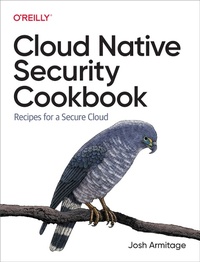
Cloud Native Security Cookbook
Description

With the rise of the cloud, every aspect of IT has been shaken to its core. The fundamentals for building systems are changing, and although many of the principles that underpin security still ring true, their implementation has become unrecognizable. This practical book provides recipes for AWS, Azure, and GCP to help you enhance the security of your own cloud native systems.
Based on his hard-earned experience working with some of the world''s biggest enterprises and rapidly iterating startups, consultant Josh Armitage covers the trade-offs that security professionals, developers, and infrastructure gurus need to make when working with different cloud providers. Each recipe discusses these inherent compromises, as well as where clouds have similarities and where they''re fundamentally different.
- Learn how the cloud provides security superior to what was achievable in an on-premises world
- Understand the principles and mental models that enable you to make optimal trade-offs as part of your solution
- Learn how to implement existing solutions that are robust and secure, and devise design solutions to new and interesting problems
- Deal with security challenges and solutions both horizontally and vertically within your business
More details
Other editions
Additional editions
Content
- Intro
- Copyright
- Table of Contents
- Preface
- Conventions Used in This Book
- Using Code Examples
- O'Reilly Online Learning
- How to Contact Us
- Acknowledgments
- Chapter 1. Security in the Modern Organization
- 1.1 Why Security Is Critical
- 1.2 What Is Meant by Cloud Native Security?
- The Beginnings of the Cloud
- Old Practices in the New Reality
- 1.3 Where Security Fits in the Modern Organization
- 1.4 The Purpose of Modern Security
- 1.5 DevSecOps
- What Is DevOps?
- What Is DevSecOps?
- Version Control
- 1.6 How to Measure the Impact of Security
- Time to Notify for Known Vulnerabilities
- Time to Fix a Known Vulnerability
- Service Impacts Incurred Through Security Vulnerabilities
- Attempted Breaches Prevented
- Compliance Statistics
- Percentage of Changes Rejected
- 1.7 The Principles of Security
- Least Privilege
- Only as Strong as Your Weakest Link
- Defense in Depth
- Security Is Job Zero
- Quality Is Built In
- Chapter Summary
- Chapter 2. Setting Up Accounts and Users
- 2.1 Scalable Project Structures on GCP
- Problem
- Solution
- Discussion
- Summarizing the Recipe
- 2.2 Scalable Account Structures on AWS
- Problem
- Solution
- Discussion
- Summarizing the Recipe
- 2.3 Scalable Subscription Structures on Azure
- Problem
- Solution
- Discussion
- Summarizing the Recipe
- 2.4 Region Locking on GCP
- Problem
- Solution
- Discussion
- 2.5 Region Locking on AWS
- Problem
- Solution
- Discussion
- 2.6 Region Locking on Azure
- Problem
- Solution
- Discussion
- 2.7 Centralizing Users on GCP
- Problem
- Solution
- Discussion
- 2.8 Centralizing Users on AWS
- Problem
- Solution
- Discussion
- 2.9 Centralizing Users on Azure
- Problem
- Solution
- Discussion
- Chapter 3. Getting Security Visibility at Scale
- 3.1 Building a Cloud Native Security Operations Center on GCP
- Problem
- Solution
- Discussion
- Summarizing the Recipe
- 3.2 Building a Cloud Native Security Operations Center on AWS
- Problem
- Solution
- Discussion
- Summarizing the Recipe
- 3.3 Building a Cloud Native Security Operations Center on Azure
- Problem
- Solution
- Discussion
- Summarizing the Recipe
- 3.4 Centralizing Logs on GCP
- Problem
- Solution
- Discussion
- Summarizing the Recipe
- 3.5 Centralizing Logs on AWS
- Problem
- Solution
- Discussion
- Summarizing the Recipe
- 3.6 Centralizing Logs on Azure
- Problem
- Solution
- Discussion
- Summarizing the Recipe
- 3.7 Log Anomaly Alerting on GCP
- Problem
- Solution
- Discussion
- Summarizing the Recipe
- 3.8 Log Anomaly Alerting on AWS
- Problem
- Solution
- Discussion
- Summarizing the Recipe
- 3.9 Log Anomaly Alerting on Azure
- Problem
- Solution
- Discussion
- Summarizing the Recipe
- 3.10 Building an Infrastructure Registry on GCP
- Problem
- Solution
- Discussion
- Summarizing the Recipe
- 3.11 Building an Infrastructure Registry on AWS
- Problem
- Solution
- Discussion
- Summarizing the Recipe
- 3.12 Building an Infrastructure Registry on Azure
- Problem
- Solution
- Discussion
- Summarizing the Recipe
- Chapter 4. Protecting Your Data
- 4.1 Encrypting Data at Rest on GCP
- Problem
- Solution
- Discussion
- Summary
- 4.2 Encrypting Data at Rest on AWS
- Problem
- Solution
- Discussion
- Summary
- 4.3 Encrypting Data at Rest on Azure
- Problem
- Solution
- Discussion
- Summary
- 4.4 Encrypting Data on GCP with Your Own Keys
- Problem
- Solution
- Discussion
- Summary
- 4.5 Encrypting Data on AWS with Your Own Keys
- Problem
- Solution
- Discussion
- Summary
- 4.6 Encrypting Data on Azure with Your Own Keys
- Problem
- Solution
- Discussion
- Summary
- 4.7 Enforcing In-Transit Data Encryption on GCP
- Problem
- Solution
- Discussion
- Summary
- 4.8 Enforcing In-Transit Data Encryption on AWS
- Problem
- Solution
- Discussion
- Summary
- 4.9 Enforcing In-Transit Data Encryption on Azure
- Problem
- Solution
- Discussion
- Summary
- 4.10 Preventing Data Loss on GCP
- Problem
- Solution
- Discussion
- Summary
- 4.11 Preventing Data Loss on AWS
- Problem
- Solution
- Discussion
- Summary
- 4.12 Preventing Data Loss on Azure
- Problem
- Solution
- Discussion
- Summary
- Chapter 5. Secure Networking
- 5.1 Networking Foundations on GCP
- Problem
- Solution
- Discussion
- Summary
- 5.2 Networking Foundations on AWS
- Problem
- Solution
- Discussion
- Summary
- 5.3 Networking Foundations on Azure
- Problem
- Solution
- Discussion
- Summary
- 5.4 Enabling External Access on GCP
- Problem
- Solution
- Discussion
- Summary
- 5.5 Enabling External Access on AWS
- Problem
- Solution
- Discussion
- Summary
- 5.6 Enabling External Access on Azure
- Problem
- Solution
- Discussion
- Summary
- 5.7 Allowing Access to Internal Resources on GCP
- Problem
- Solution
- Discussion
- Summary
- 5.8 Allowing Access to Internal Resources on AWS
- Problem
- Solution
- Discussion
- Summary
- 5.9 Allowing Access to Internal Resources on Azure
- Problem
- Solution
- Discussion
- Summary
- 5.10 Controlling External Network Connectivity on GCP
- Problem
- Solution
- Discussion
- Summary
- 5.11 Controlling External Network Connectivity on AWS
- Problem
- Solution
- Discussion
- Summary
- 5.12 Controlling External Network Connectivity on Azure
- Problem
- Solution
- Discussion
- Summary
- 5.13 Private Application Access on GCP
- Problem
- Solution
- Discussion
- Summary
- 5.14 Private Application Access on AWS
- Problem
- Solution
- Discussion
- Summary
- 5.15 Private Application Access on Azure
- Problem
- Solution
- Discussion
- Summary
- Chapter 6. Infrastructure as Code
- 6.1 Building Secure Infrastructure Defaults on GCP
- Problem
- Solution
- Discussion
- Summary
- 6.2 Building Secure Infrastructure Defaults on AWS
- Problem
- Solution
- Discussion
- Summary
- 6.3 Building Secure Infrastructure Defaults on Azure
- Problem
- Solution
- Discussion
- Summary
- 6.4 Functions as a Service on GCP
- Problem
- Solution
- Discussion
- Summary
- 6.5 Functions as a Service on AWS
- Problem
- Solution
- Discussion
- Summary
- 6.6 Functions as a Service on Azure
- Problem
- Solution
- Discussion
- Summary
- 6.7 Robust Deployment on GCP
- Problem
- Solution
- Discussion
- Summary
- 6.8 Robust Deployment on AWS
- Problem
- Solution
- Discussion
- Summary
- 6.9 Robust Deployment on Azure
- Problem
- Solution
- Discussion
- Summary
- 6.10 Deployment at Scale on GCP
- Problem
- Solution
- Discussion
- Summary
- 6.11 Deployment at Scale on AWS
- Problem
- Solution
- Discussion
- Summary
- 6.12 Deployment at Scale on Azure
- Problem
- Solution
- Discussion
- Summary
- Chapter 7. Compliance as Code
- 7.1 Labeling Resources on GCP
- Problem
- Solution
- Discussion
- Summary
- 7.2 Tagging Resources on AWS
- Problem
- Solution
- Discussion
- Summary
- 7.3 Tagging Resources on Azure
- Problem
- Solution
- Discussion
- Summary
- 7.4 Detecting Noncompliant Infrastructure on GCP
- Problem
- Solution
- Discussion
- Summary
- 7.5 Detecting Noncompliant Infrastructure on AWS
- Problem
- Solution
- Discussion
- Summary
- 7.6 Detecting Noncompliant Infrastructure on Azure
- Problem
- Solution
- Discussion
- Summary
- 7.7 Preventing Noncompliant Infrastructure on GCP
- Problem
- Solution
- Discussion
- Summary
- 7.8 Preventing Noncompliant Infrastructure on AWS
- Problem
- Solution
- Discussion
- Summary
- 7.9 Preventing Noncompliant Infrastructure on Azure
- Problem
- Solution
- Discussion
- Summary
- 7.10 Remediating Noncompliant Infrastructure on GCP
- Problem
- Solution
- Discussion
- Summary
- 7.11 Remediating Noncompliant Infrastructure on AWS
- Problem
- Solution
- Discussion
- Summary
- 7.12 Remediating Noncompliant Infrastructure on Azure
- Solution
- Discussion
- Summary
- Chapter 8. Providing Internal Security Services
- 8.1 Protecting Security Assets and Controls on GCP
- Problem
- Solution
- Discussion
- Summary
- 8.2 Protecting Security Assets and Controls on AWS
- Problem
- Solution
- Discussion
- Summary
- 8.3 Protecting Security Assets and Controls on Azure
- Problem
- Solution
- Discussion
- Summary
- 8.4 Understanding Machine Status at Scale on GCP
- Problem
- Solution
- Discussion
- Summary
- 8.5 Understanding Machine Status at Scale on AWS
- Problem
- Solution
- Discussion
- Summary
- 8.6 Understanding Machine Status at Scale on Azure
- Problem
- Solution
- Discussion
- Summary
- 8.7 Patching at Scale on GCP
- Problem
- Solution
- Discussion
- Summary
- 8.8 Patching at Scale on AWS
- Problem
- Solution
- Discussion
- Summary
- 8.9 Patching at Scale on Azure
- Problem
- Solution
- Discussion
- Summary
- 8.10 Data Backup on GCP
- Problem
- Solution
- Discussion
- Summary
- 8.11 Data Backup on AWS
- Problem
- Solution
- Discussion
- Summary
- 8.12 Data Backup on Azure
- Problem
- Solution
- Discussion
- Summary
- Chapter 9. Enabling Teams
- 9.1 Enabling Project Sharing on GCP
- Problem
- Solution
- Discussion
- Summary
- 9.2 Enabling Account Sharing on AWS
- Problem
- Solution
- Discussion
- Summary
- 9.3 Enabling Resource Group Sharing on Azure
- Problem
- Solution
- Discussion
- Summary
- 9.4 Application Security Scanning on GCP
- Problem
- Solution
- Discussion
- Summary
- 9.5 Application Security Scanning on AWS
- Problem
- Solution
- Discussion
- Summary
- 9.6 Application Security Scanning on Azure
- Problem
- Solution
- Discussion
- Summary
- Chapter 10. Security in the Future
- 10.1 The Infinite Game
- Zero Trust
- Supply Chain Security
- 10.2 Building Capability
- 10.3 Building Situational Awareness
- 10.4 Conclusion
- Chapter 11. Terraform Primer
- 11.1 Authenticating with GCP
- 11.2 Authenticating with AWS
- 11.3 Authenticating with Azure
- Index
- About the Author
