

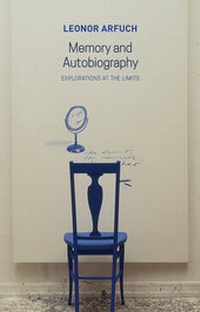
Memory and Autobiography
Explorations at the Limits
1st Edition
Published on 6. August 2020
180 pages
978-1-5095-4378-6 (ISBN)
Description

This book by one of Latin America's leading cultural theorists examines the place of the subject and the role of biographical and autobiographical genres in contemporary culture.
Arfuch argues that the on-going proliferation of private and intimate stories - what she calls the 'biographical space' - can be seen as symptomatic of the impersonalizing dynamics of contemporary times. Autobiographical genres, however, harbour an intersubjective dimension. The 'I' who speaks wants to be heard by another, and the other who listens discovers in autobiography possible points of identification. Autobiographical genres, including those that border on fiction, therefore become spaces in which the singularity of experience opens onto the collective and its historicity in ways that allow us to reflect on the ethical, political, and aesthetic dimensions not only of self-representation but also of life itself.
Opening up debate through juxtaposition and dialogue, Arfuch's own poetic writing moves freely from the Holocaust to Argentina's last dictatorship and its traumatic memories, and then to the troubled borderlands between Mexico and the United States to show how artists rescue shards of memory that would otherwise be relegated to the dustbin of history. In so doing, she makes us see not only how challenging it is to represent past traumas and violence but also how vitally necessary it is to do so as a political strategy for combating the tides of forgetting and for finding ways of being in common.
Arfuch argues that the on-going proliferation of private and intimate stories - what she calls the 'biographical space' - can be seen as symptomatic of the impersonalizing dynamics of contemporary times. Autobiographical genres, however, harbour an intersubjective dimension. The 'I' who speaks wants to be heard by another, and the other who listens discovers in autobiography possible points of identification. Autobiographical genres, including those that border on fiction, therefore become spaces in which the singularity of experience opens onto the collective and its historicity in ways that allow us to reflect on the ethical, political, and aesthetic dimensions not only of self-representation but also of life itself.
Opening up debate through juxtaposition and dialogue, Arfuch's own poetic writing moves freely from the Holocaust to Argentina's last dictatorship and its traumatic memories, and then to the troubled borderlands between Mexico and the United States to show how artists rescue shards of memory that would otherwise be relegated to the dustbin of history. In so doing, she makes us see not only how challenging it is to represent past traumas and violence but also how vitally necessary it is to do so as a political strategy for combating the tides of forgetting and for finding ways of being in common.
All prices
More details
Other editions
Additional editions
Book
08/2020
1st Edition
Polity Press
€60.50
Shipment within 15-20 days
Book
08/2020
1st Edition
Polity Press
€22.00
Shipment within 15-20 days
Persons
Leonor Arfuch is a cultural theorist and researcher at the University of Buenos Aires.
Content
Acknowledgements
Introduction by Michael Lazzara
Prologue
I. A Beginning
II. The Gaze as Autobiography: Time, place, objects
1. Journeys: time, place
2. Objects, memory
3. Biographies / autobiographies
4. Recapitulations
III. Memory and Image
IV. Women Who Narrate: Autobiography and Traumatic Memories
1. About narration
2. Biography, memory
3. Being and the limit
4. (In)conclusions
V. Political Violence, Autobiography and Testimony
1. The tone of the debate
2. Colophon
VI. The Threshold, the Frontier. Explorations in the Limits
1. Language and transgression
2. Art on the frontier
3. Public art / critical art
VII. The Name, the Number
1. On the massacre
2. The distance of the number
3. Ethics and responsibility
4. Naming
5. Silence, names
Bibliography
Index
Introduction by Michael Lazzara
Prologue
I. A Beginning
II. The Gaze as Autobiography: Time, place, objects
1. Journeys: time, place
2. Objects, memory
3. Biographies / autobiographies
4. Recapitulations
III. Memory and Image
IV. Women Who Narrate: Autobiography and Traumatic Memories
1. About narration
2. Biography, memory
3. Being and the limit
4. (In)conclusions
V. Political Violence, Autobiography and Testimony
1. The tone of the debate
2. Colophon
VI. The Threshold, the Frontier. Explorations in the Limits
1. Language and transgression
2. Art on the frontier
3. Public art / critical art
VII. The Name, the Number
1. On the massacre
2. The distance of the number
3. Ethics and responsibility
4. Naming
5. Silence, names
Bibliography
Index
