

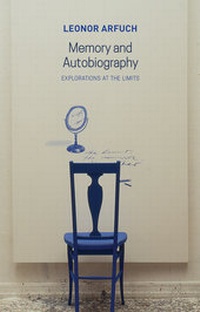
Memory and Autobiography
Description

Arfuch argues that the on-going proliferation of private and intimate stories - what she calls the 'biographical space' - can be seen as symptomatic of the impersonalizing dynamics of contemporary times. Autobiographical genres, however, harbour an intersubjective dimension. The 'I' who speaks wants to be heard by another, and the other who listens discovers in autobiography possible points of identification. Autobiographical genres, including those that border on fiction, therefore become spaces in which the singularity of experience opens onto the collective and its historicity in ways that allow us to reflect on the ethical, political, and aesthetic dimensions not only of self-representation but also of life itself.
Opening up debate through juxtaposition and dialogue, Arfuch's own poetic writing moves freely from the Holocaust to Argentina's last dictatorship and its traumatic memories, and then to the troubled borderlands between Mexico and the United States to show how artists rescue shards of memory that would otherwise be relegated to the dustbin of history. In so doing, she makes us see not only how challenging it is to represent past traumas and violence but also how vitally necessary it is to do so as a political strategy for combating the tides of forgetting and for finding ways of being in common.
All prices
More details
Other editions
Additional editions
Persons
Content
Introduction by Michael Lazzara
Prologue
I. A Beginning
II. The Gaze as Autobiography: Time, place, objects
1. Journeys: time, place
2. Objects, memory
3. Biographies / autobiographies
4. Recapitulations
III. Memory and Image
IV. Women Who Narrate: Autobiography and Traumatic Memories
1. About narration
2. Biography, memory
3. Being and the limit
4. (In)conclusions
V. Political Violence, Autobiography and Testimony
1. The tone of the debate
2. Colophon
VI. The Threshold, the Frontier. Explorations in the Limits
1. Language and transgression
2. Art on the frontier
3. Public art / critical art
VII. The Name, the Number
1. On the massacre
2. The distance of the number
3. Ethics and responsibility
4. Naming
5. Silence, names
Bibliography
Index
Introduction
Leonor Arfuch is one of the founding intellectuals of post-dictatorship thought in Argentina. Her work, like that of any great theoretician or thinker, reads like a gradual unfolding and deepening of certain questions that seem to have been there from the very beginning - questions about politics, art, language, memory, the image, ethics and the self.
Having lived through the tumultuous years of military dictatorship in her country (1976-1983) - years in which the persecution of leftist militants, torture, forced disappearance, exile and the kidnapping of children were commonplace - Arfuch's critical passions emerged as a response to a present in crisis, as a means to think through that present and intervene in it so as to open greater spaces for the democratization of thought and political action. It therefore shouldn't be surprising that a beautifully edited book she published in 2005 bears the title Pensar este tiempo: espacios, afectos, pertenencias (To Think This Time: Space, Affections, Belonging).1 Edited during an academic stay in 2004 as a fellow of the British Academy, the book brings together essays by prominent intellectuals of Great Britain and continental Europe (Scott Lash, Doreen Massey, William Rowe, Chantal Mouffe and others) in an exploration of the relationships among politics, emotions and aesthetics in a political present in which the social bond is under siege by conservative political forces and the power of capital. Arfuch's vision leaves no doubt about the far-reaching implications of her theoretical contributions and intellectual inquiry. The book's title is telling. To think about this time, our time - a time of crisis, inequality, globalization, capital, war, displacement of peoples, gender inequity, racism and xenophobia - drives her critical act and nourishes her writing to this day. In this sense, the problems she addresses are not just those of Argentina but those of Latin America and the world, always attentive to how here and there, you and I, connect with or diverge from one another.
Like many thinkers 'schooled' under dictatorship, Leonor Arfuch was, in a certain sense and by necessity, an autodidact. From the mid-1960s until the early 1970s, she expressed her political commitments by association with the left. Persecution, of course, was a frequent and constant threat in those years against anyone who openly identified with the left, and universities did not escape the repression. In an environment in which many university professors had been expelled from their posts or suffered direct reprisals by the military junta and its henchmen, Arfuch completed her undergraduate studies in literature at the University of Buenos Aires while the regime was still in power. Though her life in those years transpired with a certain degree of 'normalcy', a thoroughly violent atmosphere, coupled with her personal history of militancy, left her acutely aware of what was happening around her and inspired in her both a tenacious rebelliousness and a desire to critique that have marked her professional trajectory and writings. Under dictatorship, Arfuch worked with important mentors such as the famed Argentine critic Josefina Ludmer (1939-2016), whose 'underground' study groups became lovingly known in Argentina as the 'university of the catacombs' (la universidad de las catacumbas). In such spaces, many of the country's foremost intellectuals, like Arfuch, found their intellectual beginnings. With her extracurricular mentors she discovered Lacanian psychoanalysis, literary theory and the French School of semiotics and discourse analysis, among other subjects.
With the dawn of democracy in 1983, the Argentine military junta languished disgraced because of its loss of the war in the Malvinas Islands; this dire loss of prestige paved the way for an initial wave of public discussion on memory, human rights and the need to address crimes that had occurred in Argentina's recent past. In a historical moment in which truth and justice were topics on everyone's lips, in which public trials of the military were recently underway, and in which a truth commission had been convened that would later produce the landmark Never Again Report (Nunca Más, 1984), Leonor Arfuch launched her formal academic career as a professor and researcher in the Department of Sociology. By 1988, she had also been appointed as a professor of Communication in Graphic Design. Such a position might seem unusual for someone whose formation was largely influenced by discourse analysis, sociology, language and theory. Yet all of that background served to fuel hybrid, creative, interdisciplinary thinking, something that was particularly noteworthy in a political environment that, by that time, was marked by conservative backlash. We can't forget that the late 1980s and the entire decade of the 1990s were characterized by the privatization of industry, the advancement of neoliberalism and the curtailment of much of the progress that had been made to that point in the areas of truth, justice and reparations for the dictatorship's victims; this same period also saw the approval of Argentina's 'Full Stop' (Ley de Punto Final) and 'Due Obedience' (Ley de Obediencia Debida) laws, which essentially put an end to the possibility of trials until the mid-2000s.2 In that context, Arfuch championed the design of the 'Cultural Critique' course at UBA, which pioneered the idea that critiques of visual communication, art and graphic design could be applied to the study of areas as diverse as education, communication and memory. These new approaches - and the emergence of cultural critique as a unique mode of inquiry that could be deployed to unpack the complex relationships among politics, aesthetics, ethics and society - impacted an entire generation of students and faculty and left an indelible mark on the tenor of Argentine intellectual life from that moment onwards.
Arfuch's earliest critical work was born in the time of 'democratic spring', a time that, in her own words, saw the 'semiotic opening of physical meeting places in the city: the street, the plaza, cafés, tables on the sidewalk, and bookstores'.3 It was a time in which many voices that had once been silenced re-emerged and began to be heard again: voices of Argentinians who had lived for years in exile or of those who had survived torture or suffered first-hand in the country's vast network of detention centres. This cacophony of voices spoke in genres ranging from testimonios to memoirs to interviews (both in the written press and on television or the radio), revealing intimate aspects of experience that gave substance and depth to Argentinians' understanding of history and attuned them to the many challenges that lay ahead.
From a young age, Arfuch had been fascinated by journalism - in fact, in the mid-1960s she thought she might become a journalist. That early passion never left her and perhaps inspired her first two major works, La interioridad pública (Public Intimacy, 1992) and La entrevista: una invención dialógica (The Interview: A Dialogic Invention, 1995), both of which engage the 'return of the subject' that dominated the social sciences in the 1980s.4 Specifically, Arfuch fixed her critical gaze on how this 'return of the subject' took shape in dialogue with public narratives around the economy, human rights and democracy in post-dictatorship Argentina. Her reflections on the interview as a 'speech genre', in the Bakhtinian sense, gave us the first ever, comprehensive, semiotic and interdisciplinary study to probe the dynamics of the interview: its interlocutors, its power differentials, its silences, its hidden meanings, stagings and performative aspects. In short, the interview appears in Arfuch as an intersubjective genre, a dialogic form in which the self acknowledges the other as radical difference and in which responsibility and ethics (or the lack thereof) play key mediating roles.
Arfuch's early work on subjectivity, intersubjectivity and ethics set the stage for a major expansion of her inquiry into first-person genres that would follow on the heels of her first two books. That expansion led her to coin a critical concept that has now become the centrepiece of her work and has gained her notoriety throughout Latin America and beyond: the biographical space.
In her seminal book of 2002, El espacio biográfico: dilemas de la subjetividad contemporánea (The Biographical Space: Dilemmas of Contemporary Subjectivity), Arfuch examines the place of the subject and the role of biographical and autobiographical genres within contemporary culture, arguing that such forms of expression, which range from interviews, autobiographies, memoirs and testimonios to talk shows, reality shows, subjective documentary films, social media and autoficciones, are part of the structure of feeling of the contemporary era and have proliferated to such an extreme that they can be understood as both symptomatic of and contributors to a reconfiguration of subjectivity itself.5 She holds that the contemporary ubiquity of private and intimate histories can be read, in part, as a countervailing force to the impersonalizing dynamics of market logics in the neoliberal era....
