

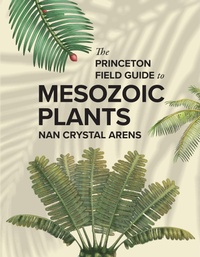
The Princeton Field Guide to Mesozoic Plants
1st Edition
Published on 25. November 2025
208 pages
978-0-691-27249-8 (ISBN)
Description

A dazzlingly illustrated guide to the plant life of the dinosaur age, from intricate ferns to the most majestic megaflora
The Mesozoic was dominated by a spectacular array of flora, from ferns, conifers, and cycads to ginkgos and flowering plants, as well as some enigmatic species with no modern-day descendants. This wide-ranging illustrated guide provides an unparalleled, in-depth look at the era's extraordinary plant life, exploring its natural history, biology, and evolution over a span of 185 million years. Blending the latest discoveries in paleontology with informative profiles of extinct species and their living descendants, The Princeton Field Guide to Mesozoic Plants is a one-of-a-kind reference to the botanical wonders of the prehistoric world. - Features hundreds of breathtaking illustrations, from life studies and scenic landscapes to detailed sketches of representative species
- Introduces the history of plant paleontology and the dating, geography, and extinction of Mesozoic flora
- Profiles hundreds of Mesozoic species, tracing the evolutionary relationships of fossil plants with living ones
- Discusses photosynthesis, reproduction, growth, climate, plant communication, partnerships with fungi and animals, and conservation
- Reveals how Mesozoic plants evolved in response to predation and changing environmental conditions
- Journeys through the forests of the Triassic, Jurassic, and Cretaceous periods
- A must-have guide for anyone interested in the lost world of the dinosaurs
The Mesozoic was dominated by a spectacular array of flora, from ferns, conifers, and cycads to ginkgos and flowering plants, as well as some enigmatic species with no modern-day descendants. This wide-ranging illustrated guide provides an unparalleled, in-depth look at the era's extraordinary plant life, exploring its natural history, biology, and evolution over a span of 185 million years. Blending the latest discoveries in paleontology with informative profiles of extinct species and their living descendants, The Princeton Field Guide to Mesozoic Plants is a one-of-a-kind reference to the botanical wonders of the prehistoric world. - Features hundreds of breathtaking illustrations, from life studies and scenic landscapes to detailed sketches of representative species
- Introduces the history of plant paleontology and the dating, geography, and extinction of Mesozoic flora
- Profiles hundreds of Mesozoic species, tracing the evolutionary relationships of fossil plants with living ones
- Discusses photosynthesis, reproduction, growth, climate, plant communication, partnerships with fungi and animals, and conservation
- Reveals how Mesozoic plants evolved in response to predation and changing environmental conditions
- Journeys through the forests of the Triassic, Jurassic, and Cretaceous periods
- A must-have guide for anyone interested in the lost world of the dinosaurs
More details
Other editions
Additional editions
Nan Crystal Arens
The Princeton Field Guide to Mesozoic Plants
Book
11/2025
Princeton University Press
€37.50
Shipment within 10-20 days
Persons
Nan Crystal Arens is professor of geoscience at Hobart and William Smith Colleges and former associate editor of the American Fern Journal. She is a trustee of the Paleontological Research Institution.
Content
- Cover
- Contents
- Preface
- Acknowledgments
- Introduction
- History of Discovery and Research
- What Plants Lived in the Mesozoic?
- Age Dating Mesozoic Plants
- Geography and Climate
- Extinction and Recovery
- After the Mesozoic
- Biology
- Making Food: Photosynthesis
- Moving Fluids without a Heart: Water and Sap
- Life Cycle and Reproduction
- Sensing and Responding to the Environment
- Living Together in Communities
- Growth
- Modular Growth in Plants
- Building the Variety of Plant Form with Nodes and Internodes
- Many Ways to Build a Tree
- Evolving in Response to the Environment
- How Evolution Happens
- Environmental Forces Shaping Plants
- Mesozoic Climate Shapes Plants
- Earth's Atmosphere and Climate Equilibria
- Estimating Carbon Dioxide Levels in the Mesozoic Atmosphere
- Carbon Dioxide Levels Translate to Climate
- Complex Controls on Greenhouse Gases
- Oxygen, Temperature, and Wildfire
- Climate, Wildfire, and the Flowering Plant Revolution
- A Guided Walk through the Mesozoic Forests
- Triassic and Jurassic
- Early Cretaceous
- Late Cretaceous
- If Flowering Plants Had Not Become Dominant . . .
- Flowering Plants as Resources for Animals
- Mesozoic Plant Conservation
- Taxus: A Treatment for Cancer
- Cycads: Ancient Cultural Connection and Modern Exploitation
- Ginkgo: A Sacred Plant in Southeast Asia
- Ephedra: A Worldwide Medicine
- Kauri: A Race to Save Mesozoic Giants
- Where to Find Mesozoic Plants
- How Plants Become Fossils
- Triassic Plant Fossil Hot Spots
- Jurassic Plant Fossil Hot Spots
- Cretaceous Plant Fossil Hot Spots
- Using the Group and Species Descriptions
- Naming Fossil Plants
- Plant Parts, Fossil Taxa, and a "Whole-Plant Concept
- Understanding Evolutionary Relationships
- Information Provided with Each Entry
- Group and Species Descriptions
- Plants that Reproduce with Spores
- Cycads
- Ginkgos and Relatives
- Conifers
- Enigmatic Seed Plants with Mesozoic Roots
- Flowering Plants
- Further Reading
- Index
