

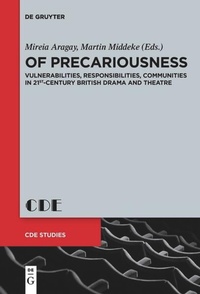
Of Precariousness
Description

Drawing primarily on Judith Butler's, Jacques Derrida's, Emmanuel Levinas's and Jean-Luc Nancy's reflections on precariousness/precarity, the Self and the Other, ethical responsibility/obligation, forgiveness, hos(ti)pitality and community, the essays in this volume examine the various ways in which contemporary British drama and theatre engage with 'the precarious'. Crucially, what emerges from the discussion of a wide range of plays - including Jez Butterworth's Jerusalem , Caryl Churchill's Here We Go , Martin Crimp's Fewer Emergencies and In the Republic of Happiness , Tim Crouch's The Author , Forced Entertainment's Tomorrow's Parties , David Greig's The American Pilot and The Events , Dennis Kelly's Love and Money , Mark Ravenhill's Shoot/Get Treasure/Repeat , Philip Ridley's Mercury Fur , Robin Soans's Talking to Terrorists , Simon Stephens's Pornography , theTheatre Uncut project, debbie tucker green's dirty butterfly and Laura Wade's Posh - is the observation that contemporary (British) drama and theatre often realises its thematic and formal/structural potential to the full precisely by reflecting upon the category and the episteme of precariousness, and deliberately turning audience members into active participants in the process of negotiating ethical agency.
More details
Other editions
Additional editions
Persons
Mireia Aragay , University of Barcelona, Spain; Martin Middeke , University of Augsburg, Germany.
Content
- Intro
- Acknowledgements
- Table of Contents
- Precariousness in Drama and Theatre: An Introduction
- On the Threshold: Precarious Hospitalities as Utopian Imaginings in Pornography, Fewer Emergencies and The American Pilot
- Staging Terror and Precariousness in Simon Stephens's Pornography and Mark Ravenhill's Shoot/Get Treasure/Repeat
- Staging Hobbes, or: Theseus Goes to the Theatre. Precariousness, Cultural Memory and Dystopia in Philip Ridley's Mercury Fur
- Jez Butterworth's Jerusalem and Postmodern Precariousness
- Precarious Virtuality in Participatory Theatre: Tim Crouch's The Author
- "We're All in This Together": Reality, Vulnerability and Democratic Representation in Tim Crouch's The Author
- Promises of the Real? The Precariousness of Verbatim Theatre and Robin Soans's Talking to Terrorists
- Spaces for the Construction of Community: The Theatre Uncut Phenomenon
- Living in Liquid Times: Precariousness and Plasticity in Forced Entertainment's Tomorrow's Parties
- Bridging Precariousness and Precarity: Ecstasy and Bleeding Across in the Work of David Greig and Suspect Culture
- Precariousness of Love and Shattered Subjects in Dennis Kelly's Love and Money
- Ethics, Precariousness and the 'Inclination' towards the Other in debbie tucker green's dirty butterfly, Laura Wade's Posh and Martin Crimp's In the Republic of Happiness
- Vulnerability and the Community of the Precarious in David Greig's The Events
- The Inoperative Community and Death: Ontological Aspects of the Precarious in David Greig's The Events and Caryl Churchill's Here We Go
- Notes on Contributors
- Index
