

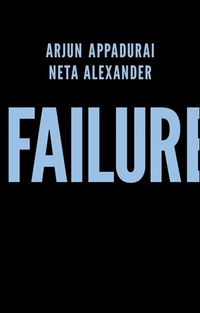
Failure
Description

Wall Street and Silicon Valley - the two worlds this book examines - promote the illusion that scarcity can and should be eliminated in the age of seamless "flow." Instead, Appadurai and Alexander propose a theory of habitual and strategic failure by exploring debt, crisis, digital divides, and (dis)connectivity. Moving between the planned obsolescence and deliberate precariousness of digital technologies and the "too big to fail" logic of the Great Recession, they argue that the sense of failure is real in that it produces disappointment and pain. Yet, failure is not a self-evident quality of projects, institutions, technologies, or lives. It requires a new and urgent understanding of the conditions under which repeated breakdowns and collapses are quickly forgotten.
By looking at such moments of forgetfulness, this highly original book offers a multilayered account of failure and a general theory of denial, memory, and nascent systems of control.
More details
Other editions
Persons
Neta Alexander is an Assistant Professor of Film and Media at Colgate University, New York.
Content
1. Introduction: The Difference that Doesn't Make a Difference
2. Chapter 1: The Promise Machine: Between "Techno-failure" and Market Failure
3. Chapter 2: Creative Destruction and the New Socialities
4. Chapter 3: Failure, Forgotten: On Buffering, Latency, and the Monetization of Waiting
5. Chapter 4: Too Big to Fail: Banks, Derivatives, and Market Collapse
6. Conclusion: Failure, Remembered
7. References
