

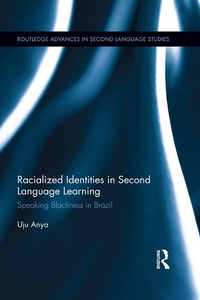
Racialized Identities in Second Language Learning
Speaking Blackness in Brazil
Published on 1. December 2016
262 pages
978-1-317-40270-1 (ISBN)
Description

*Winner of the 2019 AAAL First Book Award*
Racialized Identities in Second Language Learning: Speaking Blackness in Brazil provides a critical overview and original sociolinguistic analysis of the African American experience in second language learning. More broadly, this book introduces the idea of second language learning as "transformative socialization": how learners, instructors, and their communities shape new communicative selves as they collaboratively construct and negotiate race, ethnicity, gender, sexuality, and social class identities. Uju Anya's study follows African American college students learning Portuguese in Afro-Brazilian communities, and their journeys in learning to do and speak blackness in Brazil. Video-recorded interactions, student journals, interviews, and writing assignments show how multiple intersecting identities are enacted and challenged in second language learning. Thematic, critical, and conversation analyses describe ways black Americans learn to speak their material, ideological, and symbolic selves in Portuguese and how linguistic action reproduces or resists power and inequity. The book addresses key questions on how learners can authentically and effectively participate in classrooms and target language communities to show that black students' racialized identities and investments in these communities greatly influence their success in second language learning and how successful others perceive them to be.
Racialized Identities in Second Language Learning: Speaking Blackness in Brazil provides a critical overview and original sociolinguistic analysis of the African American experience in second language learning. More broadly, this book introduces the idea of second language learning as "transformative socialization": how learners, instructors, and their communities shape new communicative selves as they collaboratively construct and negotiate race, ethnicity, gender, sexuality, and social class identities. Uju Anya's study follows African American college students learning Portuguese in Afro-Brazilian communities, and their journeys in learning to do and speak blackness in Brazil. Video-recorded interactions, student journals, interviews, and writing assignments show how multiple intersecting identities are enacted and challenged in second language learning. Thematic, critical, and conversation analyses describe ways black Americans learn to speak their material, ideological, and symbolic selves in Portuguese and how linguistic action reproduces or resists power and inequity. The book addresses key questions on how learners can authentically and effectively participate in classrooms and target language communities to show that black students' racialized identities and investments in these communities greatly influence their success in second language learning and how successful others perceive them to be.
Reviews / Votes
"This compelling and erudite volume should be required reading for foreign language educators and study abroad professionals." -Celeste Kinginger, Department of Applied Linguistics, Pennsylvania State University, USAMore details
Series
Language
English
Place of publication
London
United Kingdom
Publishing group
Taylor & Francis Ltd
Target group
College/higher education
Product notice
Reflowable
Illustrations
3 Tables, black and white; 39 Halftones, black and white; 42 Illustrations, black and white
File size
3,02 MB
ISBN-13
978-1-317-40270-1 (9781317402701)
Copyright in bibliographic data and cover images is held by Nielsen Book Services Limited or by the publishers or by their respective licensors: all rights reserved.
Schweitzer Classification
Other editions
Additional editions
Book
01/2018
1st Edition
Routledge
€72.50
Shipment within 15-20 days
Book
12/2016
1st Edition
Routledge
€231.80
Shipment within 10-20 days
Person
Uju Anya is Assistant Professor of Second Language Learning in the College of Education at Pennsylvania State University
Content
Introduction: Why a book on race in language learning?
Chapter 1: The African American experience in language study: A review of the research
Chapter 2: Translanguaging identities
Chapter 3: Telling black stories in language learning research
Chapter 4: Nina's story: Race and ethnicity in classrooms and outside
Chapter 5: Didier's story: Translanguaging black manhood in multicultural contexts
Chapter 6: Leti's story: The racialized, gendered, and social classed body
Chapter 7: Rose's story: Redefining participation and success
Chapter 8: Communities and investments in learning a new language
Chapter 1: The African American experience in language study: A review of the research
Chapter 2: Translanguaging identities
Chapter 3: Telling black stories in language learning research
Chapter 4: Nina's story: Race and ethnicity in classrooms and outside
Chapter 5: Didier's story: Translanguaging black manhood in multicultural contexts
Chapter 6: Leti's story: The racialized, gendered, and social classed body
Chapter 7: Rose's story: Redefining participation and success
Chapter 8: Communities and investments in learning a new language
