


Collateral Knowledge
Description

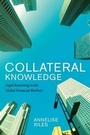
Who are the agents of financial regulation? Is good (or bad) financial governance merely the work of legislators and regulators? Here Annelise Riles argues that financial governance is made not just through top-down laws and policies but also through the daily use of mundane legal techniques such as collateral by a variety of secondary agents, from legal technicians and retail investors to financiers and academics and even computerized trading programs.
Drawing upon her ten years of ethnographic fieldwork in the Japanese derivatives market, Riles explores the uses of collateral in the financial markets as a regulatory device for stabilizing market transactions. How collateral operates, Riles suggests, is paradigmatic of a class of low-profile, mundane, but indispensable activities and practices that are all too often ignored as we think about how markets should work and be governed. Riles seeks to democratize our understanding of legal techniques, and demonstrate how these day-to-day private actions can be reformed to produce more effective forms of market regulation.
More details
Other editions
Additional editions
Content
- Intro
- Contents
- Acknowledgments
- Introduction: Private Governance, Global Markets, and the Legal Technologies of Collateral
- 1. What Is Collateral? On Legal Technique
- 2. The Technocratic State
- 3. Unwinding Technocracy
- 4. Placeholders: Engaging the Hayekian Critique of Financial Regulation
- 5. Virtual Transparency
- Conclusion: From Design to Technique in Global Financial Governance
- References
- Index
