

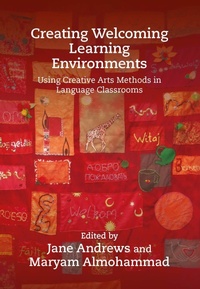
Creating Welcoming Learning Environments
Using Creative Arts Methods in Language Classrooms
Published on 9. June 2022
160 pages
978-1-78892-581-5 (ISBN)
Description

In a world where migration is a daily reality, the ways in which affirming educational experiences can be provided for all children remain high on the agendas of schools, colleges and teachers. This book provides practical ideas for how children, young people and parents can feel welcomed and affirmed in their multilingual identities and all learners can feel intrigued and excited by the linguistic diversity of the world's people. The book will be an invaluable resource for educational practitioners, researchers, trainee teachers, teacher educators and all who are passionate about bringing together creative arts approaches with language learning and teaching. By blending academic theory with tried-and-tested classroom practice the authors will inspire readers to adapt the featured activities for their own contexts and learners.
Reviews / Votes
This volume is a great source of fascinating ideas for teachers, researchers and other professionals working with EAL children and young people. It is about creating welcoming learning environments by bringing together theoretical insights, transformative practices and artistic content. The ideas are easily adaptable and will definitely inspire future readers to create their own activities and welcoming environments. * Annamaria Pinter, University of Warwick, UK * This inspiring research-to-practice book brings together multiple voices from the field of multilingual research and teaching. It presents readers with creative, innovative, and empowering endeavours which honour multilingualism and multilingual identities. Arts-based approaches are foregrounded as examples of critical socio-cultural pedagogies that facilitate the intentional disruption of monolingual classroom norms. There is something for everyone in here. * Naomi Flynn, University of Reading, UK * This book is a thoughtful curation of educationalists' case studies of creative activities together with an analysis of the 'Creating Welcoming Learning Environments' workshops which inspired them. For teachers wanting to build on the rich cultural and linguistic capital represented by their EAL pupils, this book provides the underpinning research and a wealth of practical ideas and inspiration to welcome and create together! * Catherine Brennan, Director, Better Bilingual CIC *More details
Language
English
Place of publication
Bristol
United Kingdom
Target group
Professional and scholarly
College/higher education
Product notice
Reflowable
ISBN-13
978-1-78892-581-5 (9781788925815)
Copyright in bibliographic data and cover images is held by Nielsen Book Services Limited or by the publishers or by their respective licensors: all rights reserved.
Schweitzer Classification
Other editions
Additional editions
Jane Andrews | Maryam Almohammad
Creating Welcoming Learning Environments
Using Creative Arts Methods in Language Classrooms
Book
06/2022
Multilingual Matters
€27.70
Shipment within 3-4 weeks
Persons
Jane Andrews is Professor of Education at the University of the West of England, Bristol, UK. Her research focuses on multilingualism and learning and parental involvement in learning. She is a trained secondary school teacher specialising in EAL.
Maryam Almohammad is an educator in language and intercultural communication at the Institute for Language Education, the Moray House School of Education and Sport, University of Edinburgh, UK. Her research and teaching focus on interculturality, intercultural citizenship, language, identities, art, creativity and power. She draws upon ethnographic research, sociological theories of practice, art-based methods and uses critical, postmodernist and posthumanist approaches.
Maryam Almohammad is an educator in language and intercultural communication at the Institute for Language Education, the Moray House School of Education and Sport, University of Edinburgh, UK. Her research and teaching focus on interculturality, intercultural citizenship, language, identities, art, creativity and power. She draws upon ethnographic research, sociological theories of practice, art-based methods and uses critical, postmodernist and posthumanist approaches.
Content
Contributors
Chapter 1. Jane Andrews and Maryam Almohammad: Introduction: Connecting Creative Arts Approaches with Supporting Children and Young People Developing English as an Additional Language
Chapter 2. Alison Phipps: The Well in Welcoming
Chapter 3. Maryam Almohammad: Working with Community Filming in Multilingual and Intercultural Language Education
Chapter 3.1. Gemma Sharland: Celebration through Film
Chapter 3.2. Alicja Lievaart: A Filmmaking Project
Chapter 4. Lyn Ma: Creating Together: The Role of Creative Arts in an ESOL Classroom
Chapter 4.1. Su Tippett: Working with Children's Needs and Preferences Using Creative Techniques
Chapter 4.2. Judith Prosser: Assessing Children's Language Using Creative Techniques
Chapter 4.3. Karen Thomas and Rebecca Reeve: Building Cohesion in School through Crafting
Chapter 5. Gameli Tordzro and Naa Densua Tordzro: Adinkra Creative Links: Music and Textiles in Welcoming Learning Environments
Chapter 5.1. Alison Grotzke: Working with Adinkra Symbols and Printing: Unlocking Creativity in Children
Chapter 5.2. Dominique Moore: A School Radio Station
Chapter 5.3. Lois Francis: Singing Songs from Jamaica in Early Years Settings and Primary Schools in South Gloucestershire
Chapter 5.4. Judith Prosser: Audio in School: School Languages on the Tannoy System
Chapter 6. A Conversation with Tawona Sithole, Poet and Musician
Chapter 6.1. Anna Comfort: Creative Arts Processes for Working with EAL Children
Chapter 6.2. Dominique Moore: GCSE English, Using Poetry Written in Students' First Languages
Chapter 7. Luci Gorell Barnes: The Welcome Banner: Cultural Exchange through Creative Collaboration
Chapter 8. Jean Conteh: Creativity, Collaboration and Ways Forward for EAL Learners
Jane Andrews and Maryam Almohammad: Afterword: Summary of Ideas for Practice
Chapter 1. Jane Andrews and Maryam Almohammad: Introduction: Connecting Creative Arts Approaches with Supporting Children and Young People Developing English as an Additional Language
Chapter 2. Alison Phipps: The Well in Welcoming
Chapter 3. Maryam Almohammad: Working with Community Filming in Multilingual and Intercultural Language Education
Chapter 3.1. Gemma Sharland: Celebration through Film
Chapter 3.2. Alicja Lievaart: A Filmmaking Project
Chapter 4. Lyn Ma: Creating Together: The Role of Creative Arts in an ESOL Classroom
Chapter 4.1. Su Tippett: Working with Children's Needs and Preferences Using Creative Techniques
Chapter 4.2. Judith Prosser: Assessing Children's Language Using Creative Techniques
Chapter 4.3. Karen Thomas and Rebecca Reeve: Building Cohesion in School through Crafting
Chapter 5. Gameli Tordzro and Naa Densua Tordzro: Adinkra Creative Links: Music and Textiles in Welcoming Learning Environments
Chapter 5.1. Alison Grotzke: Working with Adinkra Symbols and Printing: Unlocking Creativity in Children
Chapter 5.2. Dominique Moore: A School Radio Station
Chapter 5.3. Lois Francis: Singing Songs from Jamaica in Early Years Settings and Primary Schools in South Gloucestershire
Chapter 5.4. Judith Prosser: Audio in School: School Languages on the Tannoy System
Chapter 6. A Conversation with Tawona Sithole, Poet and Musician
Chapter 6.1. Anna Comfort: Creative Arts Processes for Working with EAL Children
Chapter 6.2. Dominique Moore: GCSE English, Using Poetry Written in Students' First Languages
Chapter 7. Luci Gorell Barnes: The Welcome Banner: Cultural Exchange through Creative Collaboration
Chapter 8. Jean Conteh: Creativity, Collaboration and Ways Forward for EAL Learners
Jane Andrews and Maryam Almohammad: Afterword: Summary of Ideas for Practice
