

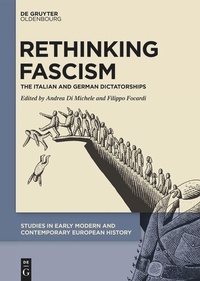
Rethinking Fascism
Description

This book takes up the stimuli of new international historiography, albeit focusing mainly on the two regimes that undoubtedly provided the model for Fascist movements in Europe, namely the Italian and the German. Starting with a historiographical assessment of the international situation, vis-à-vis studies on Fascism and National Socialism, and then concentrate on certain aspects that are essential to any study of the two dictatorships, namely the complex relationships with their respective societies, the figures of the two dictators and the role of violence. This volume reaches beyond the time-frame encompassing Fascism and National Socialism experiences, directing the attention also toward the period subsequent to their demise. This is done in two ways. On the one hand, examining the uncomfortable architectural legacy left by dictatorships to the democratic societies that came after the war. On the other hand, the book addresses an issue that is very much alive both in the strictly historiographical and political science debate, that is to say, to what extent can the label of Fascism be used to identify political phenomena of these current times, such as movements and parties of the so-called populist and souverainist right.
More details
Other editions
Additional editions
Persons
Content
- Intro
- Contents
- Introduction
- I. Fascism and Nazism in a Transnational Key
- German Historiography on National Socialism in Its Transnational Context
- Roberta Pergher Italian Fascism in Transnational Historiography
- II. "Volksgemeinschaft" and the Relationship between Italian Society and Fascism
- From Debates on the Political Order to Visions of Community
- Beyond Consensus: Rethinking Italian Fascism
- III. The Dictators: Hitler and Mussolini
- Adolf Hitler and Benito Mussolini
- Benito Mussolini: 100 Years on
- Adolf Hitler
- IV. Violence
- "Spaces" of Violence
- Fascist Violence. History and Historiography
- V. Stone Fascism after the War
- Obersalzberg and the Axis
- Traces of Fascist Architecture in Republican Italy
- Fascist Monuments on the Border. The Case of Bolzano/Bozen, South Tyrol
- VI. The New Right and Fascism
- "Sempre Presente?"
- Old Ideologies and New Strategies. German Right-Wing Populism
- CasaPound Italia and Forza Nuova. Back to the Future
- Contributors
