

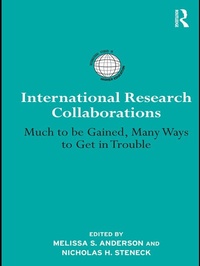
International Research Collaborations
Much to be Gained, Many Ways to Get in Trouble
Published on 22. November 2011
312 pages
978-1-136-95161-9 (ISBN)
Description

Encouraged by their institutions and governments and aided by advances in technology and communication, researchers increasingly pursue international collaborations with high hopes for scientific breakthroughs, intellectual stimulation, access to research equipment and populations, and the satisfaction of global engagement. International Research Collaborations considers what can and does go wrong in cross-national research collaborations, and how scientists can avoid these problems in order to create and sustain productive, mutually-enriching partnerships.
Unfamiliar approaches to training, legal and regulatory complications, and differences in funding and administration pose challenges for collaboration that are then compounded by the need to satisfy the requirements of different research systems. To help today's international researchers create the best possible partnerships, chapters by funding officers, diplomats, attorneys, publishers, regulators, graduate students and postdocs, industry researchers, administrators, and scholars of responsible research address the following key trouble spots:
how research is organized and funded
the legal and normative environments of research
differences in regulation and oversight
variation in graduate education and postdoctoral training.
International Research Collaborations will provide valuable insights to researchers who are collaborating or who intend to collaborate, as well as to administrators, funders, regulators, editors, and policy-makers involved in cross-national research.
Unfamiliar approaches to training, legal and regulatory complications, and differences in funding and administration pose challenges for collaboration that are then compounded by the need to satisfy the requirements of different research systems. To help today's international researchers create the best possible partnerships, chapters by funding officers, diplomats, attorneys, publishers, regulators, graduate students and postdocs, industry researchers, administrators, and scholars of responsible research address the following key trouble spots:
how research is organized and funded
the legal and normative environments of research
differences in regulation and oversight
variation in graduate education and postdoctoral training.
International Research Collaborations will provide valuable insights to researchers who are collaborating or who intend to collaborate, as well as to administrators, funders, regulators, editors, and policy-makers involved in cross-national research.
More details
Series
Language
English
Place of publication
London
United Kingdom
Publishing group
Taylor & Francis Ltd
Target group
College/higher education
Product notice
Reflowable
File size
0,50 MB
ISBN-13
978-1-136-95161-9 (9781136951619)
Copyright in bibliographic data and cover images is held by Nielsen Book Services Limited or by the publishers or by their respective licensors: all rights reserved.
Schweitzer Classification
Other editions
Additional editions
Melissa S. Anderson | Nicholas H. Steneck
International Research Collaborations
Much to be Gained, Many Ways to Get in Trouble
Book
11/2012
1st Edition
Routledge
€83.00
Shipment within 15-20 days
Melissa S. Anderson | Nicholas H. Steneck
International Research Collaborations
Much to be Gained, Many Ways to Get in Trouble
Book
07/2010
1st Edition
Routledge
€262.60
Shipment within 15-20 days
Persons
Melissa S. Anderson, PhD., is Professor of Higher Education and an affiliate faculty member in bioethics at the University of Minnesota, where she also chairs the University's Senate Research Committee.
Nicholas H. Steneck, PhD., is Director of the Research Ethics and Integrity Program of the Michigan Institute for Clinical and Health Research and Professor Emeritus of History at the University of Michigan.
Nicholas H. Steneck, PhD., is Director of the Research Ethics and Integrity Program of the Michigan Institute for Clinical and Health Research and Professor Emeritus of History at the University of Michigan.
Content
Part I. International Research Collaborations
1. What Can Be Gained and What Can Go Wrong in the Context of Different National Research Environments, Melissa S. Anderson
2. Research Integrity in the Context of Global Cooperation, Nicholas H. Steneck
3. Considerations Upon Setting Out to Collaborate Internationally, F. Gray Handley
Part II. Differences in the Organization and Funding of Research
4. National Variations in the Organization of Scientific Research, David W. Chapman, Ingo Stolz, and Olena Glushko
5. Evolution of National Funding Systems for Research, Tony Mayer
6. National Systems for Scientific Research in China, Ping Sun
Part III. Differences in Legal and Normative Environments
7. Legal and Regulatory Considerations in International Research Collaborations, Mark A. Bohnhorst, Meredith McQuaid, Stacey R. Bolton Tsantir, Donald M. Amundson, and Melissa S. Anderson
8. The Governance of Scientific Collaborations: The International Reach of U.S. Law, Alexander M. Capron
9. Normative Environments of International Science, Raymond G. De Vries, Leslie M. Rott, and Yasaswi Paruchuri
Part IV. Differences in Regulatory and Publication Oversight
10. International Cooperation to Ensure Scientific Integrity, Christine C. Boesz and Peggy L. Fischer
11. Scientific Integrity in the Context of Pan-European Cooperation, Andrew C. Stainthorpe
12. Collaborating with Colleagues in Latin America: Publication Issues, Herbert Stegemann, Juan Miyahira, Sergio Alvarado-Menacho, and Reyna M. Duron
Part V. Differences in Graduate Education and Postdoctoral Training
13. Differences in National Approaches to Doctoral Education: Implications for International Research Collaborations, Melissa S. Anderson, Felly Chiteng Kot, Yiyun Jie, Takehito Kamata, Aliya Kuzhabekova, Christine C. Lepkowski, Marta A. Shaw, Martha M. Sorenson, and Sonia M. R. Vasconcelos
14. The Emergence of International Postdoctoral Training, John B. Godfrey
15. Preparing Students to Navigate Cross-National Differences in the Research Environment: The Role of Research-Integrity Education, Elizabeth Heitman and JuLeigh Petty
Part VI. Toward Successful International Research Collaborations
16. Proactive and Reactive Approaches to Facilitating International Collaborations, Camille Nebeker
17. Balancing Research Collaborations with the Realities of Working with Industry: Lessons from the Biotechnology Realm, Stewart Lyman
18. Realizing Gains and Staying Out of Trouble, Melissa S. Anderson and Nicholas H. Steneck
Appendix
Egypt, Interview with Ibrahim Adib Abdel-Messih
India, Prem Pais, Denis Xavier, and Kumar G. Belani
Singapore and China, Interview with James O. Leckie, Toward Successful International Research Collaborations
Contributor Biographies
1. What Can Be Gained and What Can Go Wrong in the Context of Different National Research Environments, Melissa S. Anderson
2. Research Integrity in the Context of Global Cooperation, Nicholas H. Steneck
3. Considerations Upon Setting Out to Collaborate Internationally, F. Gray Handley
Part II. Differences in the Organization and Funding of Research
4. National Variations in the Organization of Scientific Research, David W. Chapman, Ingo Stolz, and Olena Glushko
5. Evolution of National Funding Systems for Research, Tony Mayer
6. National Systems for Scientific Research in China, Ping Sun
Part III. Differences in Legal and Normative Environments
7. Legal and Regulatory Considerations in International Research Collaborations, Mark A. Bohnhorst, Meredith McQuaid, Stacey R. Bolton Tsantir, Donald M. Amundson, and Melissa S. Anderson
8. The Governance of Scientific Collaborations: The International Reach of U.S. Law, Alexander M. Capron
9. Normative Environments of International Science, Raymond G. De Vries, Leslie M. Rott, and Yasaswi Paruchuri
Part IV. Differences in Regulatory and Publication Oversight
10. International Cooperation to Ensure Scientific Integrity, Christine C. Boesz and Peggy L. Fischer
11. Scientific Integrity in the Context of Pan-European Cooperation, Andrew C. Stainthorpe
12. Collaborating with Colleagues in Latin America: Publication Issues, Herbert Stegemann, Juan Miyahira, Sergio Alvarado-Menacho, and Reyna M. Duron
Part V. Differences in Graduate Education and Postdoctoral Training
13. Differences in National Approaches to Doctoral Education: Implications for International Research Collaborations, Melissa S. Anderson, Felly Chiteng Kot, Yiyun Jie, Takehito Kamata, Aliya Kuzhabekova, Christine C. Lepkowski, Marta A. Shaw, Martha M. Sorenson, and Sonia M. R. Vasconcelos
14. The Emergence of International Postdoctoral Training, John B. Godfrey
15. Preparing Students to Navigate Cross-National Differences in the Research Environment: The Role of Research-Integrity Education, Elizabeth Heitman and JuLeigh Petty
Part VI. Toward Successful International Research Collaborations
16. Proactive and Reactive Approaches to Facilitating International Collaborations, Camille Nebeker
17. Balancing Research Collaborations with the Realities of Working with Industry: Lessons from the Biotechnology Realm, Stewart Lyman
18. Realizing Gains and Staying Out of Trouble, Melissa S. Anderson and Nicholas H. Steneck
Appendix
Egypt, Interview with Ibrahim Adib Abdel-Messih
India, Prem Pais, Denis Xavier, and Kumar G. Belani
Singapore and China, Interview with James O. Leckie, Toward Successful International Research Collaborations
Contributor Biographies
