

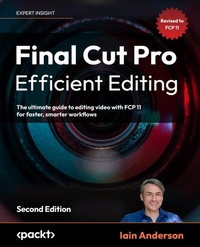
Final Cut Pro Efficient Editing
The ultimate guide to editing video with FCP 12 for faster, smarter workflows
2nd Edition
Published on 23. September 2024
828 pages
978-1-83763-819-2 (ISBN)
Description

Unlock the hidden gems of video editing with Iain Anderson, Apple Certified Trainer Bonus 1: Get the Ultimate FCP Keyboard Shortcut Cheat-Sheet for maximum speed! Bonus 2: Get Free Digital Updates for your book, regardless of the format you purchase!
Key Features
Covers the newest FCP 12 features with expert tips, tutorials, and advanced techniques.
Clear, easy-to-follow guidance for both beginners and experienced editors.
Updated for FCP 12 with Magnetic Mask, Adjustment Clips, improved timeline tools, and refined color correction.
Book DescriptionElevate your video editing skills with Final Cut Pro 12 using practical workflows, expert techniques, and the latest features to enhance your creative process and give your videos a stunning look. The second edition of this comprehensive guide covers exciting new features in FCP, teaching you how to streamline your workflow with customizable workspaces, shortcuts, and advanced trimming tools. Explore impactful titles and a comprehensive suite of visual effects in Final Cut Pro for dynamic videos, discover Final Cut Pro's audio tools to create a great-sounding mix, and utilize the magnetic timeline, multicam editing, and enhanced color correction for every project. Whether you're creating content for social media, YouTube, or Hollywood, Final Cut Pro Efficient Editing, Second Edition will help you take your video editing skills to the next level.What you will learn
Organize and manage media from multiple sources with ease
Edit video using an intuitive interface and powerful tools
Streamline workflows with customizable workspaces and shortcuts
Sync multicam interviews and master advanced trimming
Enhance edits with AI color tools and audio workflows
Collaborate smoothly with built-in editing tools
Create visual effects and motion graphics titles
Export projects in multiple formats for any platform
Who this book is forThis book is ideal for aspiring and professional video editors who want to sharpen their editing skills using Final Cut Pro 11. Whether you're a content creator, YouTuber, educator, or filmmaker, this guide provides practical workflows and expert tips to help you edit faster and more creatively. It's also perfect for editors transitioning from iMovie or upgrading from earlier FCP 10.x versions who want a smooth, guided entry into Final Cut Pro's professional environment.
Key Features
Covers the newest FCP 12 features with expert tips, tutorials, and advanced techniques.
Clear, easy-to-follow guidance for both beginners and experienced editors.
Updated for FCP 12 with Magnetic Mask, Adjustment Clips, improved timeline tools, and refined color correction.
Book DescriptionElevate your video editing skills with Final Cut Pro 12 using practical workflows, expert techniques, and the latest features to enhance your creative process and give your videos a stunning look. The second edition of this comprehensive guide covers exciting new features in FCP, teaching you how to streamline your workflow with customizable workspaces, shortcuts, and advanced trimming tools. Explore impactful titles and a comprehensive suite of visual effects in Final Cut Pro for dynamic videos, discover Final Cut Pro's audio tools to create a great-sounding mix, and utilize the magnetic timeline, multicam editing, and enhanced color correction for every project. Whether you're creating content for social media, YouTube, or Hollywood, Final Cut Pro Efficient Editing, Second Edition will help you take your video editing skills to the next level.What you will learn
Organize and manage media from multiple sources with ease
Edit video using an intuitive interface and powerful tools
Streamline workflows with customizable workspaces and shortcuts
Sync multicam interviews and master advanced trimming
Enhance edits with AI color tools and audio workflows
Collaborate smoothly with built-in editing tools
Create visual effects and motion graphics titles
Export projects in multiple formats for any platform
Who this book is forThis book is ideal for aspiring and professional video editors who want to sharpen their editing skills using Final Cut Pro 11. Whether you're a content creator, YouTuber, educator, or filmmaker, this guide provides practical workflows and expert tips to help you edit faster and more creatively. It's also perfect for editors transitioning from iMovie or upgrading from earlier FCP 10.x versions who want a smooth, guided entry into Final Cut Pro's professional environment.
All prices
More details
Edition
2nd Revised edition
Language
English
Place of publication
Birmingham
United Kingdom
Target group
Professional and scholarly
US School Grade: College Graduate Student
Edition type
Revised edition
Product notice
Reflowable
File size
95,24 MB
ISBN-13
978-1-83763-819-2 (9781837638192)
Copyright in bibliographic data and cover images is held by Nielsen Book Services Limited or by the publishers or by their respective licensors: all rights reserved.
Schweitzer Classification
Other editions
Additional editions
Iain Anderson
Final Cut Pro Efficient Editing
The ultimate guide to editing video with FCP 12 for faster, smarter workflows
Book
07/2023
2nd Edition
Packt Publishing
€165.20
Shipment within 3-4 weeks
Previous edition
Iain Anderson
Final Cut Pro Efficient Editing
A step-by-step guide to smart video editing with FCP 10.6
E-Book
09/2024
Packt Publishing
€32.99
Available for download
Person
Anderson Iain :
Iain Anderson is an author, editor, director, videographer, programmer, animator, and educator based in Brisbane, Australia. An Apple Certified Trainer who helped to create the new Apple Certified Final Cut Pro exams and training curriculum, Iain regularly presents at conferences, is a Lead Trainer for macProVideo, and creates educational video content for CoreMelt and many other organizations.
Iain Anderson is an author, editor, director, videographer, programmer, animator, and educator based in Brisbane, Australia. An Apple Certified Trainer who helped to create the new Apple Certified Final Cut Pro exams and training curriculum, Iain regularly presents at conferences, is a Lead Trainer for macProVideo, and creates educational video content for CoreMelt and many other organizations.
Content
Table of Contents
Quick start: An Introduction to FCP
Before the Edit: Production Tips
Bring It In: Importing Your Footage
Sort It Out: Reviewing and Keywording
Choose Your Favorites: Selecting, Rating, and Searching
Build the Spine of the Story: Quick Assembly
Cover It Up: Connections, Cutaways, and Storylines
Neaten the edges: Trimming Techniques
Consider Your Options: Multicam, Replacing, and Auditions
Explore a Little: Compound Clips and Timeline Tricks
Play with Light: Color Correction and Grading
Refine and Smooth: Video Properties and Effects
Blend and Warp: Video Transitions and Retiming
Boost the Signal: Audio Sweetening
A Few Words: Titles and Generators
You're Done: Exporting Your Edit and Finishing Up
Quick start: An Introduction to FCP
Before the Edit: Production Tips
Bring It In: Importing Your Footage
Sort It Out: Reviewing and Keywording
Choose Your Favorites: Selecting, Rating, and Searching
Build the Spine of the Story: Quick Assembly
Cover It Up: Connections, Cutaways, and Storylines
Neaten the edges: Trimming Techniques
Consider Your Options: Multicam, Replacing, and Auditions
Explore a Little: Compound Clips and Timeline Tricks
Play with Light: Color Correction and Grading
Refine and Smooth: Video Properties and Effects
Blend and Warp: Video Transitions and Retiming
Boost the Signal: Audio Sweetening
A Few Words: Titles and Generators
You're Done: Exporting Your Edit and Finishing Up
