

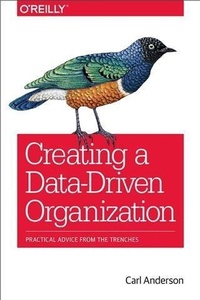
Creating a Data-Driven Organization
Practical Advice from the Trenches
Published on 23. July 2015
302 pages
978-1-4919-1688-9 (ISBN)
Description

What do you need to become a data-driven organization? Far more than having big data or a crack team of unicorn data scientists, it requires establishing an effective, deeply-ingrained data culture. This practical book shows you how true data-drivenness involves processes that require genuine buy-in across your company, from analysts and management to the C-Suite and the board.Through interviews and examples from data scientists and analytics leaders in a variety of industries, author Carl Anderson explains the analytics value chain you need to adopt when building predictive business modelsfrom data collection and analysis to the insights and leadership that drive concrete actions. Youll learn what works and what doesnt, and why creating a data-driven culture throughout your organization is essential.Start from the bottom up: learn how to collect the right data the right wayHire analysts with the right skills, and organize them into teamsExamine statistical and visualization tools, and fact-based story-telling methodsCollect and analyze data while respecting privacy and ethicsUnderstand how analysts and their managers can help spur a data-driven cultureLearn the importance of data leadership and C-level positions such as chief data officer and chief analytics officer
More details
Other editions
Additional editions
Content
- Intro
- Copyright
- Table of Contents
- Preface
- Summary
- Who Should Read This Book?
- Chapter Organization
- Conventions Used in This Book
- Safari® Books Online
- How to Contact Us
- Acknowledgments
- Chapter 1. What Do We Mean by Data-Driven?
- Data Collection
- Data Access
- Reporting
- Alerting
- From Reporting and Alerting to Analysis
- Hallmarks of Data-Drivenness
- Analytics Maturity
- Overview
- Chapter 2. Data Quality
- Facets of Data Quality
- Dirty Data
- Data Generation
- Data Entry
- Missing Data
- Duplicates
- Truncated Data
- Units
- Default Values
- Data Provenance
- Data Quality Is a Shared Responsibility
- Chapter 3. Data Collection
- Collect All the Things
- Prioritizing Data Sources
- Connecting the Dots
- Data Collection
- Purchasing Data
- How Much Is a Dataset Worth?
- Data Retention
- Chapter 4. The Analyst Organization
- Types of Analysts
- Data Analyst
- Data Engineers and Analytics Engineers
- Business Analysts
- Data Scientists
- Statisticians
- Quants
- Accountants and Financial Analysts
- Data Visualization Specialists
- Analytics Is a Team Sport
- Skills and Qualities
- Just One More Tool
- Exploratory Data Analysis and Statistical Modeling
- Database Queries
- File Inspection and Manipulation
- Chapter 5. Data Analysis
- What Is Analysis?
- Types of Analysis
- Descriptive Analysis
- Exploratory Analysis
- Inferential Analysis
- Predictive Analysis
- Causal Analysis
- Chapter 6. Metric Design
- Metric Design
- Simple
- Standardized
- Accurate
- Precise
- Relative Versus Absolute
- Robust
- Direct
- Key Performance Indicators
- KPI Examples
- How Many KPIs?
- KPI Definitions and Targets
- Chapter 7. Storytelling with Data
- Storytelling
- First Steps
- What Are You Trying to Achieve?
- Who Is Your Audience?
- What's Your Medium?
- Sell, Sell, Sell!
- Data Visualization
- Choosing a Chart
- Designing Elements of the Chart
- Delivery
- Infographics
- Dashboards
- Summary
- Chapter 8. A/B Testing
- Why A/B Test?
- How To: Best Practices in A/B Testing
- Before the Experiment
- Running the Experiment
- Other Approaches
- Multivariate Testing
- Bayesian Bandits
- Cultural Implications
- Chapter 9. Decision Making
- How Are Decisions Made?
- Data-Driven, -Informed, or -Influenced?
- What Makes Decision Making Hard?
- Data
- Culture
- The Cognitive Barriers
- Where Does Intuition Work?
- Solutions
- Motivation
- Ability
- Triggers
- Conclusion
- Chapter 10. Data-Driven Culture
- Open, Trusting Culture
- Broad Data Literacy
- Goals-First Culture
- Inquisitive, Questioning Culture
- Iterative, Learning Culture
- Anti-HiPPO Culture
- Data Leadership
- Chapter 11. The Data-Driven C-Suite
- Chief Data Officer
- CDO Role
- Secrets of Success
- Future of the CDO Role
- Chief Analytics Officer
- Conclusion
- Chapter 12. Privacy, Ethics, and Risk
- Respect Privacy
- Inadvertent Leakage
- Practice Empathy
- Provide Choice
- Data Quality
- Security
- Enforcement
- Conclusions
- Chapter 13. Conclusion
- Further Reading
- Analytics Organizations
- Data Analysis & Data Science
- Decision Making
- Data Visualization
- A/B Testing
- Appendix A. On the Unreasonable Effectiveness of Data: Why Is More Data Better?
- Nearest Neighbor Type Problems
- Relative Frequency Problems
- Estimating Univariate Distribution Problems
- Multivariate Problems
- Appendix B. Vision Statement
- Value
- Activation
- Index
- About the Author
