

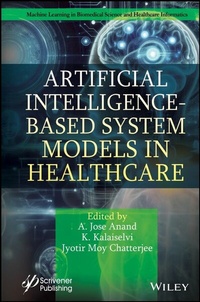
Artificial Intelligence-Based System Models in Healthcare
Description

Artificial Intelligence-Based System Models in Healthcare provides a comprehensive and insightful guide to the transformative applications of AI in the healthcare system.
This book is a groundbreaking exploration of the synergies between artificial intelligence and healthcare innovation. In an era where technological advancements are reshaping the landscape of medical practices, this book provides a comprehensive and insightful guide to the transformative applications of AI in healthcare systems. From conceptual foundations to practical implementations, the book serves as a roadmap for understanding the intricate relationships between AI-based system models and the evolution of healthcare delivery.
The first section delves into the fundamental role of technology in reshaping the healthcare landscape. With a focus on daily life activities, decision support systems, vision-based management, and semantic frameworks, this section lays the groundwork for understanding the pivotal role of AI in revolutionizing traditional healthcare approaches. Each chapter offers a unique perspective, emphasizing the intricate integration of technology into healthcare ecosystems.
The second section takes a deep dive into specific applications of AI, ranging from predictive analysis and machine learning to deep learning, image analysis, and biomedical text processing. With a focus on decision-making support systems, this section aims to demystify the complex world of AI algorithms in healthcare, offering valuable insights into their practical implications and potential impact on patient outcomes.
The final section addresses the modernization of healthcare practices and envisions the future landscape of AI applications. From medical imaging and diagnostics to predicting ventilation needs in intensive care units, modernizing health record maintenance, natural language processing, chatbots for medical inquiries, secured health insurance management, and glimpses into the future, the book concludes by exploring the frontiers of AI-driven healthcare innovations.
Audience
This book is intended for researchers and postgraduate students in artificial intelligence and the biomedical and healthcare sectors. Medical administrators, policymakers and regulatory specialists will also have an interest.
More details
Other editions
Additional editions
Persons
A. Jose Anand, PhD, is a professor in the Department of ECE, KCG College of Technology, Chennai, Tamil Nadu, India. He obtained his doctorate in information and communication engineering from Anna University in 2017 and has published several papers in national and international journals. He has also authored books on various engineering topics.
K. Kalaiselvi, PhD, is an associate professor in the Department of Computer Applications, Saveetha College of Liberal Arts and Sciences, Chennai, Tamil Nadu, India. With more than 20 years of teaching and research experience, she has published more than 80 articles in SCI journals, presented more than 20 research papers at international conferences, has been granted a patent based on the Internet of Things applications, and published 10 monographs. In addition, she received the 'Senior Woman Educator & Scholar Award' in 2020 from the National Foundation for Entrepreneurship Development.
Jyotir Moy Chatterjee, is an assistant professor in the Department of CSE, Graphic Era University, Dehradun, Uttarakhand, India. Additionally, he is an assistant professor in the Department of IT at the Lord Buddha Education Foundation, Kathmandu, Nepal. His research interests include machine learning and the Internet of Things. He was also the Young Ambassador of the Scientific Research Group of Egypt for 2020-2021. He has edited many books of which several are with the Wiley-Scrivener imprint.
Content
Preface xxi
Part I: Introduction to Healthcare Systems 1
1 Role of Technology in Healthcare Systems 3
A. Hency Juliet and K. Kalaiselvi
1.1 Introduction 4
1.2 Transformation in Healthcare 7
1.3 Technology Transformation in Healthcare Industry 14
1.4 Patient Care Improvement Using Healthcare Technology 16
1.5 Importance of Technology in Healthcare 18
1.6 Technology Impact on Healthcare 19
1.7 Innovation and Digital Transformation 21
1.8 Diagnostics' Role in Combatting Life-Threatening Diseases 23
1.9 Role of Medical Technology in Healthcare 25
1.10 Conclusion 27
2 Health Status Estimation based on Daily Life Activities 31
Josephine Anitha A. and Geetanjali R.
2.1 Introduction 32
2.2 Intersection of Technology and Healthcare 34
2.3 Unveiling the Technologies 38
2.4 Machine Learning Marvels: Unravelling Health Insights From Daily Life Activities 39
2.5 Data Collection and Processing in Daily Life Health Monitoring 41
2.6 Ethical Considerations, Data Privacy, and Regulatory Compliance 44
2.7 Potential Areas of Improvement 46
2.8 Challenges and Opportunities 47
2.9 Conclusion 49
3 Decision Support System in Healthcare Monitoring 55
V. Suganthi and K. Kalaiselvi
3.1 Introduction 56
3.2 Components of a Healthcare Monitoring System 65
3.3 Role of Decision Support System 70
3.4 Challenges in Implementing Decision Support Systems 72
3.5 Future Trends and Innovations 74
3.6 Conclusion 75
4 Vision-Based Management System in Healthcare Applications 79
K. Balasubramanian, Anu Tonk, Seema Bhakuni, S. Anita, Freddy Ajila and S. Sathish Kumar
4.1 Introduction 80
4.2 History 86
4.3 Tear Testing and Ocular Surface Analysis in a Clinical Examination 86
4.4 Other Ocular Surface Health-Related Clinical Examinations 89
4.5 Management of ADDE 95
4.6 Disease-Specific Therapy in ADDE 99
4.7 ADDE With NK 101
4.8 Unmet Needs and Future Directions 101
4.9 Conclusion 102
5 Semantic Framework in Healthcare Systems 107
Pooja Dabhowale, Mukesh Yadav, Nidhi Tiwari, Ruchi Sharma, Jose Anand A. and Irshad Ahamad
5.1 Introduction 108
5.2 Background 109
5.3 Internet of Things 111
5.4 Research Methodology 115
5.5 Theoretical Framework 117
5.6 Data Analysis 120
5.7 Conclusion 125
Part II: AI-Based System Models in Healthcare Applications 131
6 Predictive Analysis in Healthcare Systems 133
J. Sathya and F. Mary Harin Fernandez
6.1 Introduction 134
6.2 Related Work 136
6.3 Proposed System 142
6.4 Provide Support Tools and Visualizations to Aid in the Decision-Making Process 148
6.5 Conclusion 149
7 Machine Learning in Healthcare System 153
A. Hency Juliet and K. Sathya
7.1 Introduction 154
8 Deep Learning Applications in Healthcare Systems 179
V. Sheeja Kumari and Renjith Balu
8.1 Introduction 180
8.2 Fundamentals of Deep Learning 182
8.3 Deep Learning Architecture for Image Classification 194
8.4 Conclusion 200
9 Image Analysis for Health Prediction 205
Pulla Sujarani and K. Kalaiselvi
9.1 Introduction 206
9.2 Overview 208
9.3 Image Preprocessing 209
9.4 Image Filtering 211
9.5 Image Enhancement 213
9.6 Image Segmentation 215
9.7 Feature Extraction 219
9.8 Classification 222
9.9 Conclusion 226
10 Machine Learning in Biomedical Text Processing 229
Shibi Mathai and K. Kalaiselvi
10.1 Introduction 230
10.2 Fundamentals of ML for Text Processing 232
10.3 NLP Techniques in Biomedicine 233
10.4 NLP Techniques in Biomedicine 236
10.5 Feature Engineering and Selection in Biomedical Text 238
10.6 Applications of ML in Biomedical Text Mining 240
10.7 Evaluation Metrics and Model Validation 243
10.8 Ethical Considerations and Data Privacy 245
10.9 Future Directions and Challenges 246
10.10 Conclusion 247
11 Decision Making Biomedical Support System 253
V. Sheeja Kumari, J. Vijila and Renjith Balu
11.1 Introduction 254
11.2 System Architecture and Components 258
11.3 Machine Learning Algorithms 268
11.4 Expert Systems 269
11.5 Statistical Analysis Tools 270
11.6 User Interface 272
11.7 Interactivity for Healthcare Professionals 274
11.8 User-Friendly Design 275
11.9 Summary 277
Part III: Modernization and Future -- Healthcare Applications 281
12 Medical Imaging and Diagnostics with Machine Learning 283
M. Sowmiya, D. Bhanu, K. Shruthi, Punitha Jilt, B. Beaula Pinky and A. Yasmine Begum
12.1 Introduction 284
12.2 Establishing a Smart Sensor Network With the Help of AI 285
12.3 Impact of Nanotechnology and IoMT in Healthcare 292
12.4 Artificial Intelligence's Impact on the Surgery 297
12.5 The Importance of Artificial Intelligence in Treating Diabetes and Cancer 300
12.6 Challenges and Future Scope 304
12.7 Conclusions 305
13 Predicting Ventilation Needs in Intensive Care Unit 311
Yashini Priyankha S., S. Sumathi, T. Mangavarkarasi, Jose Anand A. and Mithileysh Sathiyanarayanan
13.1 Introduction 312
13.2 AI-Based Predictive Models for Healthcare Ventilation Systems 313
13.3 AI Based Ventilator Weaning Predicting Unit 319
13.4 Predictive Applications of AI in Healthcare 321
13.5 AI Impacts on Ventilation Requirements 323
13.6 ICU and Healthcare Future With AI 324
13.7 Conclusion 325
14 Modernized Health Record Maintenance 329
K. Balasubadra, Franklin Baltodano, Indira Pineda, S. Mayakannan, Eduardo Hernández and Navin M. George
14.1 Introduction 330
14.2 Literature Survey 335
14.3 Materials and Methods 336
14.4 Having a Proper Strategy 345
14.5 A Common Database to be Maintained Like a Repository 345
14.6 The Database Must Have Genuine Data 345
14.7 Case Study and Applications 345
14.8 Conclusion 357
15 Natural Language Processing in Medical Applications 361
V. Prasanna Srinivasan, Evelyn Rosero, P. Sengottuvelan, Abhinav Singhal, Chandraketu Singh and S. Mayakannan
15.1 Introduction 362
15.2 Related Studies on Medical Systems - Use of Machine Learning 363
15.3 Health Data Formats in Medical Systems 365
15.4 Prototype of Algorithms and Data Conversion 367
15.5 Results and Discussion 371
15.6 Conclusions 384
16 Chat Bots for Medical Enquiries 389
K. Saravanan, Indira Pineda, Franklin Baltodano, Krunal Vishavadia, Vanessa Valverde and Jose Anand A.
16.1 Introduction 390
16.2 Artificial Intelligence - Chatbot: Components of Architecture 398
16.3 Artificial Intelligence - Chatbot: Models for Generating a Response 400
16.4 AI Chatbots: Methods and Technologies 402
16.5 A Development of Conversational Agents: State-of-the-Art Chatbots 406
16.6 AI Chatbots: Customer-Based Services 414
16.7 AI-Chatbots: Public Administration-Based Services 417
16.8 Chatbot Performance Evaluation 419
16.9 Conclusion 421
17 Secured Health Insurance Management 425
A. Ravisankar, P. Manikandan, Iskandar Muda, Shrinivas V. Kulkarni, Rolando Marcel Torres Castillo and Jose Anand A.
17.1 Introduction 426
17.2 Methods 431
17.3 Results 436
17.4 Discussion 440
17.5 Conclusion 445
18 Future of Healthcare Applications 449
Vettrivel Arul, Hitendra Kumar Lautre, T. Priya, Satish Kumar Verma, Freddy Ajila and Ramu Samineni
18.1 Introduction 450
18.2 A History of Blockchain Technology (1991 - 2021) 454
18.3 Motivations 457
18.4 Topmost Healthcare Projects in Blockchain Technology Based on Market Capital 459
18.5 Healthcare Applications for Blockchain Technology 463
18.6 Research Challenges and Future Direction 476
18.7 Conclusion 479
References 480
Index 483
1
Role of Technology in Healthcare Systems
A. Hency Juliet* and K. Kalaiselvi
Department of Computer Applications, Saveetha College of Liberal Arts and Sciences, Saveetha Institute of Medical and Technical Sciences, Saveetha University, Chennai, Tamil Nadu, India
Abstract
Today's technology is leaps and bounds ahead, transforming every industry. The healthcare sector is no different. The use of medical technology tools safeguards patient safety. Advancement in healthcare technology and hospital management tools has made patient care easy and efficient. Digital records allow repositories of patient data to be created that doctors and researchers can share and use for studying. These data help medical professionals better diagnose causes of illness and the best cure possible. Healthcare technology has made hospital management a lot easier as well. Hospital information system can be used to keep track of medicines in stock and in supply. Technology is not without its uses. When used properly, technology can improve medication safety, foster better communication between clinicians, lower the risk of medical errors, and increase the patient experience overall. New developments in healthcare technology have made it easier for healthcare organizations to communicate better. Information and communication technology has linked medical professional with patients. Numerous health applications have been developed as a result of the use of information technology in healthcare. Using mobile smartphones to quickly and accurately get medical information is beneficial for patients. This app provides doctors with access to medication information to help with diagnosis, problem-solving, and side effect prevention. Patients can consult with specialists anywhere in the world thanks to telemedicine. This chapter covers the importance of technology in healthcare, transformation in healthcare industry, technology impact on healthcare, how can healthcare technology improve patient care, benefits of information technology in healthcare, medical Technologies, groundbreaking advancements in technology in healthcare, innovation and digital transformation.
Keywords: Telemedicine, medical technologies, information technology, health apps, smartphones and digital transformation
1.1 Introduction
The part of technology in the healthcare system is transformative, encompassing a extensive range of tools, systems, and innovations that improve patient care, streamline operations, enhance research, and revolutionize the way healthcare is delivered. In recent decades, the healthcare sector has been undergoing a profound transformation, largely driven by the integration of advanced technologies. The role of technology in the healthcare system has transcended conventional boundaries, revolutionizing how medical services are delivered, managed, and experienced. From digitizing patient records to enabling precise diagnoses through Artificial Intelligence (AI), technology has become an indispensable tool that enhances efficiency, accuracy, accessibility, and patient outcomes. This evolving synergy between healthcare and technology not only streamlines medical processes but also opens up new frontiers of research, treatment, and patient engagement [1]. In this rapidly changing landscape, understanding the multifaceted role of technology in healthcare is pivotal for healthcare professionals, policymakers, and individuals alike, as it shapes the present and future of medical care. The intersection of technology and healthcare has given rise to a transformative era marked by innovations that have redefined the way healthcare is practiced, managed, and experienced. One of the most noteworthy influences is the digitization of patient records and medical data. EHRs have substituted cumbersome paper-based systems, allowing healthcare benefactors to access and share patient evidence seamlessly. This not only enhances efficiency in care delivery but also reduces the likelihood of errors arising from manual data entry [2].
Moreover, the application of AI and Machine Learning (ML) has introduced a new dimension of precision and predictive analytics to healthcare. These technologies can examine vast datasets, aiding in early disease detection, behavior planning, and personalized medicine. Medical imaging, for instance, has been greatly enhanced by AI algorithms that can detect subtle anomalies in X-rays and other scanned images, assisting radiologists in making more accurate diagnoses. Telemedicine and remote monitoring are other remarkable advancements made possible by technology. Patients can now consult healthcare authorities from the comfort of their homes, predominantly advantageous for individuals with imperfect mobility or those residing in inaccessible areas. Wearable devices equipped with sensors and connected to smartphone apps enable real-time monitoring of vital signs, chronic conditions, and fitness levels, permitting individuals to take proactive control of their health. Hospital administration, resource allocation, and inventory management have been streamlined through integrated software solutions [3]. This optimization not only improves operational efficiency but also contributes to cost savings and resource utilization, ultimately benefitting patient care. Patient engagement and education have been transformed by technology as well. Online platforms, health apps, and informational websites provide patients with valuable resources to learn about their conditions, treatment options, and preventive measures. This democratization of information empowers patients to make knowledgeable decisions about their health and treatment plans. However, the incorporation of technology in healthcare is not without its encounters. Ensuring data security and patient privacy in an increasingly interconnected environment is a critical concern. Cybersecurity measures must continuously evolve to safeguard sensitive medical information from unauthorized access and breaches. Here are some key aspects of the role of technology in the healthcare system [4].
Patient Care and Treatment: Advanced medical devices and technologies enable precise diagnostics and effective treatments, leading to improved patient outcomes. Telemedicine platforms allow remote consultations, expanding access to medical expertise and services. Sensors attached to wearable garments monitor the patient's physiological health parameters in real-time, facilitating proactive interventions for chronic conditions.
EHRs and Data Management: EHRs digitize patient records, making them simply reachable to authorized healthcare providers, improving care coordination and reducing errors. Health information systems and databases centralize patient information, enhancing communication and data sharing among medical teams.
Diagnostic Technologies: AI and ML algorithms process medical data to improve diagnostic accuracy and speed.
Personalized Medicine and Genomics: Genomic sequencing informs custom-made behaviour plans by considering an individual's genetic makeup and disease susceptibility. Precision medicine tailors therapies to patients' unique characteristics, leading to more effective and targeted interventions.
Robotics and Surgical Innovations: Robotic-assisted surgery enhances surgical precision, enabling minimally invasive procedures and quicker recovery times. Teleoperated robots allow expert surgeons to perform procedures on patients located remotely.
Drug Discovery and Development: High-performance computing and AI streamline drug discovery processes, identifying potential drug candidates and accelerating development. Computational modelling predicts drug interactions, efficacy, and adverse effects, reducing trial-and-error approaches.
Health Information Exchange (HIE): HIE schemes empower secure data distribution among healthcare organizations, ensuring continuity of care and improving patient outcomes.
Remote Monitoring and Telehealth: Remote monitoring platforms and telehealth solutions improve patient access to care, especially in underserved areas. Virtual care encompasses teleconsultations, remote monitoring, and digital health tools that enhance patient-provider interactions.
Healthcare IoT and Wearable Devices: Internet of Things (IoT) devices connect medical equipment, wearable devices, and sensors, enabling data collection and analysis for better insights. Wearable devices track physical activity, sleep patterns, and vital signs, promoting proactive health management.
Data Analytics and Population Health: Big data analytics identify health trends, disease outbreaks, and opportunities for preventive interventions at both individual and population levels.
Patient Engagement and Education: Digital platforms provide patients with reliable medical information, encouraging them to participate in their care decisions and adopt healthier lifestyles.
Data Security and Privacy: Technologies like blockchain enhance data security, protecting patient privacy and ensuring compliance with regulations.
Healthcare Administration and Operations: Administrative tasks are streamlined through automated billing, scheduling, and resource allocation systems, reducing administrative burden and errors.
Research and Clinical Trials: Technology accelerates medical research by analyzing large datasets and simulating biological processes. Clinical trials benefit from...
