

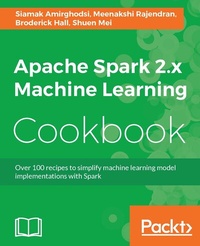
Apache Spark 2.x Machine Learning Cookbook
Over 100 recipes to simplify machine learning model implementations with Spark
Published on 8. July 2025
666 pages
978-1-78217-460-8 (ISBN)
Description

No detailed description available for "Apache Spark 2.x Machine Learning Cookbook".
All prices
More details
Edition
Digital original
Language
English
Place of publication
Birmingham
United Kingdom
Target group
Professional and scholarly
US School Grade: College Graduate Student
Edition type
Digital original
File size
16,17 MB
ISBN-13
978-1-78217-460-8 (9781782174608)
Copyright in bibliographic data and cover images is held by Nielsen Book Services Limited or by the publishers or by their respective licensors: all rights reserved.
Schweitzer Classification
Other editions
Additional editions
Siamak Amirghodsi | Meenakshi Rajendran | Shuen Hall
Apache Spark 2.x Machine Learning Cookbook
Book
09/2017
Packt Publishing
€66.00
Shipment within 3-4 weeks
Person
Amirghodsi Siamak :
Siamak Amirghodsi (Sammy) is interested in building advanced technical teams, executive management, Spark, Hadoop, big data analytics, AI, deep learning nets, TensorFlow, cognitive models, swarm algorithms, real-time streaming systems, quantum computing, financial risk management, trading signal discovery, econometrics, long-term financial cycles, IoT, blockchain, probabilistic graphical models, cryptography, and NLP.Guller Mohammed :
Author of Big Data Analytics with Spark - http://www.apress.com/9781484209653Mei Shuen :
Shuen Mei is a big data analytic platforms expert with 15+ years of experience in designing, building, and executing large-scale, enterprise-distributed financial systems with mission-critical low-latency requirements. He is certified in the Apache Spark, Cloudera Big Data platform, including Developer, Admin, and HBase. He is also a certified AWS solutions architect with emphasis on peta-byte range real-time data platform systems.Rajendran Meenakshi :
Meenakshi Rajendran is experienced in the end-to-end delivery of data analytics and data science products for leading financial institutions. Meenakshi holds a master's degree in business administration and is a certified PMP with over 13 years of experience in global software delivery environments. Her areas of research and interest are Apache Spark, cloud, regulatory data governance, machine learning, Cassandra, and managing global data teams at scale.Hall Broderick :
Broderick Hall is a hands-on big data analytics expert and holds a masters degree in computer science with 20 years of experience in designing and developing complex enterprise-wide software applications with real-time and regulatory requirements at a global scale. He is a deep learning early adopter and is currently working on a large-scale cloud-based data platform with deep learning net augmentation.
Siamak Amirghodsi (Sammy) is interested in building advanced technical teams, executive management, Spark, Hadoop, big data analytics, AI, deep learning nets, TensorFlow, cognitive models, swarm algorithms, real-time streaming systems, quantum computing, financial risk management, trading signal discovery, econometrics, long-term financial cycles, IoT, blockchain, probabilistic graphical models, cryptography, and NLP.Guller Mohammed :
Author of Big Data Analytics with Spark - http://www.apress.com/9781484209653Mei Shuen :
Shuen Mei is a big data analytic platforms expert with 15+ years of experience in designing, building, and executing large-scale, enterprise-distributed financial systems with mission-critical low-latency requirements. He is certified in the Apache Spark, Cloudera Big Data platform, including Developer, Admin, and HBase. He is also a certified AWS solutions architect with emphasis on peta-byte range real-time data platform systems.Rajendran Meenakshi :
Meenakshi Rajendran is experienced in the end-to-end delivery of data analytics and data science products for leading financial institutions. Meenakshi holds a master's degree in business administration and is a certified PMP with over 13 years of experience in global software delivery environments. Her areas of research and interest are Apache Spark, cloud, regulatory data governance, machine learning, Cassandra, and managing global data teams at scale.Hall Broderick :
Broderick Hall is a hands-on big data analytics expert and holds a masters degree in computer science with 20 years of experience in designing and developing complex enterprise-wide software applications with real-time and regulatory requirements at a global scale. He is a deep learning early adopter and is currently working on a large-scale cloud-based data platform with deep learning net augmentation.
Content
- Cover
- Title Page
- Copyright
- Credits
- About the Authors
- About the Reviewer
- www.PacktPub.com
- Customer Feedback
- Table of Contents
- Preface
- Chapter 1: Practical Machine Learning with Spark Using Scala
- Introduction
- Apache Spark
- Machine learning
- Scala
- Software versions and libraries used in this book
- Downloading and installing the JDK
- Getting ready
- How to do it...
- Downloading and installing IntelliJ
- Getting ready
- How to do it...
- Downloading and installing Spark
- Getting ready
- How to do it...
- Configuring IntelliJ to work with Spark and run Spark ML sample codes
- Getting ready
- How to do it...
- There's more...
- See also
- Running a sample ML code from Spark
- Getting ready
- How to do it...
- Identifying data sources for practical machine learning
- Getting ready
- How to do it...
- See also
- Running your first program using Apache Spark 2.0 with the IntelliJ IDE
- How to do it...
- How it works...
- There's more...
- See also
- How to add graphics to your Spark program
- How to do it...
- How it works...
- There's more...
- See also
- Chapter 2: Just Enough Linear Algebra for Machine Learning with Spark
- Introduction
- Package imports and initial setup for vectors and matrices
- How to do it...
- There's more...
- See also
- Creating DenseVector and setup with Spark 2.0
- How to do it...
- How it works...
- There's more...
- See also
- Creating SparseVector and setup with Spark
- How to do it...
- How it works...
- There's more...
- See also
- Creating dense matrix and setup with Spark 2.0
- Getting ready
- How to do it...
- How it works...
- There's more...
- See also
- Using sparse local matrices with Spark 2.0
- How to do it...
- How it works...
- There's more...
- See also
- Performing vector arithmetic using Spark 2.0
- How to do it...
- How it works...
- See also
- Performing matrix arithmetic using Spark 2.0
- How to do it...
- How it works...
- Exploring RowMatrix in Spark 2.0
- How to do it...
- How it works...
- There's more...
- See also
- Exploring Distributed IndexedRowMatrix in Spark 2.0
- How to do it...
- How it works...
- See also
- Exploring distributed CoordinateMatrix in Spark 2.0
- How to do it...
- How it works...
- See also
- Exploring distributed BlockMatrix in Spark 2.0
- How to do it...
- How it works...
- See also
- Chapter 3: Spark'
- s Three Data Musketeers for Machine Learning - Perfect Together
- Introduction
- RDDs - what started it all...
- DataFrame - a natural evolution to unite API and SQL via a high-level API
- Dataset - a high-level unifying Data API
- Creating RDDs with Spark 2.0 using internal data sources
- How to do it...
- How it works...
- Creating RDDs with Spark 2.0 using external data sources
- How to do it...
- How it works...
- There's more...
- See also
- Transforming RDDs with Spark 2.0 using the filter() API
- How to do it...
- How it works...
- There's more...
- See also
- Transforming RDDs with the super useful flatMap() API
- How to do it...
- How it works...
- There's more...
- See also
- Transforming RDDs with set operation APIs
- How to do it...
- How it works...
- See also
- RDD transformation/aggregation with groupBy() and reduceByKey()
- How to do it...
- How it works...
- There's more...
- See also
- Transforming RDDs with the zip() API
- How to do it...
- How it works...
- See also
- Join transformation with paired key-value RDDs
- How to do it...
- How it works...
- There's more...
- Reduce and grouping transformation with paired key-value RDDs
- How to do it...
- How it works...
- See also
- Creating DataFrames from Scala data structures
- How to do it...
- How it works...
- There's more...
- See also
- Operating on DataFrames programmatically without SQL
- How to do it...
- How it works...
- There's more...
- See also
- Loading DataFrames and setup from an external source
- How to do it...
- How it works...
- There's more...
- See also
- Using DataFrames with standard SQL language - SparkSQL
- How to do it...
- How it works...
- There's more...
- See also
- Working with the Dataset API using a Scala Sequence
- How to do it...
- How it works...
- There's more...
- See also
- Creating and using Datasets from RDDs and back again
- How to do it...
- How it works...
- There's more...
- See also
- Working with JSON using the Dataset API and SQL together
- How to do it...
- How it works...
- There's more...
- See also
- Functional programming with the Dataset API using domain objects
- How to do it...
- How it works...
- There's more...
- See also
- Chapter 4: Common Recipes for Implementing a Robust Machine Learning System
- Introduction
- Spark's basic statistical API to help you build your own algorithms
- How to do it...
- How it works...
- There's more...
- See also
- ML pipelines for real-life machine learning applications
- How to do it...
- How it works...
- There's more...
- See also
- Normalizing data with Spark
- How to do it...
- How it works...
- There's more...
- See also
- Splitting data for training and testing
- How to do it...
- How it works...
- There's more...
- See also
- Common operations with the new Dataset API
- How to do it...
- How it works...
- There's more...
- See also
- Creating and using RDD versus DataFrame versus Dataset from a text file in Spark 2.0
- How to do it...
- How it works...
- There's more...
- See also
- LabeledPoint data structure for Spark ML
- How to do it...
- How it works...
- There's more...
- See also
- Getting access to Spark cluster in Spark 2.0
- How to do it...
- How it works...
- There's more...
- See also
- Getting access to Spark cluster pre-Spark 2.0
- How to do it...
- How it works...
- There's more...
- See also
- Getting access to SparkContext vis-a-vis SparkSession object in Spark 2.0
- How to do it...
- How it works...
- There's more...
- See also
- New model export and PMML markup in Spark 2.0
- How to do it...
- How it works...
- There's more...
- See also
- Regression model evaluation using Spark 2.0
- How to do it...
- How it works...
- There's more...
- See also
- Binary classification model evaluation using Spark 2.0
- How to do it...
- How it works...
- There's more...
- See also
- Multiclass classification model evaluation using Spark 2.0
- How to do it...
- How it works...
- There's more...
- See also
- Multilabel classification model evaluation using Spark 2.0
- How to do it...
- How it works...
- There's more...
- See also
- Using the Scala Breeze library to do graphics in Spark 2.0
- How to do it...
- How it works...
- There's more...
- See also
- Chapter 5: Practical Machine Learning with Regression and Classification in Spark 2.0 - Part I
- Introduction
- Fitting a linear regression line to data the old fashioned way
- How to do it...
- How it works...
- There's more...
- See also
- Generalized linear regression in Spark 2.0
- How to do it...
- How it works...
- There's more...
- See also
- Linear regression API with Lasso and L-BFGS in Spark 2.0
- How to do it...
- How it works...
- There's more...
- See also
- Linear regression API with Lasso and 'auto' optimization selection in Spark 2.0
- How to do it...
- How it works...
- There's more...
- See also
- Linear regression API with ridge regression and 'auto' optimization selection in Spark 2.0
- How to do it...
- How it works...
- There's more...
- See also
- Isotonic regression in Apache Spark 2.0
- How to do it...
- How it works...
- There's more...
- See also
- Multilayer perceptron classifier in Apache Spark 2.0
- How to do it...
- How it works...
- There's more...
- See also
- One-vs-Rest classifier (One-vs-All) in Apache Spark 2.0
- How to do it...
- How it works...
- There's more...
- See also
- Survival regression - parametric AFT model in Apache Spark 2.0
- How to do it...
- How it works...
- There's more...
- See also
- Chapter 6: Practical Machine Learning with Regression and Classification in Spark 2.0 - Part II
- Introduction
- Linear regression with SGD optimization in Spark 2.0
- How to do it...
- How it works...
- There's more...
- See also
- Logistic regression with SGD optimization in Spark 2.0
- How to do it...
- How it works...
- There's more...
- See also
- Ridge regression with SGD optimization in Spark 2.0
- How to do it...
- How it works...
- There's more...
- See also
- Lasso regression with SGD optimization in Spark 2.0
- How to do it...
- How it works...
- There's more...
- See also
- Logistic regression with L-BFGS optimization in Spark 2.0
- How to do it...
- How it works...
- There's more...
- See also
- Support Vector Machine (SVM) with Spark 2.0
- How to do it...
- How it works...
- There's more...
- See also
- Naive Bayes machine learning with Spark 2.0 MLlib
- How to do it...
- How it works...
- There's more...
- See also
- Exploring ML pipelines and DataFrames using logistic regression in Spark 2.0
- Getting ready
- How to do it...
- How it works...
- There's more...
- PipeLine
- Vectors
- See also
- Chapter 7: Recommendation Engine that Scales with Spark
- Introduction
- Content filtering
- Collaborative filtering
- Neighborhood method
- Latent factor models techniques
- Setting up the required data for a scalable recommendation engine in Spark 2.0
- How to do it...
- How it works...
- There's more...
- See also
- Exploring the movies data details for the recommendation system in Spark 2.0
- How to do it...
- How it works...
- There's more...
- See also
- Exploring the ratings data details for the recommendation system in Spark 2.0
- How to do it...
- How it works...
- There's more...
- See also
- Building a scalable recommendation engine using collaborative filtering in Spark 2.0
- How to do it...
- How it works...
- There's more...
- See also
- Dealing with implicit input for training
- Chapter 8: Unsupervised Clustering with Apache Spark 2.0
- Introduction
- Building a KMeans classifying system in Spark 2.0
- How to do it...
- How it works...
- KMeans (Lloyd Algorithm)
- KMeans++ (Arthur's algorithm)
- KMeans|| (pronounced as KMeans Parallel)
- There's more...
- See also
- Bisecting KMeans, the new kid on the block in Spark 2.0
- How to do it...
- How it works...
- There's more...
- See also
- Using Gaussian Mixture and Expectation Maximization (EM) in Spark to classify data
- How to do it...
- How it works...
- New GaussianMixture()
- There's more...
- See also
- Classifying the vertices of a graph using Power Iteration Clustering (PIC) in Spark 2.0
- How to do it...
- How it works...
- There's more...
- See also
- Latent Dirichlet Allocation (LDA) to classify documents and text into topics
- How to do it...
- How it works...
- There's more...
- See also
- Streaming KMeans to classify data in near real-time
- How to do it...
- How it works...
- There's more...
- See also
- Chapter 9: Optimization - Going Down the Hill with Gradient Descent
- Introduction
- How do machines learn using an error-based system?
- Optimizing a quadratic cost function and finding the minima using just math to gain insight
- How to do it...
- How it works...
- There's more...
- See also
- Coding a quadratic cost function optimization using Gradient Descent (GD) from scratch
- How to do it...
- How it works...
- There's more...
- See also
- Coding Gradient Descent optimization to solve Linear Regression from scratch
- How to do it...
- How it works...
- There's more...
- See also
- Normal equations as an alternative for solving Linear Regression in Spark 2.0
- How to do it...
- How it works...
- There's more...
- See also
- Chapter 10: Building Machine Learning Systems with Decision Tree and Ensemble Models
- Introduction
- Ensemble models
- Measures of impurity
- Getting and preparing real-world medical data for exploring Decision Trees and Ensemble models in Spark 2.0
- How to do it...
- There's more...
- Building a classification system with Decision Trees in Spark 2.0
- How to do it
- How it works...
- There's more...
- See also
- Solving Regression problems with Decision Trees in Spark 2.0
- How to do it...
- How it works...
- See also
- Building a classification system with Random Forest Trees in Spark 2.0
- How to do it...
- How it works...
- See also
- Solving regression problems with Random Forest Trees in Spark 2.0
- How to do it...
- How it works...
- See also
- Building a classification system with Gradient Boosted Trees (GBT) in Spark 2.0
- How to do it...
- How it works....
- There's more...
- See also
- Solving regression problems with Gradient Boosted Trees (GBT) in Spark 2.0
- How to do it...
- How it works...
- There's more...
- See also
- Chapter 11: Curse of High-Dimensionality in Big Data
- Introduction
- Feature selection versus feature extraction
- Two methods of ingesting and preparing a CSV file for processing in Spark
- How to do it...
- How it works...
- There's more...
- See also
- Singular Value Decomposition (SVD) to reduce high-dimensionality in Spark
- How to do it...
- How it works...
- There's more...
- See also
- Principal Component Analysis (PCA) to pick the most effective latent factor for machine learning in Spark
- How to do it...
- How it works...
- There's more...
- See also
- Chapter 12: Implementing Text Analytics with Spark 2.0 ML Library
- Introduction
- Doing term frequency with Spark - everything that counts
- How to do it...
- How it works...
- There's more...
- See also
- Displaying similar words with Spark using Word2Vec
- How to do it...
- How it works...
- There's more...
- See also
- Downloading a complete dump of Wikipedia for a real-life Spark ML project
- How to do it...
- There's more...
- See also
- Using Latent Semantic Analysis for text analytics with Spark 2.0
- How to do it...
- How it works...
- There's more...
- See also
- Topic modeling with Latent Dirichlet allocation in Spark 2.0
- How to do it...
- How it works...
- There's more...
- See also
- Chapter 13: Spark Streaming and Machine Learning Library
- Introduction
- Structured streaming for near real-time machine learning
- How to do it...
- How it works...
- There's more...
- See also
- Streaming DataFrames for real-time machine learning
- How to do it...
- How it works...
- There's more...
- See also
- Streaming Datasets for real-time machine learning
- How to do it...
- How it works...
- There's more...
- See also
- Streaming data and debugging with queueStream
- How to do it...
- How it works...
- See also
- Downloading and understanding the famous Iris data for unsupervised classification
- How to do it...
- How it works...
- There's more...
- See also
- Streaming KMeans for a real-time on-line classifier
- How to do it...
- How it works...
- There's more...
- See also
- Downloading wine quality data for streaming regression
- How to do it...
- How it works...
- There's more...
- Streaming linear regression for a real-time regression
- How to do it...
- How it works...
- There's more...
- See also
- Downloading Pima Diabetes data for supervised classification
- How to do it...
- How it works...
- There's more...
- See also
- Streaming logistic regression for an on-line classifier
- How to do it...
- How it works...
- There's more...
- See also
- Index

