

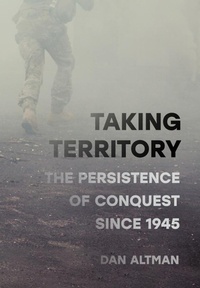
Taking Territory
Description

Taking Territory is an eye-opening account of why territorial conquest remains a phenomenon today.
The end of World War II seemingly brought about a decline of territorial conquest. Many have argued that a strong territorial integrity norm in the postwar era explains this decline. Yet as Dan Altman shows, states have seized territory numerous times since 1945. Large-scale conquests have waned, but small, targeted seizures have persisted. The relationship between conquest and war has also shifted. While states attempting conquest before 1945 often initiated war, then sought to occupy large territories, challengers today more often seize small regions, then try to avoid war. This strategy, the fait accompli, has become the predominant mode of conquest.
Drawing on his own original data consisting of 175 conquest attempts between 1918 and 2024, Altman explains why conquest persists, what motivates it, when it turns violent, and when it succeeds. He shows how miscalculated faits accomplis have sparked many post-1945 wars and why the motives behind many territorial grabs are often about image, domestic politics, and the ambitions of military officers. Incisive and illuminating, Taking Territory cuts against what we think we know about post-1945 conquest to reveal its true causes and consequences.
More details
Other editions
Additional editions
Person
Dan Altman is an Associate Professor of Political Science at Georgia State University.
