

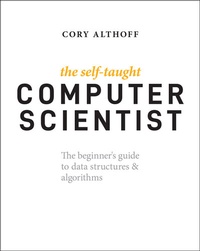
The Self-Taught Computer Scientist
The Beginner's Guide to Data Structures & Algorithms
1st Edition
Published on 15. September 2021
224 pages
978-1-119-72444-5 (ISBN)
Description

The follow-up to Cory Althoff's bestselling The Self-Taught Programmer, which inspired hundreds of thousands of professionals to learn to program outside of school!
Fresh out of college and with just a year of self-study behind him, Cory Althoff was offered a dream first job as a software engineer for a well-known tech company, but he quickly found himself overwhelmed by the amount of things he needed to know, but hadn't learned yet. This experience combined with his personal journey learning to program inspired his widely praised guide, The Self-Taught Programmer. Now Cory's back with another guide for the self-taught community of learners focusing on the foundations of computer science.
The Self-Taught Computer Scientist introduces beginner and self-taught programmers to computer science fundamentals that are essential for success in programming and software engineering fields. Computer science is a massive subject that could cover an entire lifetime of learning. This book does not aim to cover everything you would learn about if you went to school to get a computer science degree. Instead, Cory's goal is to give you an introduction to some of the most important concepts in computer science that apply to a programming career. With a focus on data structures and algorithms, The Self-Taught Computer Scientist helps you fill gaps in your knowledge, prepare for a technical interview, feel knowledgeable and confident on the job, and ultimately, become a better programmer.
* Learn different algorithms including linear and binary search and test your knowledge with feedback loops
* Understand what a data structure is and study arrays, linked lists, stacks, queues, hash tables, binary trees, binary heaps, and graphs
* Prepare for technical interviews and feel comfortable working with more experienced colleagues
* Discover additional resources and tools to expand your skillset and continue your learning journey
It's as simple as this: You have to study computer science if you want to become a successful programmer, and if you don't understand computer science, you won't get hired. Ready for a career in programming, coding, or software engineering and willing to embrace an "always be learning" mindset? The Self-Taught Computer Scientist is for you.
Fresh out of college and with just a year of self-study behind him, Cory Althoff was offered a dream first job as a software engineer for a well-known tech company, but he quickly found himself overwhelmed by the amount of things he needed to know, but hadn't learned yet. This experience combined with his personal journey learning to program inspired his widely praised guide, The Self-Taught Programmer. Now Cory's back with another guide for the self-taught community of learners focusing on the foundations of computer science.
The Self-Taught Computer Scientist introduces beginner and self-taught programmers to computer science fundamentals that are essential for success in programming and software engineering fields. Computer science is a massive subject that could cover an entire lifetime of learning. This book does not aim to cover everything you would learn about if you went to school to get a computer science degree. Instead, Cory's goal is to give you an introduction to some of the most important concepts in computer science that apply to a programming career. With a focus on data structures and algorithms, The Self-Taught Computer Scientist helps you fill gaps in your knowledge, prepare for a technical interview, feel knowledgeable and confident on the job, and ultimately, become a better programmer.
* Learn different algorithms including linear and binary search and test your knowledge with feedback loops
* Understand what a data structure is and study arrays, linked lists, stacks, queues, hash tables, binary trees, binary heaps, and graphs
* Prepare for technical interviews and feel comfortable working with more experienced colleagues
* Discover additional resources and tools to expand your skillset and continue your learning journey
It's as simple as this: You have to study computer science if you want to become a successful programmer, and if you don't understand computer science, you won't get hired. Ready for a career in programming, coding, or software engineering and willing to embrace an "always be learning" mindset? The Self-Taught Computer Scientist is for you.
More details
Other editions
Additional editions
Book
11/2021
1st Edition
Wiley
€31.50
Shipment within 15-20 days
Person
CORY ALTHOFF is a programmer, speaker, and author whose work includes The Self-Taught Programmer and The Self-Taught Computer Scientist. After graduating with a major in political science, Cory taught himself to program, eventually becoming a software engineer at eBay. Cory's books have been translated into eight languages, and he has been featured in publications like Forbes and CNBC. Over 250K developers are part of the self-taught programmer community he created through his popular Facebook group, course, and newsletter. Cory is a senior vice president at CompTIA, where he helps people learn the skills they need to have successful careers in tech. Cory lives in California with his wife and daughter.
Content
Introduction xiv
I Introduction to Algorithms 1
1 What Is an Algorithm? 3
Analyzing Algorithms 4
Constant Time 8
Logarithmic Time 9
Linear Time 10
Log-Linear Time 11
Quadratic Time 11
Cubic Time 13
Exponential Time 14
Best- Case vs. Worst-Case Complexity 15
Space Complexity 15
Why Is This Important? 16
Vocabulary 17
Challenge 18
2 Recursion 19
When to Use Recursion 23
Vocabulary 23
Challenge 23
3 Search Algorithms 25
Linear Search 25
When to Use a Linear Search 27
Binary Search 27
When to Use a Binary Search 30
Searching for Characters 32
Vocabulary 34
Challenge 35
4 Sorting Algorithms 37
Bubble Sort 37
When to Use Bubble Sort 41
Insertion Sort 42
When to Use Insertion Sort 45
Merge Sort 45
When to Use Merge Sort 52
Sorting Algorithms in Python 53
Vocabulary 54
Challenge 54
5 String Algorithms 55
Anagram Detection 55
Palindrome Detection 56
Last Digit 57
Caesar Cipher 58
Vocabulary 61
Challenge 61
6 Math 63
Binary 63
Bitwise Operators 66
FizzBuzz 70
Greatest Common Factor 72
Euclid's Algorithm 74
Primes 75
Vocabulary 77
Challenge 78
7 Self- Taught Inspiration: Margaret Hamilton 79
II Data Structures. 81
8 What Is a Data Structure? 83
Vocabulary 85
Challenge 86
9 Arrays 87
Array Performance 88
Creating an Array 90
Moving Zeros 91
Combining Two Lists 94
Finding the Duplicates in a List 95
Finding the Intersection of Two Lists 98
Vocabulary 99
Challenge 100
10 Linked Lists 101
Linked List Performance 103
Create a Linked List 104
Search a Linked List 107
Removing a Node from a Linked List 108
Reverse a Linked List 109
Finding a Linked List Cycle 110
Vocabulary 111
Challenges 112
11 Stacks 113
When to Use Stacks 114
Creating a Stack 115
Using Stacks to Reverse Strings 119
Min Stack 120
Stacked Parentheses 123
Vocabulary 125
Challenges 125
12 Queues 127
When to Use Queues 128
Creating a Queue 129
Python's Built- In Queue Class 134
Create a Queue Using Two Stacks 134
Vocabulary 136
Challenge 136
13 Hash Tables 137
When to Use Hash Tables 140
Characters in a String 141
Two Sum 143
Vocabulary 144
Challenge 145
14 Binary Trees 147
When to Use Trees 150
Creating a Binary Tree 153
Breadth- First Tree Traversal 155
More Tree Traversals 157
Invert a Binary Tree 160
Vocabulary 162
Challenges 162
15 Binary Heaps 163
When to Use Heaps 167
Creating a Heap 167
Connecting Ropes with Minimal Cost 169
Vocabulary 171
Challenge 171
16 Graphs 173
When to Use Graphs 177
Creating a Graph 178
Dijkstra's Algorithm 180
Vocabulary 186
Challenge 187
17 Self- Taught Inspiration: Elon Musk 189
18 Next Steps 191
What's Next? 191
Climbing the Freelance Ladder 192
How to Get an Interview 192
How to Prepare for a Technical Interview 193
Additional Resources 194
Final Thoughts 194
Index 195
I Introduction to Algorithms 1
1 What Is an Algorithm? 3
Analyzing Algorithms 4
Constant Time 8
Logarithmic Time 9
Linear Time 10
Log-Linear Time 11
Quadratic Time 11
Cubic Time 13
Exponential Time 14
Best- Case vs. Worst-Case Complexity 15
Space Complexity 15
Why Is This Important? 16
Vocabulary 17
Challenge 18
2 Recursion 19
When to Use Recursion 23
Vocabulary 23
Challenge 23
3 Search Algorithms 25
Linear Search 25
When to Use a Linear Search 27
Binary Search 27
When to Use a Binary Search 30
Searching for Characters 32
Vocabulary 34
Challenge 35
4 Sorting Algorithms 37
Bubble Sort 37
When to Use Bubble Sort 41
Insertion Sort 42
When to Use Insertion Sort 45
Merge Sort 45
When to Use Merge Sort 52
Sorting Algorithms in Python 53
Vocabulary 54
Challenge 54
5 String Algorithms 55
Anagram Detection 55
Palindrome Detection 56
Last Digit 57
Caesar Cipher 58
Vocabulary 61
Challenge 61
6 Math 63
Binary 63
Bitwise Operators 66
FizzBuzz 70
Greatest Common Factor 72
Euclid's Algorithm 74
Primes 75
Vocabulary 77
Challenge 78
7 Self- Taught Inspiration: Margaret Hamilton 79
II Data Structures. 81
8 What Is a Data Structure? 83
Vocabulary 85
Challenge 86
9 Arrays 87
Array Performance 88
Creating an Array 90
Moving Zeros 91
Combining Two Lists 94
Finding the Duplicates in a List 95
Finding the Intersection of Two Lists 98
Vocabulary 99
Challenge 100
10 Linked Lists 101
Linked List Performance 103
Create a Linked List 104
Search a Linked List 107
Removing a Node from a Linked List 108
Reverse a Linked List 109
Finding a Linked List Cycle 110
Vocabulary 111
Challenges 112
11 Stacks 113
When to Use Stacks 114
Creating a Stack 115
Using Stacks to Reverse Strings 119
Min Stack 120
Stacked Parentheses 123
Vocabulary 125
Challenges 125
12 Queues 127
When to Use Queues 128
Creating a Queue 129
Python's Built- In Queue Class 134
Create a Queue Using Two Stacks 134
Vocabulary 136
Challenge 136
13 Hash Tables 137
When to Use Hash Tables 140
Characters in a String 141
Two Sum 143
Vocabulary 144
Challenge 145
14 Binary Trees 147
When to Use Trees 150
Creating a Binary Tree 153
Breadth- First Tree Traversal 155
More Tree Traversals 157
Invert a Binary Tree 160
Vocabulary 162
Challenges 162
15 Binary Heaps 163
When to Use Heaps 167
Creating a Heap 167
Connecting Ropes with Minimal Cost 169
Vocabulary 171
Challenge 171
16 Graphs 173
When to Use Graphs 177
Creating a Graph 178
Dijkstra's Algorithm 180
Vocabulary 186
Challenge 187
17 Self- Taught Inspiration: Elon Musk 189
18 Next Steps 191
What's Next? 191
Climbing the Freelance Ladder 192
How to Get an Interview 192
How to Prepare for a Technical Interview 193
Additional Resources 194
Final Thoughts 194
Index 195
