

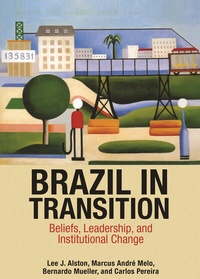
Brazil in Transition
Beliefs, Leadership, and Institutional Change
1st Edition
Published on 20. June 2016
280 pages
978-1-4008-8094-2 (ISBN)
Description

Brazil is the world's sixth-largest economy, and for the first three-quarters of the twentieth century was one of the fastest-growing countries in the world. While the country underwent two decades of unrelenting decline from 1975 to 1994, the economy has rebounded dramatically. How did this nation become an emerging power? Brazil in Transition looks at the factors behind why this particular country has successfully progressed up the economic development ladder. The authors examine the roles of beliefs, leadership, and institutions in the elusive, critical transition to sustainable development.
Analyzing the last fifty years of Brazil's history, the authors explain how the nation's beliefs, centered on social inclusion yet bound by orthodox economic policies, led to institutions that altered economic, political, and social outcomes. Brazil's growth and inflation became less variable, the rule of law strengthened, politics became more open and competitive, and poverty and inequality declined. While these changes have led to a remarkable economic transformation, there have also been economic distortions and inefficiencies that the authors argue are part of the development process.
Brazil in Transition demonstrates how a dynamic nation seized windows of opportunity to become a more equal, prosperous, and rules-based society.
Analyzing the last fifty years of Brazil's history, the authors explain how the nation's beliefs, centered on social inclusion yet bound by orthodox economic policies, led to institutions that altered economic, political, and social outcomes. Brazil's growth and inflation became less variable, the rule of law strengthened, politics became more open and competitive, and poverty and inequality declined. While these changes have led to a remarkable economic transformation, there have also been economic distortions and inefficiencies that the authors argue are part of the development process.
Brazil in Transition demonstrates how a dynamic nation seized windows of opportunity to become a more equal, prosperous, and rules-based society.
All prices
More details
Language
English
Place of publication
Princeton, NJ
United States
Publishing group
De Gruyter
Target group
Professional and scholarly
Edition type
Digital original
Product notice
Reflowable
Illustrations
21 line illus. 3 tables.
File size
0,94 MB
ISBN-13
978-1-4008-8094-2 (9781400880942)
Schweitzer Classification
Other editions
Additional editions
Lee J. Alston | Marcus Andre Melo | Bernardo Mueller
Brazil in Transition
Beliefs, Leadership, and Institutional Change
Book
05/2016
Princeton University Press
€52.00
Shipment within 10-20 days
Persons
Lee J. Alston is the Ostrom Chair, professor of economics and law, and director of the Ostrom Workshop at Indiana University, as well as research associate at the NBER. Marcus André Melo is professor of political science at the Federal University of Pernambuco, Brazil. Bernardo Mueller is professor of economics at the University of Brasília. Carlos Pereira is professor of political science at the Brazilian School of Administration at the Getúlio Vargas Foundation, Rio de Janeiro.
Content
List of Illustrations xi
List of Tables xiii
Preface xv
Abbreviations xvii
Part I. An Overview of Brazil in Transition: Beliefs, Leadership, and Institutional Change 1
Chapter 1. Introduction 3
Economic Development and Critical Transitions 3
Brazil: This Time for Real? 7
A Sketch of the Conceptual Framework 14
Analytical Narratives and Economic Development 16
Road Map for the Book 19
Chapter 2. A Conceptual Dynamic for Understanding Development 24
Beliefs, Leadership, Dominant Network, and Windows of Opportunity 24
Difference in Difference in Changing Beliefs 28
Overview of Dominant Network, Beliefs, and Institutions in Brazil from 1964 to 2014 33
1964-1984 33
1985-1993 36
1994-2014 38
Summary 39
Part II. Introduction to the Case Study of Brazil, 1964-2014 41
Identifying Beliefs 45
Appendix: A Primer on the Brazilian Political System 50
Chapter 3. From Disorder to Growth and Back: The Military Regime (1964-1984) 54
From Chaos to a Short Period of Order 54
From Order to Unsustainable Growth 59
The Miracle Fades 64
Back to Disorder 67
The Decline of Developmentalism 70
Chapter 4. Transition to Democracy and the Belief in Social Inclusion (1985-1993) 71
A New Belief Emerges 71
The Transition to Democracy 72
Codifying Beliefs: The Constitution of 1988 76
The Constitution-Making Process 78
The Constitution's Delegation of Powers to the President 87
Back to Uncertainty and Chaos 90
Failures of the Brazilian Economic Plans before the Real 91
The Collor Government: Great Hope, Huge Disappointment 93
Chapter 5. Cardoso Seizes a Window of Opportunity (1993-2002) 97
The Real Plan 99
Early Institutional Deepening: Constitutional Amendments 103
Coalition Management under Cardoso 107
Asserting Fiscal Control over States 108
Staying the Course against the Early Opposition to the Real Plan 110
Sustaining Stability in the Face of External Shocks 116
Cardoso's Second Term: Combining Macro Orthodoxy with Social Inclusion 117
The Reassertion of Presidential Fiscal Authority 119
Conclusions 120
Chapter 6. Deepening Beliefs and Institutional Change (2002-2014) 122
The Uncertain Transition 122
Continuity in Change 126
Deepening the Social Contract 128
Checks and Balances vs. Strong Presidential Powers 138
The New Economic Matrix and Dilma's Policy Switch 150
Beliefs? Really? . . . Really! 154
The Messy Process of Dissipative Inclusion 161
Conclusion 165
Part III. A General Inductive Framework for Understandin Critical Transitions 169
Chapter 7. A Conceptual Framework for Understanding Critical Transitions 171
Understanding Critical Transitions 172
How Does Our Framework Fit in the Literature? 173
The Building Blocks of Our Conceptual Framework 176
Windows of Opportunity 176
Dominant Network 177
Beliefs 180
Leadership 186
Institutions 189
Economic and Political Outcomes 190
Dynamics 191
Argentina: An Illustrative Use of the Framework 199
The Camelot Years: 1912-1930 200
Electoral Fraud and the Rise of Perón: 1930-1946 201
Instability Is the Rule: Oscillations between Populism and Military Rule: 1946-Present 204
Concluding Remarks 207
Chapter 8. Conclusion 209
Better and Worse at the Same Time 210
Assessing the Framework 214
Brazil and the Critical Transition 216
Afterword 221
References 227
Index 243
List of Tables xiii
Preface xv
Abbreviations xvii
Part I. An Overview of Brazil in Transition: Beliefs, Leadership, and Institutional Change 1
Chapter 1. Introduction 3
Economic Development and Critical Transitions 3
Brazil: This Time for Real? 7
A Sketch of the Conceptual Framework 14
Analytical Narratives and Economic Development 16
Road Map for the Book 19
Chapter 2. A Conceptual Dynamic for Understanding Development 24
Beliefs, Leadership, Dominant Network, and Windows of Opportunity 24
Difference in Difference in Changing Beliefs 28
Overview of Dominant Network, Beliefs, and Institutions in Brazil from 1964 to 2014 33
1964-1984 33
1985-1993 36
1994-2014 38
Summary 39
Part II. Introduction to the Case Study of Brazil, 1964-2014 41
Identifying Beliefs 45
Appendix: A Primer on the Brazilian Political System 50
Chapter 3. From Disorder to Growth and Back: The Military Regime (1964-1984) 54
From Chaos to a Short Period of Order 54
From Order to Unsustainable Growth 59
The Miracle Fades 64
Back to Disorder 67
The Decline of Developmentalism 70
Chapter 4. Transition to Democracy and the Belief in Social Inclusion (1985-1993) 71
A New Belief Emerges 71
The Transition to Democracy 72
Codifying Beliefs: The Constitution of 1988 76
The Constitution-Making Process 78
The Constitution's Delegation of Powers to the President 87
Back to Uncertainty and Chaos 90
Failures of the Brazilian Economic Plans before the Real 91
The Collor Government: Great Hope, Huge Disappointment 93
Chapter 5. Cardoso Seizes a Window of Opportunity (1993-2002) 97
The Real Plan 99
Early Institutional Deepening: Constitutional Amendments 103
Coalition Management under Cardoso 107
Asserting Fiscal Control over States 108
Staying the Course against the Early Opposition to the Real Plan 110
Sustaining Stability in the Face of External Shocks 116
Cardoso's Second Term: Combining Macro Orthodoxy with Social Inclusion 117
The Reassertion of Presidential Fiscal Authority 119
Conclusions 120
Chapter 6. Deepening Beliefs and Institutional Change (2002-2014) 122
The Uncertain Transition 122
Continuity in Change 126
Deepening the Social Contract 128
Checks and Balances vs. Strong Presidential Powers 138
The New Economic Matrix and Dilma's Policy Switch 150
Beliefs? Really? . . . Really! 154
The Messy Process of Dissipative Inclusion 161
Conclusion 165
Part III. A General Inductive Framework for Understandin Critical Transitions 169
Chapter 7. A Conceptual Framework for Understanding Critical Transitions 171
Understanding Critical Transitions 172
How Does Our Framework Fit in the Literature? 173
The Building Blocks of Our Conceptual Framework 176
Windows of Opportunity 176
Dominant Network 177
Beliefs 180
Leadership 186
Institutions 189
Economic and Political Outcomes 190
Dynamics 191
Argentina: An Illustrative Use of the Framework 199
The Camelot Years: 1912-1930 200
Electoral Fraud and the Rise of Perón: 1930-1946 201
Instability Is the Rule: Oscillations between Populism and Military Rule: 1946-Present 204
Concluding Remarks 207
Chapter 8. Conclusion 209
Better and Worse at the Same Time 210
Assessing the Framework 214
Brazil and the Critical Transition 216
Afterword 221
References 227
Index 243

