

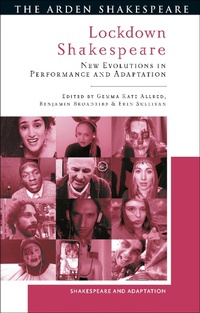
Lockdown Shakespeare
New Evolutions in Performance and Adaptation
1st Edition
Published on 16. June 2022
296 pages
978-1-350-24781-9 (ISBN)
Description

This edited collection offers the first in-depth analysis and sourcebook for 'Lockdown Shakespeare'. It brings together scholars of stage, screen, early modern and adaptation studies to examine the work that emerged during the Covid-19 pandemic and considers issues of form, liveness, reception, presence and community. Interviews with theatre makers and artists illuminate the challenges and benefits of creating new work online, while educators consider how digital tools have facilitated the teaching of Shakespeare through performance. Together, the chapters in this book offer readers the definitive work on the performance and adaptation of Shakespeare online during the pandemic.
From The Show Must Go Online, which presented Shakespeare's First Folio via YouTube, to Creation Theatre and Big Telly's interactive The Tempest and Macbeth, which used Zoom as their stage, the book documents the variety and richness of work that emerged during the pandemic. It reveals how, by taking Shakespeare online in new and innovative ways, the theatre industry sparked the evolution of new forms of performance with their own conventions, aesthetics and notions of liveness. Among the other productions discussed are Arden Theatre Company's A Midsummer Night's Dream, Tender Claws' 'The Under Presents: Tempest', The Shakespeare Ensemble's What You Will, Merced Shakespearefest's Ricardo II, CtrlAltRepeat's Midsummer Night Stream, Sally McLean's Shakespeare Republic: #AllTheWebsAStage (The Lockdown Chronicles) and Justina Taft Mattos's Moore - A Pacific Island Othello.
More details
Series
Edition
1. Auflage
Language
English
Place of publication
London
United Kingdom
Publishing group
Bloomsbury Publishing PLC
Target group
College/higher education
Illustrations
12 bw illus
ISBN-13
978-1-350-24781-9 (9781350247819)
Copyright in bibliographic data and cover images is held by Nielsen Book Services Limited or by the publishers or by their respective licensors: all rights reserved.
Schweitzer Classification
Other editions
Additional editions
Gemma Kate Allred | Benjamin Broadribb | Erin Sullivan
Lockdown Shakespeare
New Evolutions in Performance and Adaptation
Book
01/2024
The Arden Shakespeare
€55.89
Shipment within 15-20 days
Gemma Kate Allred | Benjamin Broadribb | Erin Sullivan
Lockdown Shakespeare
New Evolutions in Performance and Adaptation
Book
07/2022
The Arden Shakespeare
€126.28
Shipment within 15-20 days
Persons
Gemma Kate Allred is a doctoral researcher at the Université de Neuchâtel, Switzerland.
Benjamin Broadribb is a doctoral researcher at The Shakespeare Institute, University of Birmingham, UK.
Erin Sullivan is Reader in Shakespeare at The Shakespeare Institute, University of Birmingham, UK.
Benjamin Broadribb is a doctoral researcher at The Shakespeare Institute, University of Birmingham, UK.
Erin Sullivan is Reader in Shakespeare at The Shakespeare Institute, University of Birmingham, UK.
Content
Introduction: Cultural Cartography of The Digital Lockdown Landscape
Gemma Kate Allred (Université de Neuchâtel, Switzerland) and Benjamin Broadribb (Shakespeare Institute, Stratford-upon-Avon, UK)
Part One: Analyses
1. The Screen Language of Lockdown: Connection and Choice in Split-Screen Performance John Wyver (University of Westminster, London, UK)
2. Lockdown Shakespeare and the Metamodern Sensibility Benjamin Broadribb (Shakespeare Institute, Stratford-upon-Avon, UK)
3. Notions of Liveness in Lockdown Performance Gemma Kate Allred (Université de Neuchâtel, Switzerland)
4. Creation Theatre and Big Telly's The Tempest: Digital Theatre and the Performing Audience Pascale Aebischer and Rachael Nicholas (University of Exeter, UK)
5. Immersion in a Time of Distraction: 'The Under Presents: Tempest' Erin Sullivan (Shakespeare Institute, Stratford-upon-Avon, UK)
6. What You Will in the Time of COVID-19: Exploring the Digital Arts, Race and Flexible Resistance David Sterling Brown (Trinity College, Connecticut, USA ) and Ben Crystal (The Shakespeare Ensemble, Global)
Part Two: Case Studies
7. 'Shakespeare for Everyone' The Show Must Go Online in conversation with Gemma Kate Allred (Université de Neuchâtel, Switzerland) and Benjamin Broadribb (Shakespeare Institute, Stratford-upon-Avon, UK)
8. Ricardo II: una producción bilingüe de Merced Shakespearefest William Wolfgang (University of Warwick, UK) and Erin Sullivan (Shakespeare Institute, Stratford-upon-Avon, UK)
9. 'Your play needs no excuse' CtrlAltRepeat in conversation with Gemma Kate Allred (Université de Neuchâtel, Switzerland) and Benjamin Broadribb (Shakespeare Institute, Stratford-upon-Avon, UK)
10. 'Are we all met?': Responding to Shakespeare's Canon through Online Community Performance Jennifer Moss Waghorn, Katrin Bauer, Sarah Hodgson, Diane Lowman, Kathryn Twigg and Martin Wiggins (Shakespeare Institute, Stratford-upon-Avon, UK)
11. 'Present fears are less than horrible imaginings' Big Telly Theatre Company in conversation with Gemma Kate Allred (Université de Neuchâtel, Switzerland) and Benjamin Broadribb (Shakespeare Institute, Stratford-upon-Avon, UK)
12. Teaching Shakespearean Performance in Lockdown Andrew James Hartley (University of North Carolina at Charlotte, USA), Sarah Hatchuel (Université Paul-Valéry, Montpellier, France) and Yu Umemiya (Waseda University, Tokyo, Japan) in conversation with Erin Sullivan (Shakespeare Institute, Stratford-upon-Avon, UK)
Part Three:
Lockdown Digital Arts: An Extended Year in Review
Gemma Kate Allred (Université de Neuchâtel, Switzerland), Benjamin Broadribb and Erin Sullivan (Shakespeare Institute, Stratford-upon-Avon, UK)
I. Spring
II. Summer
III. Autumn
IV. Winter / Spring
Conclusion: Shakespeare after Lockdown
Erin Sullivan (Shakespeare Institute, Stratford-upon-Avon, UK)
Notes
Index
Gemma Kate Allred (Université de Neuchâtel, Switzerland) and Benjamin Broadribb (Shakespeare Institute, Stratford-upon-Avon, UK)
Part One: Analyses
1. The Screen Language of Lockdown: Connection and Choice in Split-Screen Performance John Wyver (University of Westminster, London, UK)
2. Lockdown Shakespeare and the Metamodern Sensibility Benjamin Broadribb (Shakespeare Institute, Stratford-upon-Avon, UK)
3. Notions of Liveness in Lockdown Performance Gemma Kate Allred (Université de Neuchâtel, Switzerland)
4. Creation Theatre and Big Telly's The Tempest: Digital Theatre and the Performing Audience Pascale Aebischer and Rachael Nicholas (University of Exeter, UK)
5. Immersion in a Time of Distraction: 'The Under Presents: Tempest' Erin Sullivan (Shakespeare Institute, Stratford-upon-Avon, UK)
6. What You Will in the Time of COVID-19: Exploring the Digital Arts, Race and Flexible Resistance David Sterling Brown (Trinity College, Connecticut, USA ) and Ben Crystal (The Shakespeare Ensemble, Global)
Part Two: Case Studies
7. 'Shakespeare for Everyone' The Show Must Go Online in conversation with Gemma Kate Allred (Université de Neuchâtel, Switzerland) and Benjamin Broadribb (Shakespeare Institute, Stratford-upon-Avon, UK)
8. Ricardo II: una producción bilingüe de Merced Shakespearefest William Wolfgang (University of Warwick, UK) and Erin Sullivan (Shakespeare Institute, Stratford-upon-Avon, UK)
9. 'Your play needs no excuse' CtrlAltRepeat in conversation with Gemma Kate Allred (Université de Neuchâtel, Switzerland) and Benjamin Broadribb (Shakespeare Institute, Stratford-upon-Avon, UK)
10. 'Are we all met?': Responding to Shakespeare's Canon through Online Community Performance Jennifer Moss Waghorn, Katrin Bauer, Sarah Hodgson, Diane Lowman, Kathryn Twigg and Martin Wiggins (Shakespeare Institute, Stratford-upon-Avon, UK)
11. 'Present fears are less than horrible imaginings' Big Telly Theatre Company in conversation with Gemma Kate Allred (Université de Neuchâtel, Switzerland) and Benjamin Broadribb (Shakespeare Institute, Stratford-upon-Avon, UK)
12. Teaching Shakespearean Performance in Lockdown Andrew James Hartley (University of North Carolina at Charlotte, USA), Sarah Hatchuel (Université Paul-Valéry, Montpellier, France) and Yu Umemiya (Waseda University, Tokyo, Japan) in conversation with Erin Sullivan (Shakespeare Institute, Stratford-upon-Avon, UK)
Part Three:
Lockdown Digital Arts: An Extended Year in Review
Gemma Kate Allred (Université de Neuchâtel, Switzerland), Benjamin Broadribb and Erin Sullivan (Shakespeare Institute, Stratford-upon-Avon, UK)
I. Spring
II. Summer
III. Autumn
IV. Winter / Spring
Conclusion: Shakespeare after Lockdown
Erin Sullivan (Shakespeare Institute, Stratford-upon-Avon, UK)
Notes
Index
