

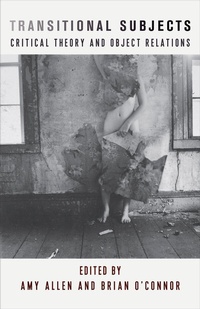
Transitional Subjects
Critical Theory and Object Relations
1st Edition
Published on 22. July 2019
280 pages
978-0-231-54478-8 (ISBN)
Description

Critical social theory has long been marked by a deep, creative, and productive relationship with psychoanalysis. Whereas Freud and Fromm were important cornerstones for the early Frankfurt School, recent thinkers have drawn on the object-relations school of psychoanalysis. Transitional Subjects is the first book-length collection devoted to the engagement of critical theory with the work of Melanie Klein, Donald Winnicott, and other members of this school. Featuring contributions from some of the leading figures working in both of these fields, including Axel Honneth, Joel Whitebook, Noëlle McAfee, Sara Beardsworth, and C. Fred Alford, it provides a synoptic overview of current research at the intersection of these two theoretical traditions while also opening up space for further innovations.
Transitional Subjects offers a range of perspectives on the critical potential of object-relations psychoanalysis, including feminist and Marxist views, to offer valuable insight into such fraught social issues as aggression, narcissism, "progress," and torture. The productive dialogue that emerges augments our understanding of the self as intersubjectively and socially constituted and of contemporary "social pathologies." Transitional Subjects shows how critical theory and object-relations psychoanalysis, considered together, have not only enriched critical theory but also invigorated psychoanalysis.
Transitional Subjects offers a range of perspectives on the critical potential of object-relations psychoanalysis, including feminist and Marxist views, to offer valuable insight into such fraught social issues as aggression, narcissism, "progress," and torture. The productive dialogue that emerges augments our understanding of the self as intersubjectively and socially constituted and of contemporary "social pathologies." Transitional Subjects shows how critical theory and object-relations psychoanalysis, considered together, have not only enriched critical theory but also invigorated psychoanalysis.
All prices
More details
Other editions
Additional editions
Book
08/2019
Columbia University Press
€144.84
Article not available at the moment
Book
08/2019
Columbia University Press
€37.14
Article not available at the moment
Persons
Allen Amy :
Amy Allen (PhD, Philosophy, Northwestern) is Liberal Arts Professor of Philosophy and Women's, Gender, and Sexuality Studies and head of the Philosophy Department at the Pennsylvania State University. Her publications include The End of Progress: Decolonizing the Normative Foundations of Critical Theory (Columbia, 2016) and The Politics of Our Selves: Power, Autonomy, and Gender in Contemporary Critical Theory (Columbia, 2007). She is also the editor of the Columbia series New Directions in Critical Theory. She specializes in critical social theory, feminist theory, and 20th-century continental philosophy.O'Connor Brian :
Brian O'Connor (PhD, Philosophy, Oxford) is Professor of Philosophy at University College Dublin. He is the author of Idleness: A Philosophical Essay (Princeton, 2018), Adorno (Routledge, 2013), and Adorno's Negative Dialectic: Philosophy and the Possibility of a Critical Rationality (MIT, 2004), the editor of The Adorno Reader (Blackwell, 2000), and the coeditor (with Georg Mohr) of German Idealism: An Anthology and Guide (Chicago, 2007). His research focuses on critical theory and German idealism.Allen Amy :
Amy Allen (PhD, Philosophy, Northwestern) is Liberal Arts Professor of Philosophy and Women's, Gender, and Sexuality Studies and head of the Philosophy Department at the Pennsylvania State University. Her publications include The End of Progress: Decolonizing the Normative Foundations of Critical Theory (Columbia, 2016) and The Politics of Our Selves: Power, Autonomy, and Gender in Contemporary Critical Theory (Columbia, 2007). She is also the editor of the Columbia series New Directions in Critical Theory. She specializes in critical social theory, feminist theory, and 20th-century continental philosophy.Amy Allen is Liberal Arts Professor of Philosophy and Women's, Gender, and Sexuality Studies and head of the Department of Philosophy at the Pennsylvania State University. Her books include, most recently, The End of Progress: Decolonizing the Normative Foundations of Critical Theory (Columbia, 2016).
Brian O'Connor is professor of philosophy at University College Dublin. His books include Adorno (2013) and Idleness: A Philosophical Essay (2018).
Amy Allen (PhD, Philosophy, Northwestern) is Liberal Arts Professor of Philosophy and Women's, Gender, and Sexuality Studies and head of the Philosophy Department at the Pennsylvania State University. Her publications include The End of Progress: Decolonizing the Normative Foundations of Critical Theory (Columbia, 2016) and The Politics of Our Selves: Power, Autonomy, and Gender in Contemporary Critical Theory (Columbia, 2007). She is also the editor of the Columbia series New Directions in Critical Theory. She specializes in critical social theory, feminist theory, and 20th-century continental philosophy.O'Connor Brian :
Brian O'Connor (PhD, Philosophy, Oxford) is Professor of Philosophy at University College Dublin. He is the author of Idleness: A Philosophical Essay (Princeton, 2018), Adorno (Routledge, 2013), and Adorno's Negative Dialectic: Philosophy and the Possibility of a Critical Rationality (MIT, 2004), the editor of The Adorno Reader (Blackwell, 2000), and the coeditor (with Georg Mohr) of German Idealism: An Anthology and Guide (Chicago, 2007). His research focuses on critical theory and German idealism.Allen Amy :
Amy Allen (PhD, Philosophy, Northwestern) is Liberal Arts Professor of Philosophy and Women's, Gender, and Sexuality Studies and head of the Philosophy Department at the Pennsylvania State University. Her publications include The End of Progress: Decolonizing the Normative Foundations of Critical Theory (Columbia, 2016) and The Politics of Our Selves: Power, Autonomy, and Gender in Contemporary Critical Theory (Columbia, 2007). She is also the editor of the Columbia series New Directions in Critical Theory. She specializes in critical social theory, feminist theory, and 20th-century continental philosophy.Amy Allen is Liberal Arts Professor of Philosophy and Women's, Gender, and Sexuality Studies and head of the Department of Philosophy at the Pennsylvania State University. Her books include, most recently, The End of Progress: Decolonizing the Normative Foundations of Critical Theory (Columbia, 2016).
Brian O'Connor is professor of philosophy at University College Dublin. His books include Adorno (2013) and Idleness: A Philosophical Essay (2018).
Content
Introduction, by Amy Allen and Brian O'Connor
Part I: Conceptual Foundations
1. Fusion or Omnipotence? A Dialogue, by Axel Honneth and Joel Whitebook
2. Hate, Aggression, and Recognition: Winnicott, Klein, and Honneth, by C. Fred Alford
3. Narcissism and Critique: On Kohut's Self Psychology, by Alessandro Ferrara
Part II: Historical Encounters
4. Progress and the Death Drive, by Amy Allen
5. Transitional Objects, God, and Modeling the Commodity Form, by Owen Hulatt
6. A "True- Enough Self ": Winnicott, Object Relations Theory, and the Bases of Identity, by James Martel
Part III: Political Implications
7. Intersubjectivity on the Couch: Recognition and Destruction in the Work of Jessica Benjamin, by Johanna Meehan
8. Politics and the Fear of Breakdown, by Noëlle McAfee
9. Who Is the Perpetrator? The Missing Affect in Torture's Violation of Human Dignity, by Sara Beardsworth
Index
Part I: Conceptual Foundations
1. Fusion or Omnipotence? A Dialogue, by Axel Honneth and Joel Whitebook
2. Hate, Aggression, and Recognition: Winnicott, Klein, and Honneth, by C. Fred Alford
3. Narcissism and Critique: On Kohut's Self Psychology, by Alessandro Ferrara
Part II: Historical Encounters
4. Progress and the Death Drive, by Amy Allen
5. Transitional Objects, God, and Modeling the Commodity Form, by Owen Hulatt
6. A "True- Enough Self ": Winnicott, Object Relations Theory, and the Bases of Identity, by James Martel
Part III: Political Implications
7. Intersubjectivity on the Couch: Recognition and Destruction in the Work of Jessica Benjamin, by Johanna Meehan
8. Politics and the Fear of Breakdown, by Noëlle McAfee
9. Who Is the Perpetrator? The Missing Affect in Torture's Violation of Human Dignity, by Sara Beardsworth
Index

