

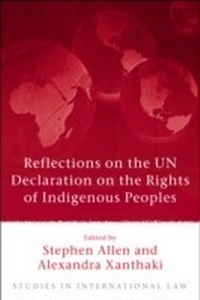
Reflections on the UN Declaration on the Rights of Indigenous Peoples
1st Edition
Published on 12. January 2011
620 pages
978-1-84731-623-3 (ISBN)
Description

The adoption of the Declaration on the Rights of Indigenous Peoples by the United Nations General Assembly on 13 September 2007 was acclaimed as a major success for the United Nations system given the extent to which it consolidates and develops the international corpus of indigenous rights. This is the first in-depth academic analysis of this far-reaching instrument. Indigenous representatives have argued that the rights contained in the Declaration, and the processes by which it was formulated, obligate affected States to accept the validity of its provisions and its interpretation of contested concepts (such as 'culture', 'land', 'ownership' and 'self-determination'). This edited collection contains essays written by the main protagonists in the development of the Declaration; indigenous representatives; and field-leading academics. It offers a comprehensive institutional, thematic and regional analysis of the Declaration. In particular, it explores the Declaration's normative resonance for international law and considers the ways in which this international instrument could catalyse institutional action and influence the development of national laws and policies on indigenous issues.
More details
Series
Edition
1. Auflage
Language
English
Place of publication
London
United Kingdom
Publishing group
Bloomsbury Publishing PLC
Target group
Professional and scholarly
ISBN-13
978-1-84731-623-3 (9781847316233)
Copyright in bibliographic data and cover images is held by Nielsen Book Services Limited or by the publishers or by their respective licensors: all rights reserved.
Schweitzer Classification
Other editions
Additional editions
Stephen Allen | Alexandra Xanthaki
Reflections on the UN Declaration on the Rights of Indigenous Peoples
Book
01/2011
1st Edition
Hart Publishing
€124.80
Shipment within 15-20 days
Persons
Stephen Allen is a Lecturer in Law at Brunel University.
Alexandra Xanthaki is a Reader in Law and Deputy Head at Brunel Law School.
Alexandra Xanthaki is a Reader in Law and Deputy Head at Brunel Law School.
Content
SECTION A: INSTITUTIONAL PERSPECTIVES
1. The UN Declaration on the Rights of Indigenous Peoples: Background and Appraisal
Erica-Irene Daes
2. The UN Declaration on the Rights of Indigenous Peoples: From Advocacy to Implementation
Julian Burger
3. Integrating the UN Declaration on the Rights of Indigenous Peoples into CERD Practice
Patrick Thornberry
4. The International Labour Organization and the Internationalisation of the Concept of Indigenous Peoples
Andrew Erueti
5. Using the United Nations Declaration on the Rights of Indigenous Peoples in Litigation
Clive Baldwin and Cynthia Morel
SECTION B: THEMATIC PERSPECTIVES
6. Making the Declaration on the Rights of Indigenous Peoples Work: The Challenge Ahead
Rodolfo Stavenhagen
7. The Three Ironies of the UN Declaration on the Rights of Indigenous Peoples
H Patrick Glenn
8. Beyond the Indigenous/Minority Dichotomy?
Will Kymlicka
9. Voting in the General Assembly as Evidence of Customary International Law?
Emmanuel Voyiakis
10. The UN Declaration on the Rights of Indigenous Peoples and the Limits of the International Legal Project
Stephen Allen
SECTION C: SUBSTANTIVE PERSPECTIVES
11. The UN Declaration on the Rights of Indigenous Peoples: New Directions for Self-Determination and
Participatory Rights?
Helen Quane
12. A New Dawn over the Land: Shedding Light on Collective Ownership and Consent
Jérémie Gilbert and Cathal Doyle
13. The Controversial Issue of Natural Resources: Balancing States' Sovereignty with Indigenous
Peoples' Rights
Stefania Errico
14. Indigenous Rights and the Right to Development: Emerging Synergies or Collusion?
Joshua Castellino
15. Taking Cultural Rights Seriously: The Vision of the UN Declaration on the Rights of Indigenous Peoples
Elsa Stamatopoulou
16. The UN Declaration on the Rights of Indigenous Peoples and Collective Rights: What's the Future for
Indigenous Women?
Alexandra Xanthaki
17. Community Rights to Culture: The UN Declaration on the Rights of Indigenous Peoples
Johanna Gibson
SECTION D: REGIONAL PERSPECTIVES
18. The Inter-American System and the UN Declaration on the Rights of Indigenous Peoples: Mutual Reinforcement
Luis Rodríguez-Pinero
19. The UN Declaration on the Rights of Indigenous Peoples in Africa: The Approach of the Regional
Organisations to Indigenous Peoples
Rachel Murray
20. Reflections on the UN Declaration on the Rights of Indigenous Peoples: An Arctic Perspective
Dalee Sambo Dorough
21. The UN Declaration on the Rights of Indigenous Peoples: Recent Developments regarding the Saami People of the North
Malgosia Fitzmaurice
22. Between the Devil and the Deep Blue Sea: Indigenous Peoples as the Pawns in the US 'War on Terror' and the Jihad of Osama Bin Laden
Javaid Rehman
APPENDIX: The United Nations Declaration on the Rights of Indigenous Peoples
1. The UN Declaration on the Rights of Indigenous Peoples: Background and Appraisal
Erica-Irene Daes
2. The UN Declaration on the Rights of Indigenous Peoples: From Advocacy to Implementation
Julian Burger
3. Integrating the UN Declaration on the Rights of Indigenous Peoples into CERD Practice
Patrick Thornberry
4. The International Labour Organization and the Internationalisation of the Concept of Indigenous Peoples
Andrew Erueti
5. Using the United Nations Declaration on the Rights of Indigenous Peoples in Litigation
Clive Baldwin and Cynthia Morel
SECTION B: THEMATIC PERSPECTIVES
6. Making the Declaration on the Rights of Indigenous Peoples Work: The Challenge Ahead
Rodolfo Stavenhagen
7. The Three Ironies of the UN Declaration on the Rights of Indigenous Peoples
H Patrick Glenn
8. Beyond the Indigenous/Minority Dichotomy?
Will Kymlicka
9. Voting in the General Assembly as Evidence of Customary International Law?
Emmanuel Voyiakis
10. The UN Declaration on the Rights of Indigenous Peoples and the Limits of the International Legal Project
Stephen Allen
SECTION C: SUBSTANTIVE PERSPECTIVES
11. The UN Declaration on the Rights of Indigenous Peoples: New Directions for Self-Determination and
Participatory Rights?
Helen Quane
12. A New Dawn over the Land: Shedding Light on Collective Ownership and Consent
Jérémie Gilbert and Cathal Doyle
13. The Controversial Issue of Natural Resources: Balancing States' Sovereignty with Indigenous
Peoples' Rights
Stefania Errico
14. Indigenous Rights and the Right to Development: Emerging Synergies or Collusion?
Joshua Castellino
15. Taking Cultural Rights Seriously: The Vision of the UN Declaration on the Rights of Indigenous Peoples
Elsa Stamatopoulou
16. The UN Declaration on the Rights of Indigenous Peoples and Collective Rights: What's the Future for
Indigenous Women?
Alexandra Xanthaki
17. Community Rights to Culture: The UN Declaration on the Rights of Indigenous Peoples
Johanna Gibson
SECTION D: REGIONAL PERSPECTIVES
18. The Inter-American System and the UN Declaration on the Rights of Indigenous Peoples: Mutual Reinforcement
Luis Rodríguez-Pinero
19. The UN Declaration on the Rights of Indigenous Peoples in Africa: The Approach of the Regional
Organisations to Indigenous Peoples
Rachel Murray
20. Reflections on the UN Declaration on the Rights of Indigenous Peoples: An Arctic Perspective
Dalee Sambo Dorough
21. The UN Declaration on the Rights of Indigenous Peoples: Recent Developments regarding the Saami People of the North
Malgosia Fitzmaurice
22. Between the Devil and the Deep Blue Sea: Indigenous Peoples as the Pawns in the US 'War on Terror' and the Jihad of Osama Bin Laden
Javaid Rehman
APPENDIX: The United Nations Declaration on the Rights of Indigenous Peoples
