

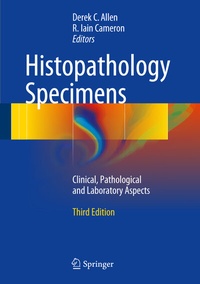
Histopathology Specimens
Description

Covering anatomical, clinical, pathological and laboratory aspects of surgical histopathology specimens, this revised, updated third edition relates specimen dissection and its clinical context to relevant histopathology reports, and therefore a more comprehensive patient prognosis and management is possible.
This book explains pathological and clinical terminology, including a glossary of clinical request form abbreviations. A standardised step-wise approach to specimen handling is illustrated with simple line diagrams and highlights essentials of the histopathology report, relating them to appropriate specimen dissection. The integrated multidisciplinary team approach taken to the modern clinical management of patients is reflected by correlating patient presentation, diagnostic and staging investigations with histopathology specimens. Current WHO and TNM tumour classifications are referenced.
Histopathology Specimens: Clinical, Pathological and Laboratory Aspects, Third Edition will be of educative value and act as a reference tool for the medical undergraduate student, medical trainee in histopathology and the biomedical scientist, and as a useful aide memoire for the histopathology consultant.
More details
Other editions
Additional editions
Previous edition
Persons
Derek C. Allen, Belfast City Hospital, Belfast Health and Social Care Trust, UK
R. Iain Cameron, Altnagelvin Hospital, Western Health and Social Care Trust, Londonderry, UK
Content
Introduction .- Gastrointestinal Specimens .- General comments.- Oesophagus.- Stomach.- Pancreas, duodenum, ampulla of Vater and extrahepatic bile ducts.- Small intestine.- Colorectum.- Appendix.- Anus.- Gall bladder.- Liver.- Abdominal wall, umbilicus, hernias, omentum and peritoneum.- Breast Specimens .- Breast.- Head and Neck Specimens .- Nasal cavities and paranasal sinuses.- Lips, mouth and tongue.- Maxilla, mandible and teeth.- Pharynx and larynx.- Salivary glands.- Thyroid gland.- Parathyroid glands.- Neck - cysts, tumors and dissections.- Eye, Muscle and Nerve Specimens .- Eye, muscle and nerve specimens (including rectal biopsy for Hirschsprung's disease).- Gynaecological Specimens .- Ovary.- Fallopian tube.- Uterus.- Cervix.- Vagina.- Vulva.- Placenta.- Urological Specimens .- Kidney, renal pelvis and ureter.- Bladder.- Prostate.- Urethra.- Testis, epididymis and vas.- Penis.- Pelvic and Retroperitoneal Specimens .- Pelvic exenteration specimens.- Retroperitoneum.- Adrenal gland.- Skin Specimens .- Skin specimens.- Cardiothoracic Specimens and Vessels .- Lung.- Pleura.- Mediastinum.- Heart.- Vessels.- Osteoarticular and Soft Tissue S pecimens.- Joint space, bone, soft tissues and special techniques.- Haemopoietic Specimens .- Lymph nodes, spleen and bone marrow.- Miscellaneous Specimens and Ancillary Techniques .- Miscellaneous specimens and ancillary techniques.- Clinical Request Form Abbreviations .- Resection Specimen Blocking Summary .- Specimen Cut-up Proformas .- Index .
