


Conceptions of Space in Intellectual History
1st Edition
Published on 9. June 2020
154 pages
978-1-000-71127-1 (ISBN)
Description

This volume takes a fresh approach to the issue of 'space' in intellectual history and puts forward novel ways of rendering conceptions of space useful for historians of political thought.
Notions of 'space' have become increasingly important to the practice of intellectual historians in recent years. This is evidenced by emerging locutions such as 'the international turn', 'global intellectual history', and 'political space'. Thus far, however, it is still unclear what it actually means to take 'space' seriously in intellectual history, and what we might gain from doing so. Ranging from the early modern period to the twentieth century, the contributions to this volume span a variety of diverse topics and showcase the rewards of a spatial focus in intellectual history, both as a kind of place and as an organising principle. The book reconstructs the role of the modern territorial state in grounding reflection on political legitimacy; the interface between oceans and empires as a source of political reflection; and the curious antecedents of today's spatial turn in German and Indian visions of geopolitics in the interwar years. In doing so, it makes a contribution to an ever-growing field.
This book was originally published as a special issue of Global Intellectual History.
Notions of 'space' have become increasingly important to the practice of intellectual historians in recent years. This is evidenced by emerging locutions such as 'the international turn', 'global intellectual history', and 'political space'. Thus far, however, it is still unclear what it actually means to take 'space' seriously in intellectual history, and what we might gain from doing so. Ranging from the early modern period to the twentieth century, the contributions to this volume span a variety of diverse topics and showcase the rewards of a spatial focus in intellectual history, both as a kind of place and as an organising principle. The book reconstructs the role of the modern territorial state in grounding reflection on political legitimacy; the interface between oceans and empires as a source of political reflection; and the curious antecedents of today's spatial turn in German and Indian visions of geopolitics in the interwar years. In doing so, it makes a contribution to an ever-growing field.
This book was originally published as a special issue of Global Intellectual History.
More details
Edition
1. Auflage
Language
English
Place of publication
London
United Kingdom
Publishing group
Taylor & Francis Ltd
Target group
College/higher education
ISBN-13
978-1-000-71127-1 (9781000711271)
Copyright in bibliographic data and cover images is held by Nielsen Book Services Limited or by the publishers or by their respective licensors: all rights reserved.
Schweitzer Classification
Other editions
Additional editions
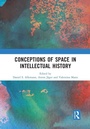
Daniel S. Allemann | Anton Jaeger | Valentina Mann
Conceptions of Space in Intellectual History
Book
06/2021
1st Edition
Routledge
€65.10
Shipment within 10-20 days

Daniel S. Allemann | Anton Jaeger | Valentina Mann
Conceptions of Space in Intellectual History
Book
10/2019
1st Edition
Routledge
€205.80
Shipment within 15-20 days
Persons
Daniel S. Allemann is a Research and Teaching Fellow at the University of Lucerne, Switzerland, while completing a PhD in the history of early modern political thought at the University of Cambridge, UK. His current research focuses on visions of slavery and empire in the wider Iberian world.
Anton Jaeger is a PhD Student working on populism and intellectual history at the University of Cambridge, UK. His doctoral thesis seeks to provide a new, revisionist intellectual history of the Populist movement in the late nineteenth-century United States.
Valentina Mann is a PhD Candidate at the University of Cambridge, UK. Her research focuses on the intellectual history of the social sciences in Europe and the United States at the end of the nineteenth century.
Anton Jaeger is a PhD Student working on populism and intellectual history at the University of Cambridge, UK. His doctoral thesis seeks to provide a new, revisionist intellectual history of the Populist movement in the late nineteenth-century United States.
Valentina Mann is a PhD Candidate at the University of Cambridge, UK. Her research focuses on the intellectual history of the social sciences in Europe and the United States at the end of the nineteenth century.
Content
Introduction: approaching space in intellectual history 1. The nation and property in Vattel's theory of territory 2. Kropotkin's commune and the politics of history 3. Space as gravitational field: the empire and the Atlantic in the political thought of Thomas Pownall 4. British imperialism and Southern liberalism: re-shaping the Mediterranean space, c. 1817-1823 5. Spaces on the temporal move: Weimar Geopolitik and the vision of an Indian science of the state, 1924-1945 6. Afterward: the space of political community and the space of authority
