

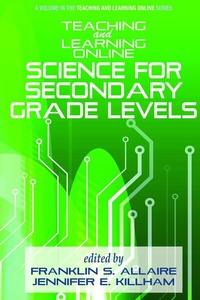
Teaching and Learning Online
Science for Secondary Grade Levels
1st Edition
Published on 1. January 2023
447 pages
979-8-88730-129-7 (ISBN)
Description

Science is unique among the disciplines since it is inherently hands-on. However, the hands-on nature of science instruction also makes it uniquely challenging when teaching in virtual environments. How do we, as science teachers, deliver high-quality experiences to secondary students in an online environment that leads to age/grade-level appropriate science content knowledge and literacy, but also collaborative experiences in the inquiry process and the nature of science?The expansion of online environments for education poses logistical and pedagogical challenges for early childhood and elementary science teachers and early learners. Despite digital media becoming more available and ubiquitous and increases in online spaces for teaching and learning (Killham et al., 2014; Wong et al., 2018), PreK-12 teachers consistently report feeling underprepared or overwhelmed by online learning environments (Molnar et al., 2021; Seaman et al., 2018). This is coupled with persistent challenges related to elementary teachers' lack of confidence and low science teaching self-efficacy (Brigido, Borrachero, Bermejo, & Mellado, 2013; Gunning & Mensah, 2011).Teaching and Learning Online: Science for Secondary Grade Levels comprises three distinct sections: Frameworks, Teacher's Journeys, and Lesson Plans. Each section explores the current trends and the unique challenges facing secondary teachers and students when teaching and learning science in online environments. All three sections include alignment with Next Generation Science Standards, tips and advice from the authors, online resources, and discussion questions to foster individual reflection as well as small group/classwide discussion. Teacher's Journeys and Lesson Plan sections use the 5E model (Bybee et al., 2006; Duran & Duran, 2004). Ideal for undergraduate teacher candidates, graduate students, teacher educators, classroom teachers, parents, and administrators, this book addresses why and how teachers use online environments to teach science content and work with elementary students through a research-based foundation.
More details
Other editions
Additional editions
Franklin S. Allaire | Jennifer E. Killham
Teaching and Learning Online
Science for Secondary Grade Levels
Book
01/2023
Information Age Publishing
€76.50
Shipment within 10-20 days
Content
- Cover
- Teaching and Learning Online: Science for Secondary Grade Levels
- Series
- Teaching and Learning Online: Science for Secondary Grade Levels
- Copyright
- Contents
- Dedication
- Introduction: Teaching and Learning Online: Science for Secondary Grade Levels
- COVID-19 AND TEACHING AND LEARNING ONLINE
- HOW TO USE THIS BOOK
- ONE MORE THING...
- REFERENCES
- I. FRAMEWORKS
- 1. Inquiry and Nature of Science in Digital Spaces
- RATIONALE
- THEORETICAL BACKGROUND
- INQUIRY AND NOS
- Inquiry: Development of Scientific Knowledge
- Teaching Inquiry in Digital Spaces
- Science Inquiry Online Example: The Effects of Water of Earth Materials
- NOS: Characteristics of Scientific Knowledge
- Laws and Theories
- Observational
- Subjectivity
- Durable yet Tentative and Well-established
- Natural Explanations
- Curiosity, Creativity, and Imagination
- Social, Cultural, and Historical Events
- Teaching NOSK in Digital Spaces
- Decontextualized Lesson Example: Nature of Science Magic Bottle and Mystery Tube
- Contextualized Lesson Example: Creating the Periodic Table of Elements
- SUMMARY AND REFLECTIONS
- TIPS AND ADVICE
- RESOURCE NOTES
- DISCUSSION QUESTIONS
- REFERENCES
- 2. Crosscutting Concepts: The Common Thread Often Hidden
- RATIONALE
- THEORETICAL BACKGROUND
- CHAPTER FOCUS
- Considerations for Teaching With the CCCs
- Resources for Teaching and Learning the CCCs
- An Example Lesson Activity
- Reflections
- SUMMARY AND REFLECTION
- TIPS AND ADVICE
- RESOURCE NOTES
- DISCUSSION QUESTIONS
- REFERENCES
- 3. Issues of Diversity, Equity, and Inclusivity in Online Secondary STEM Education
- RATIONALE
- THEORETICAL FRAMEWORK
- Technological Redlining and Equitable Online Secondary STEM Curriculum
- Collaborative Learning & Considerations in Online STEM Learning
- Inclusive Curriculum for Online Secondary STEM Content
- Cultural Representation
- Neurodiverse Student Needs
- Humanizing Social-Emotional Learning for Secondary STEM Students
- CHAPTER FOCUS: PRACTICAL APPLICATIONS IN DEVELOPING A MORE INCLUSIVE ONLINE STEM CURRICULUM
- Strategies That Account for the Impacts of Digital Redlining
- Collaborative Learning and Building Social Capital in Online Settings
- Developing Social Capital & NGSS Connections
- Culturally Inclusive Learning in Virtual Contexts
- Cultural Inclusivity & NGSS Connections
- Accessible Curriculum for Neurodiverse Students
- UDL and NGSS Connections
- Social-Emotional Learning and Trauma-Informed Practices
- SUMMARY AND REFLECTION
- TIPS AND ADVICE
- RESOURCE NOTES
- DISCUSSION QUESTIONS
- REFERENCES
- 4. Empowering Secondary Teachers to Use EQuIP Rubric to be Critical Conscious Users of Online Science Curricular Materials
- RATIONALE
- THEORETICAL BACKGROUND
- CHAPTER FOCUS
- Engage
- Explore
- Explain
- Elaborate
- Evaluate
- SUMMARY AND REFLECTIONS
- TIPS AND ADVICE
- RESOURCE NOTES
- DISCUSSION QUESTIONS
- REFERENCES
- 5. Engineering Design as a Framework for Virtual Education in Inclusive Science Classrooms
- RATIONALE
- THEORETICAL FRAMEWORK
- CHAPTER FOCUS
- Creating Collaborative Virtual Experiences
- Example One
- Example Two
- SUMMARY AND REFLECTION
- TIPS AND ADVICE
- RESOURCE NOTES
- DISCUSSION QUESTIONS
- REFERENCES
- 6. Bridging the Gap: Empowering Adolescent Girls in STEM Through Online Learning and Mentoring
- RATIONALE
- DEFINITIONS
- THEORETICAL BACKGROUND
- Underrepresentation Influencing Gender Gaps
- Modern Context
- Chapter Focus
- CONCEPTUAL FRAMEWORK
- Connectivism as a Learning Theory
- ONLINE STEM LEARNING FOR ADOLESCENT GIRLS
- Developing Identities in STEM
- Productive Mentoring
- Productive Mentoring in Connected Online Learning
- Implications
- SUMMARY AND REFLECTIONS
- TIPS AND ADVICE
- RESOURCE NOTES
- DISCUSSION QUESTIONS
- REFERENCES
- 7. Supporting Claim-Evidence-Reasoning in Linguistically Diverse Secondary Science Classes
- RATIONALE
- Theoretical Background
- CHAPTER FOCUS
- DIGITAL RESOURCES USED IN THE SCIENCE LANGUAGE ROUTINES
- NGSS Dimensions
- Claim-Evidence-Reasoning (CER)
- Claim
- Evidence
- Reasoning
- SUMMARY AND REFLECTIONS
- RESOURCE NOTES
- TIPS AND ADVICE
- DISCUSSION QUESTIONS
- REFERENCES
- 8. Giving Online Learning the Personal Touch: The Promoting Evidentiary Reasoning and Self-Regulation Online (PERSON) Framework
- RATIONALE
- THEORETICAL BACKGROUND
- KEY ELEMENTS OF PERSON
- Evidentiary Reasoning
- Foundational Knowledge
- Simulation Study
- Analyze and Extend
- Case Study
- Social Discourse
- Support for Self-Regulation
- Evaluation
- ALIGNMENT TO NGSS
- SUPPORTING LEARNING WITH ONLINE/REMOTE LEARNING ENVIRONMENTS
- Critiques and Considerations
- SUMMARY AND REFLECTION
- TIPS AND ADVICE
- RESOURCE NOTES
- DISCUSSION QUESTIONS
- REFERENCES
- II. TEACHER'S JOURNEYS
- 9. Using Educational Technology to Foster High School Students' Online Presence and Engagement as Becomings: An Integrated Stem Lesson on Trebuchets and Parabolas
- Student Engagement and Presence Through Becomings
- Diffractive Noticing: A Novel Theoretical Approach Helps Us to "See" Differently
- Synchronous Integrated STEM Lessons
- CONNECTIONS TO NGSS AND THREE-DIMENSIONAL LEARNING
- Students' Performance Expectations
- Science and Engineering Practices
- Asking Questions and Defining Problems (HS-ETS1-1)
- Using Mathematics and Computational Thinking (HS-ETS1-4)
- Disciplinary Core Ideas
- Defining and Delimiting Engineering Problems (ETS1.A)
- Developing Possible Solutions (ETS1.B)
- Optimizing the Design Solution (ETS1.C)
- Crosscutting Concepts
- Structure and Function (ETS1-2)
- LESSON NARRATIVE
- Engage
- Teacher Moves
- Student Moves
- Diffractive Noticing
- Explore
- Teacher Moves
- Student Moves
- Diffractive Noticing
- Explain
- Teacher Moves
- Student Moves
- Diffractive Noticing
- Elaborate
- Teacher Moves
- Student Moves
- Diffractive Noticing
- Evaluate
- Teacher Moves
- Student Moves
- Diffractive Noticing
- SUMMARY AND REFLECTIONS
- TIPS AND ADVICE
- RESOURCE NOTES
- DISCUSSION QUESTIONS
- REFERENCES
- 10. A PHET Simulation Inquiry Lab on Energy Conservation: Modified for Remote Learning in High School
- PhET's Energy Skate Park: Basics Sim
- Design of the In-Class Guided-Inquiry Lab
- Modification of the Lab for Remote Learning
- CONNECTIONS TO NGSS AND THREE-DIMENSIONAL LEARNING
- Students' Performance Expectations
- Science and Engineering Practices
- Developing and Using Models (HS-PS3)
- Planning and Carrying Out Investigations (HS-PS3)
- Constructing Explanations and Designing Solutions (HS-PS3)
- Disciplinary Core Ideas
- Definitions of Energy (PS3.A)
- Conservation of Energy and Energy Transfer (PS3.B)
- Relationship between Energy and Forces (PS3.C)
- Crosscutting Concepts
- Energy and Matter (HS-PS3)
- LESSON NARRATIVE
- Engage
- Explore
- Explain and Elaborate
- Evaluate
- Extension
- SUMMARY AND REFLECTIONS
- TIPS AND ADVICE
- RESOURCE NOTES
- DISCUSSION QUESTIONS
- REFERENCES
- 11. Active Learning at Home: Using 3D Virtual Reality Viewers to Explore the Human Heart for High School Students
- CONNECTION TO NGSS AND THREE-DIMENSIONAL LEARNING
- Students' Performance Expectations
- Science and Engineering Practices
- Constructing Explanations and Designing Solutions (HS-LS1-1)
- Developing and using models (HS-LS1-2)
- Disciplinary Core Ideas
- Structure and Function (LS1.A)
- Crosscutting Concepts
- Systems and System Models (HS-LS1-2)
- Stability and Change (HS-LS1-3)
- LESSON NARRATIVE
- Engage
- Explore
- Explain
- Elaborate
- Evaluate
- SUMMARY AND REFLECTIONS
- TIPS AND ADVICE
- RESOURCE NOTES
- DISCUSSION QUESTIONS
- REFERENCES
- 12. Citizen Science to Engage Youth in Pollinator Conservation for the Social Good
- INTRODUCTION
- Citizen Science for the Social Good
- Ecocitizen Pollinator Conservation Projects
- CONNECTIONS TO NGSS AND THREE-DIMENSIONAL LEARNING
- Students' Performance Expectations
- Science and Engineering Practices
- Analyzing and Interpreting Data (MS-LS2-1)
- Constructing explanations and designing solutions (MS-LS2-2)
- Disciplinary Core Ideas
- Ecosystems dynamics, functioning, and resilience (LS2.C)
- Biodiversity and humans (LS4.D)
- Crosscutting Concepts
- Patterns (MS-LS2-2)
- LESSON NARRATIVE
- Engage
- Explore
- Explain
- Elaborate
- Evaluate
- RESOURCE NOTES
- DISCUSSION QUESTIONS
- REFERENCES
- SUMMARY AND REFLECTIONS
- 13. Where Did My Food's Food Come From? Nature Journaling as a Tool For Meaning-Making In Photosynthesis
- Meaning-Making and Nature Journaling
- Nature Journaling for Online Teaching
- CONNECTIONS TO NGSS AND THREE-DIMENSIONAL LEARNING
- Students' Performance Expectations
- Science and Engineering Practices
- Constructing Explanations and Designing Solutions (MS-LS1-6)
- Developing and Using Models (MS-LS2-3)
- Disciplinary Core Ideas
- Organization for Matter and Energy Flow in Organisms (LS1.C)
- Cycle of Matter and Energy Transfer in Ecosystems (LS2.B)
- Crosscutting Concepts
- Energy and Matter (MS-LS1-6, MS-LS2-3)
- LESSON NARRATIVE
- Engage
- Explore
- Explain
- Elaborate
- Evaluate
- SUMMARY AND REFLECTIONS
- TIPS AND ADVICE
- RESOURCE NOTES
- DISCUSSION QUESTIONS
- REFERENCES
- 14. Design Thinking and Mini-Maker Kits in Science Education: Frameworks for Creative Problem-Solving in Transitions to Online and Hybrid Learning
- Frameworks
- Design Thinking
- Makerspaces
- CONNECTIONS TO NGSS AND THREE-DIMENSIONAL LEARNING
- LESSON NARRATIVE
- Engage
- Explore
- Explain
- Elaborate
- Evaluate
- SUMMARY AND REFLECTIONS
- TIPS AND ADVICE
- RESOURCE NOTES
- DISCUSSION QUESTIONS
- REFERENCES
- III. LESSON PLANS
- 15. Exploring Regional Climates With 360-Degree Photo Spheres
- LESSON PLAN OVERVIEW
- CONNECTIONS TO NGSS AND THREE-DIMENSIONAL LEARNING
- Science and Engineering Practices:
- Developing and Using Models
- Engaging in Argumentation from Evidence
- Disciplinary Core Ideas:
- ESS2.C: The Roles of Water in Earth's Surface Processes
- ESS2.D: Weather and Climate
- Crosscutting Concepts
- Systems and Systems Models
- TEACHING AND LEARNING ONLINE 5E LESSON PLAN
- Performance Expectation(s):
- BACKGROUND INFORMATION
- Prior Student Knowledge
- Possible Preconceptions / Misconceptions
- LESSON PLAN
- ENGAGE
- EXPLORE
- EXPLAIN
- Vocabulary
- ELABORATE
- EVALUATE
- Formative Monitoring (Questioning / Discussion)
- Summative Assessment (Quiz / Project / Report)
- ADDITIONAL LESSON INFO
- Extension and Contingency Plans
- Accommodations and Modifications
- LESSON NARRATIVE
- Engage
- Explore
- Explain
- Elaborate
- Evaluate
- SUMMARY AND REFLECTIONS
- TIPS AND ADVICE
- RESOURCE NOTES
- DISCUSSION QUESTIONS
- REFERENCES
- 16. Scientific Modeling in a Virtual Setting: Floating and Sinking Pennies!
- LESSON PLAN OVERVIEW
- CONNECTIONS TO NGSS AND THREE-DIMENSIONAL LEARNING
- Students' Performance Expectations
- Science and Engineering Practices
- Developing and Using Models (MS-PS1-1)
- Analyzing and Interpreting Data (HS-PS1-2)
- Disciplinary Core Ideas
- Structure and Properties of Matter (MS-PS1.A)
- Chemical Reactions (MS-PS1.B)
- Crosscutting Concepts
- Scale, Proportion, and Quantity (MS-PS1.A)
- Patterns (MS-PS1.B)
- TEACHING AND LEARNING ONLINE 5E LESSON PLAN
- BACKGROUND INFORMATION
- Prior Student Knowledge
- Possible Preconceptions / Misconceptions
- Source Notes
- LESSON PLAN
- ENGAGE
- Introduction to the Unit
- Asynchronous
- Synchronous
- Discussion Questions Using Claims-Evidence Reasoning (CER)
- Follow-up Using a Demo, "the Secret of the Block of Wood" video
- Discussion Questions
- EXPLORE
- Asynchronous
- Synchronous
- EXPLAIN
- Asynchronous or Synchronous
- Discussion Questions
- Synchronous: Students will complete these activities
- Answers for Teachers
- Scaffolds for Students
- Academic Vocabulary
- ELABORATE
- Introduction
- Asynchronous/Synchronous
- Discussion Questions
- Synchronous Activity
- Scaffolds for Students
- EVALUATE
- Formative Monitoring (Questioning / Discussion)
- Summative Assessment (Quiz / Project / Report)
- ADDITIONAL LESSON INFO
- Extension and Contingency Plans
- Accommodations and Modifications
- LESSON NARRATIVE
- Engage
- Explore
- Explain
- Elaborate
- Evaluate
- SUMMARY AND REFLECTIONS
- Online and Remote Learning Environments
- Critiques and Considerations
- TIPS AND ADVICE
- RESOURCE NOTES
- DISCUSSION QUESTIONS
- REFERENCES
- APPENDIX 1
- APPENDIX 2
- APPENDIX 3
- 17. Digging Into Rocks & Minerals Through Science Olympiad's MY SO Program
- LESSON PLAN OVERVIEW
- CONNECTIONS TO NGSS AND THREE-DIMENSIONAL LEARNING
- Performance Expectations
- Middle School Physical Science
- Middle School Earth and Space Science
- High School Physical Sciences
- High School Earth and Space Science
- Science and Engineering Practices
- Constructing Explanations and Designing Solutions
- Disciplinary Core Ideas
- Ecosystem Dynamics, Functioning, and Resilience (LS2.C)
- Biodiversity and Humans (LS4.D)
- Developing Possible Solutions (ETS1.B)
- Crosscutting Concepts
- Stability and Change (HS-LS2-7)
- TEACHING AND LEARNING ONLINE 5E LESSON PLAN
- BACKGROUND INFORMATION
- Prior Student Knowledge
- Possible Preconceptions / Misconceptions
- Source Notes
- LESSON PLAN
- ENGAGE
- Activity Description
- Materials
- EXPLORE
- Activity Description
- Materials
- Procedure
- EXPLAIN
- Activity Description
- Materials
- Procedure
- ELABORATE
- Activity Description
- Materials
- Videos & Recordings
- Hands-On & Simulation Activities
- Projects & Culminating Activities
- EVALUATE
- Formative Monitoring (Questioning / Discussion)
- ENGAGE Phase
- EXPLORE Phase
- EXPLAIN Phase
- ELABORATE Phase
- Summative Assessment (Quiz / Project / Report)
- Activity Description
- Materials
- ADDITIONAL LESSON INFO
- Accommodations and Modifications
- LESSON NARRATIVE
- SUMMARY AND REFLECTION
- TIPS AND ADVICE
- RESOURCE NOTES
- DISCUSSION QUESTIONS
- REFERENCES
- APPENDIX
- 18. A Look Inside the Atom: The Basic Building Block of Matter and the Foundation in an Online Science Course
- LESSON PLAN OVERVIEW
- CONNECTIONS TO NGSS AND THREE-DIMENSIONAL LEARNING
- Students' Performance Expectations
- Science and Engineering Practices
- Developing and Using Models (MS-PS1)
- Developing and Using Models (HS-PS1)
- Disciplinary Core Ideas
- Structure and Properties of Matter (MS-PS1.A)
- Structure and Properties of Matter (HS-PS1.A)
- Crosscutting Concepts
- Scale, Proportion, and Quantity (MS-PS1.A)
- Patterns (HS-PS1.A)
- TEACHING AND LEARNING ONLINE 5E LESSON PLAN
- Guiding Question(s)
- Performance Expectation(s)
- BACKGROUND INFORMATION
- Prior Student Knowledge
- Possible Preconceptions / Misconceptions
- Source Notes
- LESSON PLAN
- ENGAGE
- Opening Activity-Access Prior Learning / Stimulate Interest / Generate Questions
- Question(s)
- EXPLAIN
- Concepts Explained and Vocabulary Defined
- ELABORATE
- EVALUATE
- Formative Monitoring (Questioning / Discussion)
- Teacher observation of classwork
- Summative Assessment (Quiz / Project / Report)
- ADDITIONAL LESSON INFO
- LESSON NARRATIVE
- Engage
- Explore
- Explain
- Elaborate
- Evaluate
- Online/Remote Learning Environments
- Critiques and Considerations
- Student Participation
- Academic Integrity
- Students' Misconceptions
- SUMMARY AND REFLECTIONS
- TIPS AND ADVICE
- RESOURCE NOTES
- DISCUSSION QUESTIONS
- REFERENCES
- APPENDIX 1
- APPENDIX 2
- APPENDIX 3
- 19. When Things Move With Constant Velocity and Acceleration
- LESSON PLAN OVERVIEW
- CONNECTIONS TO NGSS AND THREE-DIMENSIONAL LEARNING
- Students' Performance Expectations
- Science and Engineering Practices
- Analyzing and Interpreting Data
- Planning and Carrying Out Investigations
- Using Mathematics in Computational Thinking
- Constructing Explanations and Designing solutions
- Disciplinary Core Ideas
- Forces and Motion (PS2.A)
- Crosscutting Concepts
- Cause and Effect
- TEACHING AND LEARNING ONLINE 5E LESSON PLAN
- Guiding Question(s)
- BACKGROUND INFORMATION
- Prior Student Knowledge
- Possible Preconceptions / Misconceptions
- LESSON PLAN
- Guiding Question
- Teacher Note
- Ask students
- Teacher Note
- Ask students
- Ask students
- Ask students
- Procedure
- Solution
- Ask students
- Teacher Note
- Vocabulary
- ELABORATE
- Title: Predicting a Target
- Materials
- Ask students
- Step 1: Horizontal Speed
- Step 2: Time of Flight
- Step 3: Floor Distance
- EVALUATE
- Summative Assessment (Quiz / Project / Report)
- ADDITIONAL LESSON INFO
- Extension and Contingency Plans
- Materials Required
- LESSON NARRATIVE
- Engage
- Explore
- Explain
- Elaborate
- SUMMARY AND REFLECTIONS
- TIPS AND ADVICE
- DISCUSSION QUESTIONS
- REFERENCES
- 20. Using Scaffolding to Develop Evidentiary Reasoning: A Simulation-Based Approach to Teaching Biological Evolution Online
- LESSON PLAN OVERVIEW
- CONNECTIONS TO NGSS AND THREE-DIMENSIONAL LEARNING
- Students' Performance Expectations
- Domain: Life Science
- Science and Engineering Practices
- Obtaining, Evaluating, and Communicating Information (LS4)
- Constructing Explanations and Designing Solutions (LS4)
- Analyzing and interpreting data (LS4)
- Engaging in Argument from Evidence (LS4)
- Disciplinary Core Ideas
- LS4.A Evidence of Common Ancestry and Diversity
- LS4.B Natural Selection
- LS4.C Adaptation
- Crosscutting Concepts
- Patterns (LS4)
- Cause and Effect (LS4)
- LESSON: TEACHING AND LEARNING ONLINE 5E LESSON PLAN
- Guiding Question(s)
- Performance Expectation(s)
- BACKGROUND INFORMATION
- Prior Student Knowledge
- Possible Preconceptions / Misconceptions
- Resource Notes
- LESSON PLAN
- EVALUATE
- ADDITIONAL LESSON INFO
- Extension and Contingency Plans
- Accommodations and Modifications
- LESSON NARRATIVE
- Engage: Foundational Knowledge About the Diversity of Life
- Explore: Simulation Study About the Struggle for Survival
- Explain: Case Study About MRSA
- Vocabulary
- Elaborate: Case Study About Lactose (in)tolerance
- Evaluate
- Formative Monitoring
- Summative Assessment
- SUMMARY AND REFLECTION
- TIPS AND ADVICE
- RESOURCE NOTES
- DISCUSSION QUESTIONS
- REFERENCES
- APPENDIX A
- Control/Treatment Trial 1
- Control/Treatment Trial 2
- When does antibiotic resistance arise within the simulation?
- At what point would someone take an antibiotic?
- What happens if you stop taking antibiotics too soon?
- This simulation seems rigged, do the resistant bacteria always win in real life?
- APPENDIX B
- 21. Climate Crisis Issues in Our Community
- LESSON OVERVIEW
- CONNECTIONS TO NGSS AND THREE-DIMENSIONAL LEARNING
- Students' Performance Expectations
- Science & Engineering Practices
- Constructing Explanations and Designing Solutions (HS-LS2-7)
- Disciplinary Core Ideas
- Ecosystem Dynamics, Functioning, and Resilience (LS2.C)
- Biodiversity and Humans (LS4.D)
- Developing Possible Solutions (ETS1.B)
- Crosscutting Concepts
- Stability and Change
- TEACHING AND LEARNING ONLINE 5E LESSON PLAN
- Guiding Question(s)
- BACKGROUND INFORMATION
- Prior Student Knowledge
- Possible Preconceptions / Misconceptions
- Climate Crisis Websites
- TED-EdTM videos
- Readings
- Model Building Online
- LESSON PLAN
- EXPLAIN
- Vocabulary
- ELABORATE
- ADDITIONAL LESSON INFO
- Extension and Contingency Plans
- Accommodations and Modifications
- LESSON NARRATIVE
- Guiding Questions
- Engage
- Explore
- Explain
- Vocabulary
- Elaborate
- Platforms
- Evaluate
- Peer Presentation Questions
- Summative Assessment (Quiz / Project / Report)
- SUMMARY AND REFLECTIONS
- TIPS AND ADVICE
- RESOURCE NOTES
- DISCUSSION QUESTIONS
- REFERENCES
- 22. Exploring Digital Inclusive Pedagogy in Action in a High School Physics Class: Analyzing and Interpreting Force and Motion
- LESSON PLAN OVERVIEW
- CONNECTIONS TO NGSS AND THREE-DIMENSIONAL LEARNING
- Overview and Description of the Guiding Questions
- Students' Performance Expectations
- Science and Engineering Practices
- Analyzing and Interpreting Data
- Disciplinary Core Ideas
- Forces and Motion (PS2.A)
- Crosscutting Concepts
- Cause and Effect
- LESSON PLAN
- Guiding Question(s)
- Performance Expectation(s): from the Evidence Statement NGSS HS-PS2-1
- BACKGROUND INFORMATION
- Prior Student Knowledge
- Possible Preconceptions / Misconceptions
- Source Notes
- LESSON PLAN
- ENGAGE
- You do it alone (independent practice)
- EXPLORE
- EXPLAIN
- ELABORATE
- EVALUATE
- Identify
- ADDITIONAL LESSON INFO
- Extension and Contingency Plans
- LESSON NARRATIVE
- SUMMARY AND REFLECTIONS
- TIPS AND ADVICE
- RESOURCE NOTES
- DISCUSSION QUESTIONS
- REFERENCES
- 23. Stability and Change: Wildfires and Ecosystem Succession
- LESSON PLAN OVERVIEW
- CONNECTIONS TO NGSS AND THREE-DIMENSIONAL LEARNING
- Students' Performance Expectations
- NGSS HS Life Science
- Science and Engineering Practices
- Obtaining, Evaluating & Communicating Information
- Engaging in Argumentation from Evidence
- Constructing Explanations and Designing Solutions
- Developing and Using Models
- Disciplinary Core Ideas
- Ecosystem Dynamics, Functioning, and Resilience (LS2C.)
- Crosscutting Concepts
- Primary
- Stability and Change
- Secondary
- Cycling of Matter & Flow of Energy
- Cause and Effect
- LESSON PLAN
- Guiding Question(s)
- Performance Expectation(s): NGSS HS Life Science
- BACKGROUND INFORMATION
- Vocabulary
- LESSON PLAN
- Formative Monitoring (Questioning / Discussion)
- Summative Assessment (Quiz / Project / Report)
- Extension and Contingency Plans
- Accommodations and Modifi cations
- LESSON NARRATIVE
- Lesson 1 (90 minutes): A Tale of Australia and Gorongosa
- Engage (20 minutes)
- Explore (20 minutes)
- Explain (25 minutes)
- Elaborate and Evaluate (25 minutes)
- Lesson 2 (90 minutes): Succession
- Engage (15 minutes)
- Explore (30 minutes)
- Explain (15 minutes)
- Elaborate and Evaluate (30 minutes)
- Lesson 3 (90 minutes): The Specialists Weigh In
- Engage (15 minutes)
- Explore, Explain & Elaborate (60 minutes)
- Evaluate (15 minutes)
- SUMMARY AND REFLECTIONS
- TIPS AND ADVICE
- RESOURCE NOTES
- DISCUSSION QUESTIONS
- REFERENCES
- APPENDICES
- 24. How Does CO2 Interact With Water To Make It More Acidic?
- LESSON PLAN OVERVIEW
- CONNECTIONS TO NGSS AND THREE-DIMENSIONAL LEARNING
- LESSON PLAN
- Learning Objectives
- Performance Expectation(s)
- BACKGROUND INFORMATION
- Prior Student Knowledge
- Possible Preconceptions / Misconceptions
- SOURCE NOTES
- LESSON PLAN
- ENGAGE
- Introduction/Do Now
- EXPLORE
- EXPLAIN
- Vocabulary
- ELABORATE
- EVALUATE
- Formative Monitoring (Questioning / Discussion)
- Summative Assessment (Quiz / Project / Report)
- ADDITIONAL LESSON INFO
- Extension And Contingency Plans
- Accommodations and Modifications
- LESSON NARRATIVE
- Overview and Description of the Guiding Question and Performance Expectations
- Lesson Plan Narrative 5Es
- SUMMARY AND REFLECTIONS
- TIPS AND ADVICE
- DISCUSSION QUESTIONS
- SUGGESTED READINGS
- APPENDIX 1: OCEAN ACIDIFICATION IN A CUP
- Materials
- Followed Procedure
- Notice Changes and Answer Questions
- What's Going On?
- Additional information
- APPENDIX 2. HOW DOES CO2 MAKE WATER MORE ACIDIC?
- Background Information
- Supplemental Information
- Synthesis questions: Why does it matter? How does it affect us?
- 25. A Case of Violet's GLUT1: What is Wrong with Violet?
- LESSON PLAN OVERVIEW
- CONNECTIONS TO NGSS AND THREE-DIMENSIONAL LEARNING
- Students' Performance Expectations
- Science and Engineering Practices
- Asking Questions and Defining Problems (HS-LS3-1)
- Developing and Using Models (HS-LS1-2)
- Planning and Carrying Out Investigations (HS-LS1-3)
- Analyzing and Interpreting Data (SEP4)
- Constructing Explanations and Designing Solutions (HS-LS1-1)
- Engaging Argument from Evidence (SEP7)
- Obtaining, Evaluating, and Communicating Evidence (SEP8)
- Disciplinary Core Ideas
- Structure and Function (LS1.A)
- Inheritance of Traits (LS3.A)
- Structure and Properties of Matter (PS1.A)
- Crosscutting Concepts
- Patterns (PS-PS1.A)
- Cause and Effect (HS-LS3.A)
- Systems and System Models (HS-LS1.A)
- Structure and Function (HS-LS1.A)
- Stability and Change (HS-LS1.A)
- ACTUAL LESSON TEACHING AND LEARNING ONLINE 5E LESSON PLAN
- Guiding Question(s)
- Performance Expectation(s)
- BACKGROUND INFORMATION
- Prior Student Knowledge
- Possible Preconceptions / Misconceptions
- Source Notes
- LESSON PLAN
- ENGAGE
- Essential Question
- Practices
- Learning Outcomes
- Anchoring Phenomenon of the Case
- Asynchronous and Synchronous Lesson Sequence and Tasks
- Violet's Story
- Activities and Tasks
- EXPLORE
- Essential Question
- Practices
- Learning Outcomes
- Asynchronous and Synchronous Lesson Sequence and Tasks
- Activities and Tasks
- EXPLAIN
- Essential Question
- Practices
- Learning Outcomes
- Asynchronous and Synchronous Lesson Sequence and Tasks
- Activities and Tasks
- Teacher's Annotations for Differentiation and Explanation
- ELABORATE
- Essential Question
- Practices
- Learning Outcomes
- Asynchronous and Synchronous Lesson Sequence and Tasks
- Activities and Tasks
- Teacher's Annotations for Differentiation and Explanation
- EVALUATE
- Essential Question
- Activities and Tasks
- Family Dialogue with Dr. Ramirez
- Formative Monitoring (Questioning / Discussion)
- Summative Assessment (Quiz / Project / Report)
- ADDITIONAL LESSON INFO
- Extension and Contingency Plans
- LESSON NARRATIVE
- Engage
- Explore
- Explain
- Elaborate
- Evaluate
- SUMMARY AND REFLECTIONS
- TIPS AND ADVICE
- RESOURCE NOTES
- DISCUSSION QUESTIONS
- ACKNOWLEDGEMENT
- REFERENCES
- Biographies
- ABOUT THE EDITORS
- ABOUT THE AUTHORS AND CONTRIBUTORS
