

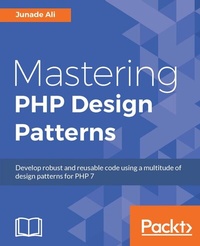
Mastering PHP Design Patterns
Develop robust and reusable code using a multitude of design patterns for PHP 7
Published on 8. July 2025
270 pages
978-1-78588-342-2 (ISBN)
Description

Develop robust and reusable code using a multitude of design patterns for PHP 7
Key Features
[*]Learn about advanced design patterns in PHP 7
[*]Understand enhanced architectural patterns
[*]Learn to implement reusable design patterns to address common recurring problems
Book DescriptionDesign patterns are a clever way to solve common architectural issues that arise during software development. With an increase in demand for enhanced programming techniques and the versatile nature of PHP, a deep understanding of PHP design patterns is critical to achieve efficiency while coding. This comprehensive guide will show you how to achieve better organization structure over your code through learning common methodologies to solve architectural problems. You'll also learn about the new functionalities that PHP 7 has to offer. Starting with a brief introduction to design patterns, you quickly dive deep into the three main architectural patterns: Creational, Behavioral, and Structural popularly known as the Gang of Four patterns. Over the course of the book, you will get a deep understanding of object creation mechanisms, advanced techniques that address issues concerned with linking objects together, and improved methods to access your code. You will also learn about Anti-Patterns and the best methodologies to adopt when building a PHP 7 application. With a concluding chapter on best practices, this book is a complete guide that will equip you to utilize design patterns in PHP 7 to achieve maximum productivity, ensuring an enhanced software development experience. What you will learn
[*]Recognize recurring problems in your code with Anti-Patterns
[*]Uncover object creation mechanisms using Creational Patterns
[*]Use Structural design patterns to easily access your code
[*]Address common issues encountered when linking objects using the splObserver classes in PHP 7
[*]Achieve a common style of coding with Architectural Patterns
[*]Write reusable code for common MVC frameworks such as Zend, Laravel, and Symfony
[*]Get to know the best practices associated with design patterns when used with PHP 7
Who this book is forThis book is for PHP developers who wish to have better organization structure over their code through learning common methodologies to solve architectural problems against a backdrop of learning new functionality in PHP 7.
Key Features
[*]Learn about advanced design patterns in PHP 7
[*]Understand enhanced architectural patterns
[*]Learn to implement reusable design patterns to address common recurring problems
Book DescriptionDesign patterns are a clever way to solve common architectural issues that arise during software development. With an increase in demand for enhanced programming techniques and the versatile nature of PHP, a deep understanding of PHP design patterns is critical to achieve efficiency while coding. This comprehensive guide will show you how to achieve better organization structure over your code through learning common methodologies to solve architectural problems. You'll also learn about the new functionalities that PHP 7 has to offer. Starting with a brief introduction to design patterns, you quickly dive deep into the three main architectural patterns: Creational, Behavioral, and Structural popularly known as the Gang of Four patterns. Over the course of the book, you will get a deep understanding of object creation mechanisms, advanced techniques that address issues concerned with linking objects together, and improved methods to access your code. You will also learn about Anti-Patterns and the best methodologies to adopt when building a PHP 7 application. With a concluding chapter on best practices, this book is a complete guide that will equip you to utilize design patterns in PHP 7 to achieve maximum productivity, ensuring an enhanced software development experience. What you will learn
[*]Recognize recurring problems in your code with Anti-Patterns
[*]Uncover object creation mechanisms using Creational Patterns
[*]Use Structural design patterns to easily access your code
[*]Address common issues encountered when linking objects using the splObserver classes in PHP 7
[*]Achieve a common style of coding with Architectural Patterns
[*]Write reusable code for common MVC frameworks such as Zend, Laravel, and Symfony
[*]Get to know the best practices associated with design patterns when used with PHP 7
Who this book is forThis book is for PHP developers who wish to have better organization structure over their code through learning common methodologies to solve architectural problems against a backdrop of learning new functionality in PHP 7.
All prices
More details
Edition
Digital original
Language
English
Place of publication
Birmingham
United Kingdom
Target group
Professional and scholarly
US School Grade: College Graduate Student
Edition type
Digital original
File size
13,90 MB
ISBN-13
978-1-78588-342-2 (9781785883422)
Copyright in bibliographic data and cover images is held by Nielsen Book Services Limited or by the publishers or by their respective licensors: all rights reserved.
Schweitzer Classification
Other editions
Additional editions
Junade Ali
Mastering PHP Design Patterns
Develop robust and reusable code using a multitude of design patterns for PHP 7
Book
09/2016
Packt Publishing
€55.80
Shipment within 3-4 weeks
Person
Ali Junade :
Junade Ali was a technical lead at some of the UK's leading digital agencies and has also worked using PHP in mission-critical road-safety systems. He loves pushing PHP to its innovative limits. Having started his career as a web development apprentice, he still remains engaged in the academic computer science community. Junade, an avid contributor to the PHP community, has also spoken at PHPTek and the Lead Developer Conference. In addition to this, Junade was interviewed by Cal Evans for Voices of the ElePHPant, and he has appeared on the PHP Roundtable. In this spirit, Junade is proud of his local PHP user group: PHPWarks. Currently, Junade works at CloudFlare as a polymath, and helps make the Internet more secure and faster. Outside of development, Junade has an interest in law and political campaigns and is a published author on constitutional law.
Junade Ali was a technical lead at some of the UK's leading digital agencies and has also worked using PHP in mission-critical road-safety systems. He loves pushing PHP to its innovative limits. Having started his career as a web development apprentice, he still remains engaged in the academic computer science community. Junade, an avid contributor to the PHP community, has also spoken at PHPTek and the Lead Developer Conference. In addition to this, Junade was interviewed by Cal Evans for Voices of the ElePHPant, and he has appeared on the PHP Roundtable. In this spirit, Junade is proud of his local PHP user group: PHPWarks. Currently, Junade works at CloudFlare as a polymath, and helps make the Internet more secure and faster. Outside of development, Junade has an interest in law and political campaigns and is a published author on constitutional law.
Content
Table of Contents
Why "Good PHP Developer" Isnt an Oxymoron
Anti-Patterns
Creational Design Patterns
Structural Design Patterns
Behavioral Design Patterns
Architectural Patterns
Refactoring
How to Write Better Code
Why "Good PHP Developer" Isnt an Oxymoron
Anti-Patterns
Creational Design Patterns
Structural Design Patterns
Behavioral Design Patterns
Architectural Patterns
Refactoring
How to Write Better Code

