

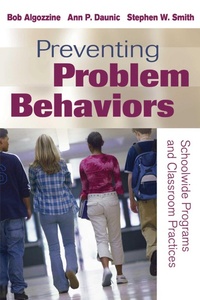
Preventing Problem Behaviors
Schoolwide Programs and Classroom Practices
Published on 28. April 2015
248 pages
978-1-63220-979-5 (ISBN)
Description

In today's increasingly diverse PreK-12 classrooms, problem behaviors can often interrupt instructional time and disrupt learning. Designed for 21st-century school leaders, administrators, behavior specialists, and classroom teachers, this research-based guide offers specific strategies and plans for preventing problem behavior at both the classroom and school level.
Based on the premise that early response to problems can lead to better outcomes for students, the book's content is framed around four essential areas: foundations, intervention, collaboration, and evaluation. Within these areas, this accessible guide features:
-The latest information on the science and practice of prevention
-Reasons why conflict resolution, peer mediation, and bully-proofing are essential to prevention
-Effective practices for teaching social skills to young children
-Proven techniques for implementing schoolwide positive behavior support
-Tools for using individual behavior plans to prevent problems
-Ideas for home-school and community partnerships and culturally responsible teaching
-Critical strategies for monitoring student progress and evaluating prevention practices
-New, updated chapters, including information on preschool behavior support and RTI
This valuable resource provides all the tools and strategies school leaders and teachers need to keep children focused on learning.
Based on the premise that early response to problems can lead to better outcomes for students, the book's content is framed around four essential areas: foundations, intervention, collaboration, and evaluation. Within these areas, this accessible guide features:
-The latest information on the science and practice of prevention
-Reasons why conflict resolution, peer mediation, and bully-proofing are essential to prevention
-Effective practices for teaching social skills to young children
-Proven techniques for implementing schoolwide positive behavior support
-Tools for using individual behavior plans to prevent problems
-Ideas for home-school and community partnerships and culturally responsible teaching
-Critical strategies for monitoring student progress and evaluating prevention practices
-New, updated chapters, including information on preschool behavior support and RTI
This valuable resource provides all the tools and strategies school leaders and teachers need to keep children focused on learning.
More details
Other editions
Additional editions
Bob Algozzine | Ann P. Daunic | Stephen W. Smith
Preventing Problem Behaviors
Schoolwide Programs and Classroom Practices
Book
05/2015
Skyhorse Publishing
€16.50
Shipment within 3-4 weeks
Persons
Bob Algozzine: Bob Algozzine is a professor in the Department of Educational Leadership at the University of North Carolina and project codirector of the US Department of Education-supported Behavior and Reading Improvement Center. With twenty-five years of research experience and extensive firsthand knowledge of teaching students classified as seriously emotionally disturbed, Algozzine is a uniquely qualified staff developer, conference speaker, and teacher of behavior management and effective teaching courses. He is active in special education practice as a partner and collaborator with professionals in the Charlotte-Mecklenburg schools in North Carolina and as an editor of several journals focused on special education. Algozzine has written more than 250 manuscripts on special education topics, including many books and textbooks on how to manage emotional and social behavior problems. He lives in Chapel Hill, NC.
Ann P. Daunic: Ann P. Daunic is an Associate Scholar in the Department of Special Education, School Psychology, and Early Childhood Studies at the University of Florida. She is currently director of the Prevention Research Project, a four-year study funded by the Institute of Education Sciences to evaluate the efficacy of a social problem-solving curriculum for fourth and fifth grade students. She lives in Gainesville, FL.
Stephen W. Smith: Stephen W. Smith is a Professor in the Department of Special Education at the University of Florida (UF). He is a member of the IES Social and Behavioral Education Scientific Research Review Panel and is a member of the Executive Board of the Division for Research, Council for Exceptional Children. He lives in Gainesville, FL.
Ann P. Daunic: Ann P. Daunic is an Associate Scholar in the Department of Special Education, School Psychology, and Early Childhood Studies at the University of Florida. She is currently director of the Prevention Research Project, a four-year study funded by the Institute of Education Sciences to evaluate the efficacy of a social problem-solving curriculum for fourth and fifth grade students. She lives in Gainesville, FL.
Stephen W. Smith: Stephen W. Smith is a Professor in the Department of Special Education at the University of Florida (UF). He is a member of the IES Social and Behavioral Education Scientific Research Review Panel and is a member of the Executive Board of the Division for Research, Council for Exceptional Children. He lives in Gainesville, FL.
Content
- Intro
- Title Page
- Copyright
- Contents
- Dedication
- Acknowledgments
- About the Authors
- About the Contributors
- Introduction: Changing the Lives of Students With Problems
- 1. Prevention Science and Practice
- What We Know About Prevention Practice
- What We Know About Response to Intervention
- What We Know About Behavior and Achievement
- An Illustration From Practice
- 2. Preschool Behavior Support
- Importance of Teaching Social Skills in Preschool
- Effective Practices for Teaching Social Skills to Young Children
- Teaching Young Children How to Behave in Social Settings
- An Illustration From Practice
- 3. Schoolwide Positive Behavior Support
- Definition and Importance of SWPBS
- Characteristics and Effective Practices of SWPBS
- Effectiveness of SWPBS
- Perspective on Schoolwide Positive Behavior Support
- An Illustration From Practice
- 4. Cognitive-Behavioral Interventions in School Settings
- Cognitive-Behavioral Interventions
- Theoretical Underpinnings of CBI
- Current Research on CBI
- School-Based CBIs
- A CBI Example
- Summary
- An Illustration From Practice
- 5. Social Skills Instruction and Generalization Strategies
- Social Skills, Social Competence, and Curricula
- Generalization of Social Skills and Building Performance Competence
- Why Social Skills Programs Sometimes Fail
- Gaining Community Support for Social Skills Training
- Importance of Improving and Generalizing Social Skills
- 6. Conflict Resolution, Peer Mediation, and Bullying Prevention
- Some Program Definitions
- A Developmental Framework
- Characteristics of Effective CRE Programs
- How to Sustain CRE and Bullying Prevention Programs
- Concluding Thoughts
- An Illustration From Practice
- 7. Classroom Interventions and Individual Behavior Plans
- What Educators Should Know About the RTI Model
- RTI as a Schoolwide and Classroom Management Approach
- Effective Classroom Management Approaches
- Tier II Behavior Plans for Students
- Behavior Planning for Tier II Students
- Summary of Tier II Behavior Planning
- Individualized Behavior Intervention Plan (BIP)
- Conclusion
- 8. Effective Home-School Partnerships
- The Importance of Home-School Partnerships
- Principles and Key Features of Home-School Partnerships
- Characteristics of Effective Home-School Partnerships
- Home-School Partnerships and Challenging Behavior
- An Illustration From Practice
- 9. Community and Interagency Partnerships
- Poverty, Immigrant Status, and Risk
- Interagency Approaches to Preventing Problem Behavior
- Core Principles and Governance Structure
- Linkages to Learning in Action
- Evaluating the Effect of Linkages to Learning on Children and Families
- Preventing Problem Behaviors With Community Partnerships
- 10. Culturally Responsive Teaching
- Culture and Today's Classrooms
- Culturally Responsive Teaching
- Teaching Appropriate Behavior
- Teaching Behavior to CLD Learners
- Conclusion
- Illustrations From Practice
- 11. Monitoring Student Progress and Evaluating Prevention Practices
- Monitoring Student Progress in Preventive Interventions
- Evaluating Outcomes of Prevention Efforts
- Designing Program Evaluations
- Measurement Issues
- Common Hazards in Program Evaluation
- Disseminating Evaluation Information
- Measuring Success of Prevention Programs
- 12. Building and Sustaining Effective Prevention Practices
- Building Effective Prevention Practices
- Sustaining Effective Prevention Practices
- Putting It All Together
- Postscript
- Index
