


Beneficial Insects
1st Edition
Published on 23. April 2019
400 pages
978-1-4822-6261-2 (ISBN)
Description

CHOICE Highly recommended 2020
Insects are key components of life on our planet, and their presence is essential for maintaining balanced terrestrial ecosystems. Without insects humans would struggle to survive, and on a world scale food production would be severely compromised. Many plants and animals depend directly or indirectly on insects for their very survival, and this is particularly so in the case of insectivorous birds and other such creatures. The beneficial role of insects is often overlooked or misunderstood, and in farming circles their very presence on crops is often seen to be unwelcome. In reality, however, many insects are genuinely beneficial, as in the case of parasitic and predacious species. The use of chemical pesticides to control crop pests is becoming more tightly regulated and environmentally undesirable, and low-input farming, in which natural enemies of pests are encouraged to survive or increase, is becoming far more prevalent. Accordingly, Integrated Pest Management (IPM) and Integrated Pest Management (ICM) strategies are increasingly being developed, advocated and adopted.
Features:
Highlights information on many groups of insects and mites that act as natural enemies or biological control agents of phytophagous insects and mites, including plant pests.
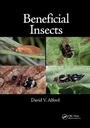
Profusely illustrated with high-quality colour photographs.
Focuses mainly on insects and mites as natural enemies of plant pests, including parasitic and predacious species that have been accidentally or deliberately introduced in classical biological control programmes.
Reviews the role of phytophagous European insects and mites in controlling or managing European plants that have become invasive weeds in other parts of the world, notably North America, Australia and New Zealand.
Insects are key components of life on our planet, and their presence is essential for maintaining balanced terrestrial ecosystems. Without insects humans would struggle to survive, and on a world scale food production would be severely compromised. Many plants and animals depend directly or indirectly on insects for their very survival, and this is particularly so in the case of insectivorous birds and other such creatures. The beneficial role of insects is often overlooked or misunderstood, and in farming circles their very presence on crops is often seen to be unwelcome. In reality, however, many insects are genuinely beneficial, as in the case of parasitic and predacious species. The use of chemical pesticides to control crop pests is becoming more tightly regulated and environmentally undesirable, and low-input farming, in which natural enemies of pests are encouraged to survive or increase, is becoming far more prevalent. Accordingly, Integrated Pest Management (IPM) and Integrated Pest Management (ICM) strategies are increasingly being developed, advocated and adopted.
Features:
Highlights information on many groups of insects and mites that act as natural enemies or biological control agents of phytophagous insects and mites, including plant pests.
Profusely illustrated with high-quality colour photographs.
Focuses mainly on insects and mites as natural enemies of plant pests, including parasitic and predacious species that have been accidentally or deliberately introduced in classical biological control programmes.
Reviews the role of phytophagous European insects and mites in controlling or managing European plants that have become invasive weeds in other parts of the world, notably North America, Australia and New Zealand.
Reviews / Votes
The anthropocentric perspective adopted here by renowned British entomologist Alford provides an excellent lens to reveal the complex relationships where insect life intersects positively with human valued resources. This superlative, well-illustrated overview is a valuable reference to facilitate further studies.--M. K. Harris, emeritus, Texas A&M University, in CHOICE Jan 2020.
I liked the excellent details about what is eaten and how that is accomplished by the diverse groups of natural enemies. Some examples are well known with lots of available information while others are lesser known species for which the author has included pertinent information that I assume would be difficult to find. I also very much enjoyed the short review starting the book that frames the overall subject of beneficial insects by discussing diverse ways that insects can be useful beyond just controlling pests. The vast majority are of insects that are usually quite small, which demonstrates the author's excellent abilities as a macrophotographer. In summary, this book provides a great compendium of the detailed biologies of the breadth of European natural enemies attacking insect plant pests and weeds.
--Ann E. Hajek, Entomology, Cornell University, Ithaca, New York, in The Quarterly Review of Biology, Volume 95, Number 1 (March 2020)
More details
Edition
1. Auflage
Language
English
Place of publication
London
United Kingdom
Publishing group
Taylor & Francis Ltd
Target group
Professional and scholarly
ISBN-13
978-1-4822-6261-2 (9781482262612)
Copyright in bibliographic data and cover images is held by Nielsen Book Services Limited or by the publishers or by their respective licensors: all rights reserved.
Schweitzer Classification
Other editions
Additional editions
David V. Alford
Beneficial Insects
Book
05/2019
1st Edition
CRC Press
€275.29
Article not available for order
Person
Dr David V. Alford began his entomological career at the world famous Rothamsted Experimental Station. He later joined the Ministry of Agriculture, Fisheries & Food in Cambridge, where he was eventually appointed Regional Entomologist. He has wide experience of insects and mites associated with agricultural and horticultural crops, both at home and abroad, and has published many scientific papers and profusely illustrated reference books. In 2007 he was awarded the British Crop Protection Council's gold medal for services to crop protection in the UK, and in 2008 received the prestigious Anton de Bary Medal from the Deutsche Phytomedizinische Gesellschaft e.V. in recognition of his work on general and applied entomology.
Content
PART 1 INTRODUCTION AND OVERVIEW
Chapter 1 Introduction
Chapter 2 Beneficial insects - an overview
PART 2 INSECTS AS NATURAL ENEMIES OF PLANT PESTS
Chapter 3 True bugs
Chapter 4 Lacewings and allied insects
Chapter 5 Beetles
Chapter 6 True flies
Chapter 7 Wasps and allied insects
Chapter 8 Miscellaneous predators
PART 3 INSECTS AS NATURAL ENEMIES OF WEEDS
Chapter 9 Beneficial phytophagous insects and mites
Appendix I List of parasitic and predacious insects and mites etc. cited in Part 2
Appendix II List of insects and mites cited in Part 2 as prey of parasites, parasitoids or predators
Appendix III List of phytophagous insects and mites associated with weeds
Appendix IV List of plants mentioned in the text
References
Botanical index
General index
Zoological index
Chapter 1 Introduction
Chapter 2 Beneficial insects - an overview
PART 2 INSECTS AS NATURAL ENEMIES OF PLANT PESTS
Chapter 3 True bugs
Chapter 4 Lacewings and allied insects
Chapter 5 Beetles
Chapter 6 True flies
Chapter 7 Wasps and allied insects
Chapter 8 Miscellaneous predators
PART 3 INSECTS AS NATURAL ENEMIES OF WEEDS
Chapter 9 Beneficial phytophagous insects and mites
Appendix I List of parasitic and predacious insects and mites etc. cited in Part 2
Appendix II List of insects and mites cited in Part 2 as prey of parasites, parasitoids or predators
Appendix III List of phytophagous insects and mites associated with weeds
Appendix IV List of plants mentioned in the text
References
Botanical index
General index
Zoological index
