

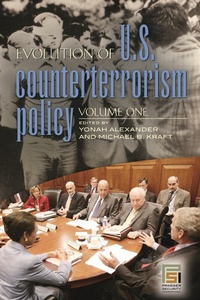
Evolution of U.S. Counterterrorism Policy
[3 Volumes]
1st Edition
Published on 30. December 2007
1456 pages
978-0-275-99530-0 (ISBN)
Description

Including many older documents not available electronically or otherwise accessible, this three-volume set provides the first comprehensive collection of key documents, statements, and testimony on U.S. government counterterrorism policies as they have evolved in the face of the changing terrorist threats. Selected executive and congressional materials highlight the government's diverse policy and program responses to terrorism. The testimony, statements, and documents provide the public articulation and face to the largely important intelligence, law enforcement, preventative security measures, and international cooperation used in the shadowy war against terrorism. Recent entries provide a handy compilation of important post-9/11 materials. For example, useful background information on U.S. actions against Osama bin Laden, the Taliban, and Saddam Hussein and terrorism fundraising. Also included are statements from the Reagan and other administrations that relate to disputes over the appropriate use of force. Introductory chapters by Alexander and Kraft provide the historical context and analysis of previous and current U.S. counterterrorism policy including U.S. legislation.
For over two centuries, America has faced occasional outbreaks of terrorism, perpetrated by both indigenous and foreign groups. But the spectacular bombing in Oklahoma City in 1995 and the September 11, 2001, attacks seemed to signify a new age, frightening many Americans and destroying their sense of domestic security. In addition, U.S. citizens and interests have been increasingly affected by acts of terrorism abroad. The challenges of terrorism, therefore, have required the United States to develop comprehensive strategies and programs to counter both conventional and unconventional threats, nationally and globally.
For over two centuries, America has faced occasional outbreaks of terrorism, perpetrated by both indigenous and foreign groups. But the spectacular bombing in Oklahoma City in 1995 and the September 11, 2001, attacks seemed to signify a new age, frightening many Americans and destroying their sense of domestic security. In addition, U.S. citizens and interests have been increasingly affected by acts of terrorism abroad. The challenges of terrorism, therefore, have required the United States to develop comprehensive strategies and programs to counter both conventional and unconventional threats, nationally and globally.
More details
Series
Edition
1. Auflage
Language
English
Place of publication
New York
United States
Publishing group
Bloomsbury Publishing Plc
Target group
Interest Age: From 7 to 17 years
ISBN-13
978-0-275-99530-0 (9780275995300)
Copyright in bibliographic data and cover images is held by Nielsen Book Services Limited or by the publishers or by their respective licensors: all rights reserved.
Schweitzer Classification
Other editions
Additional editions
![Cover: Evolution of U.S. Counterterrorism Policy [3 volumes] - Praeger Publishers Inc](https://content.schweitzer-online.de/static/catalog_manager/live/media_files/representation/A1384706/446131_l_1.jpg)
Yonah Alexander | Michael B. Kraft
Evolution of U.S. Counterterrorism Policy [3 volumes]
Book
12/2007
Praeger Publishers Inc
€414.48
Article exhausted; check different version
Persons
Yonah Alexander is currently a Senior Fellow and Director, International Center for Terrorism Studies (at the Potomac Institute) and Director, Inter-University Center for Terrorism Studies. Formerly a professor and director of terrorism studies at the State University of New York and The George Washington University, Dr. Alexander also held academic appointments at other institutions in the United States and abroad. He has published ninety-five books on international affairs, terrorism and the Middle East.
Michael B. Kraft is a former State Department Counterterrorism Office Senior Advisor for Legislative and Budget Affairs with nineteen years of experience in the office, working on a variety of legislative, program, and regional issues. He is now a, Washington-based counerterrorism consultant and writer, contributing chapters to other books as well as articles to newspapers and counterterrorism blogs. Since retiring from the State Department in 2005, he has also been an adjunct counterterrorism faculty member at the National Defense University's Africa Center for Strategic Studies, Senate Foreign Relations Middle East Subcommittee Staff Director, and a foreign correspondent.
Michael B. Kraft is a former State Department Counterterrorism Office Senior Advisor for Legislative and Budget Affairs with nineteen years of experience in the office, working on a variety of legislative, program, and regional issues. He is now a, Washington-based counerterrorism consultant and writer, contributing chapters to other books as well as articles to newspapers and counterterrorism blogs. Since retiring from the State Department in 2005, he has also been an adjunct counterterrorism faculty member at the National Defense University's Africa Center for Strategic Studies, Senate Foreign Relations Middle East Subcommittee Staff Director, and a foreign correspondent.
Content
Foreword
Preface
Introduction
1. Evolution of U.S. Counterterrorism Laws, Policies, and Programs
PART ONE: U. S. POLICY PRE-SEPTEMBER 11, 2001
2. The White House
President Richard M. Nixon
President James Earl Carter
President Ronald Reagan
President George H. W. Bush
President William Jefferson Clinton
President George W. Bush
3. Department of State and Department of Defense
Secretary of State George P. Shultz
Secretary of Defense Caspar W. Weinberger
Secretary of State James Baker
Secretary of State Warren Christopher
Secretary of State Madeleine K. Albright
Undersecretary of State Timothy E. Wirth
Secretary of State Colin Powell
4. Department of State Coordinators for Counterterrorism
Ambassador Robert B. Oakley
Ambassador L. Paul Bremer, III
Ambassador Morris D. Busby
Ambassador Thomas E. McNamara
Ambassador Philip C. Wilcox, Jr.
Ambassador Michael A. Sheehan
5.Attorney General Janet Reno
6. The Intelligence Community
Central Intelligence Agency
Federal Bureau of Investigation
PART TWO: U. S. POLICY POST-SEPTEMBER 11, 2001
7. President George W. Bush
8. Vice President Richard B. Cheney
9. Secretary of State Colin L. Powell
10. Secretary of State Condoleezza Rice
11. Department of State Coordinators for Counterterrorism
Ambassador Francis X. Taylor
Ambassador J. Cofer Black
Ambassador Henry A. Crumpton
12. Secretary of Defense Donald H. Rumsfeld
13. Attorney General John Ashcroft
14. Attorney General Alberto R. Gonzales
15. Homeland Security Secretary Tom Ridge
16. Homeland Security Secretary Michael Chertoff
PART THREE: COUNTERTERRORISM BY TOPICS AND ISSUES
17. Threats (Overview of Worldwide Terrorist Threats)
18. Intelligence (Organizational Issues within Intelligence Community Agencies)
19. Iraq
20. Legislation
21. Law Enforcement: FBI
22. Financial
23. Homeland Security
24. Hostages
25. Counterterrorism Programs
Department of Defense Counterterrorism Programs
26. International Cooperation
Europe
Middle East
Western Hemisphere
Africa
Asia
27. Key Documents
Presidential Strategy Papers
Commission Reports
U. N. Security Council Resolutions
Presidential Executive Orders
Executive Branch Directives, Statements, and Reports
State Department Annual Terrorism Reports to Congress
International Statements
28. Coordination and Strategies
Selected Bibliography
Index
Preface
Introduction
1. Evolution of U.S. Counterterrorism Laws, Policies, and Programs
PART ONE: U. S. POLICY PRE-SEPTEMBER 11, 2001
2. The White House
President Richard M. Nixon
President James Earl Carter
President Ronald Reagan
President George H. W. Bush
President William Jefferson Clinton
President George W. Bush
3. Department of State and Department of Defense
Secretary of State George P. Shultz
Secretary of Defense Caspar W. Weinberger
Secretary of State James Baker
Secretary of State Warren Christopher
Secretary of State Madeleine K. Albright
Undersecretary of State Timothy E. Wirth
Secretary of State Colin Powell
4. Department of State Coordinators for Counterterrorism
Ambassador Robert B. Oakley
Ambassador L. Paul Bremer, III
Ambassador Morris D. Busby
Ambassador Thomas E. McNamara
Ambassador Philip C. Wilcox, Jr.
Ambassador Michael A. Sheehan
5.Attorney General Janet Reno
6. The Intelligence Community
Central Intelligence Agency
Federal Bureau of Investigation
PART TWO: U. S. POLICY POST-SEPTEMBER 11, 2001
7. President George W. Bush
8. Vice President Richard B. Cheney
9. Secretary of State Colin L. Powell
10. Secretary of State Condoleezza Rice
11. Department of State Coordinators for Counterterrorism
Ambassador Francis X. Taylor
Ambassador J. Cofer Black
Ambassador Henry A. Crumpton
12. Secretary of Defense Donald H. Rumsfeld
13. Attorney General John Ashcroft
14. Attorney General Alberto R. Gonzales
15. Homeland Security Secretary Tom Ridge
16. Homeland Security Secretary Michael Chertoff
PART THREE: COUNTERTERRORISM BY TOPICS AND ISSUES
17. Threats (Overview of Worldwide Terrorist Threats)
18. Intelligence (Organizational Issues within Intelligence Community Agencies)
19. Iraq
20. Legislation
21. Law Enforcement: FBI
22. Financial
23. Homeland Security
24. Hostages
25. Counterterrorism Programs
Department of Defense Counterterrorism Programs
26. International Cooperation
Europe
Middle East
Western Hemisphere
Africa
Asia
27. Key Documents
Presidential Strategy Papers
Commission Reports
U. N. Security Council Resolutions
Presidential Executive Orders
Executive Branch Directives, Statements, and Reports
State Department Annual Terrorism Reports to Congress
International Statements
28. Coordination and Strategies
Selected Bibliography
Index
