

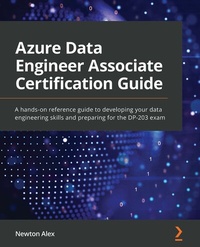
Azure Data Engineer Associate Certification Guide
A hands-on reference guide to developing your data engineering skills and preparing for the DP-203 exam
1st Edition
Published on 3. June 2024
574 pages
978-1-80181-283-2 (ISBN)
Description

Become well-versed with data engineering concepts and exam objectives to achieve Azure Data Engineer Associate certificationKey Features - Understand and apply data engineering concepts to real-world problems and prepare for the DP-203 certification exam
- Explore the various Azure services for building end-to-end data solutions
- Gain a solid understanding of building secure and sustainable data solutions using Azure services
Book DescriptionAzure is one of the leading cloud providers in the world, providing numerous services for data hosting and data processing. Most of the companies today are either cloud-native or are migrating to the cloud much faster than ever. This has led to an explosion of data engineering jobs, with aspiring and experienced data engineers trying to outshine each other. Gaining the DP-203: Azure Data Engineer Associate certification is a sure-fire way of showing future employers that you have what it takes to become an Azure Data Engineer. This book will help you prepare for the DP-203 examination in a structured way, covering all the topics specified in the syllabus with detailed explanations and exam tips. The book starts by covering the fundamentals of Azure, and then takes the example of a hypothetical company and walks you through the various stages of building data engineering solutions. Throughout the chapters, you'll learn about the various Azure components involved in building the data systems and will explore them using a wide range of real-world use cases. Finally, you'll work on sample questions and answers to familiarize yourself with the pattern of the exam. By the end of this Azure book, you'll have gained the confidence you need to pass the DP-203 exam with ease and land your dream job in data engineering.What you will learn - Gain intermediate-level knowledge of Azure the data infrastructure
- Design and implement data lake solutions with batch and stream pipelines
- Identify the partition strategies available in Azure storage technologies
- Implement different table geometries in Azure Synapse Analytics
- Use the transformations available in T-SQL, Spark, and Azure Data Factory
- Use Azure Databricks or Synapse Spark to process data using Notebooks
- Design security using RBAC, ACL, encryption, data masking, and more
- Monitor and optimize data pipelines with debugging tips
Who this book is forThis book is for data engineers who want to take the DP-203: Azure Data Engineer Associate exam and are looking to gain in-depth knowledge of the Azure cloud stack. The book will also help engineers and product managers who are new to Azure or interviewing with companies working on Azure technologies, to get hands-on experience of Azure data technologies. A basic understanding of cloud technologies, extract, transform, and load (ETL), and databases will help you get the most out of this book.
- Explore the various Azure services for building end-to-end data solutions
- Gain a solid understanding of building secure and sustainable data solutions using Azure services
Book DescriptionAzure is one of the leading cloud providers in the world, providing numerous services for data hosting and data processing. Most of the companies today are either cloud-native or are migrating to the cloud much faster than ever. This has led to an explosion of data engineering jobs, with aspiring and experienced data engineers trying to outshine each other. Gaining the DP-203: Azure Data Engineer Associate certification is a sure-fire way of showing future employers that you have what it takes to become an Azure Data Engineer. This book will help you prepare for the DP-203 examination in a structured way, covering all the topics specified in the syllabus with detailed explanations and exam tips. The book starts by covering the fundamentals of Azure, and then takes the example of a hypothetical company and walks you through the various stages of building data engineering solutions. Throughout the chapters, you'll learn about the various Azure components involved in building the data systems and will explore them using a wide range of real-world use cases. Finally, you'll work on sample questions and answers to familiarize yourself with the pattern of the exam. By the end of this Azure book, you'll have gained the confidence you need to pass the DP-203 exam with ease and land your dream job in data engineering.What you will learn - Gain intermediate-level knowledge of Azure the data infrastructure
- Design and implement data lake solutions with batch and stream pipelines
- Identify the partition strategies available in Azure storage technologies
- Implement different table geometries in Azure Synapse Analytics
- Use the transformations available in T-SQL, Spark, and Azure Data Factory
- Use Azure Databricks or Synapse Spark to process data using Notebooks
- Design security using RBAC, ACL, encryption, data masking, and more
- Monitor and optimize data pipelines with debugging tips
Who this book is forThis book is for data engineers who want to take the DP-203: Azure Data Engineer Associate exam and are looking to gain in-depth knowledge of the Azure cloud stack. The book will also help engineers and product managers who are new to Azure or interviewing with companies working on Azure technologies, to get hands-on experience of Azure data technologies. A basic understanding of cloud technologies, extract, transform, and load (ETL), and databases will help you get the most out of this book.
All prices
More details
Other editions
New editions
Giacinto Palmieri | Surendra Mettapalli | Newton Alex
Azure Data Engineer Associate Certification Guide
Ace the DP-203 exam with advanced data engineering skills
E-Book
09/2024
2nd Edition
Packt Publishing
from
€38.39
Available for download
Additional editions
Newton Alex
Azure Data Engineer Associate Certification Guide
A hands-on reference guide to developing your data engineering skills and preparing for the DP-203 exam
Book
02/2022
Packt Publishing
€91.20
Shipment within 3-4 weeks
Person
Alex Newton :
Newton Alex leads several Azure Data Analytics teams in Microsoft, India. His team contributes to technologies including Azure Synapse, Azure Databricks, Azure HDInsight, and many open source technologies, including Apache YARN, Apache Spark, and Apache Hive. He started using Hadoop while at Yahoo, USA, where he helped build the first batch processing pipelines for Yahoo's ad serving team. After Yahoo, he became the leader of the big data team at Pivotal Inc., USA, where he was responsible for the entire open source stack of Pivotal Inc. He later moved to Microsoft and started the Azure Data team in India. He has worked with several Fortune 500 companies to help build their data systems on Azure.
Newton Alex leads several Azure Data Analytics teams in Microsoft, India. His team contributes to technologies including Azure Synapse, Azure Databricks, Azure HDInsight, and many open source technologies, including Apache YARN, Apache Spark, and Apache Hive. He started using Hadoop while at Yahoo, USA, where he helped build the first batch processing pipelines for Yahoo's ad serving team. After Yahoo, he became the leader of the big data team at Pivotal Inc., USA, where he was responsible for the entire open source stack of Pivotal Inc. He later moved to Microsoft and started the Azure Data team in India. He has worked with several Fortune 500 companies to help build their data systems on Azure.
Content
Table of Contents - Introducing Azure Basics
- Designing a Data Storage Structure
- Designing a Partition Strategy
- Designing the Serving Layer
- Implementing Physical Data Storage Structures
- Implementing Logical Data Structures
- Implementing the Serving Layer
- Ingesting and Transforming Data
- Designing and Developing a Batch Processing Solution
- Designing and Developing a Stream Processing Solution
- Managing Batches and Pipelines
- Designing Security for Data Policies and Standards
- Monitoring Data Storage and Data Processing
- Optimizing and Troubleshooting Data Storage and Data Processing
- Sample Questions with Solutions
- Designing a Data Storage Structure
- Designing a Partition Strategy
- Designing the Serving Layer
- Implementing Physical Data Storage Structures
- Implementing Logical Data Structures
- Implementing the Serving Layer
- Ingesting and Transforming Data
- Designing and Developing a Batch Processing Solution
- Designing and Developing a Stream Processing Solution
- Managing Batches and Pipelines
- Designing Security for Data Policies and Standards
- Monitoring Data Storage and Data Processing
- Optimizing and Troubleshooting Data Storage and Data Processing
- Sample Questions with Solutions
