

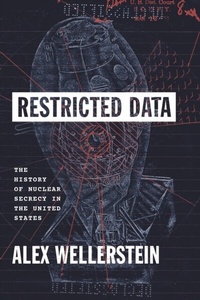
Restricted Data
The History of Nuclear Secrecy in the United States
1st Edition
Published on 9. April 2021
528 pages
978-0-226-02041-9 (ISBN)
Description

The first full history of US nuclear secrecy, from its origins in the late 1930s to our post-Cold War present.The American atomic bomb was born in secrecy. From the moment scientists first conceived of its possibility to the bombings of Hiroshima and Nagasaki and beyond, there were efforts to control the spread of nuclear information and the newly discovered scientific facts that made such powerful weapons possible. The totalizing scientific secrecy that the atomic bomb appeared to demand was new, unusual, and very nearly unprecedented. It was foreign to American science and American democracy and potentially incompatible with both. From the beginning, this secrecy was controversial, and it was always contested. The atomic bomb was not merely the application of science to war, but the result of decades of investment in scientific education, infrastructure, and global collaboration. If secrecy became the norm, how would science survive? Drawing on troves of declassified files, including records released by the government for the first time through the author s efforts, Restricted Data traces the complex evolution of the US nuclear secrecy regime from the first whisper of the atomic bomb through the mounting tensions of the Cold War and into the early twenty-first century. A compelling history of powerful ideas at war, it tells a story that feels distinctly American: rich, sprawling, and built on the conflict between high-minded idealism and ugly, fearful power.
All prices
More details
Other editions
Additional editions
Book
04/2024
University of Chicago Press
€25.00
Shipment within 10-20 days
Book
04/2021
University of Chicago Press
€36.00
Article not available at the moment
Person
Alex Wellerstein is assistant professor of science and technology studies at the Stevens Institute of Technology in New Jersey. He is the creator of the online nuclear weapons simulator NUKEMAP.
Content
- Intro
- Contents
- Introduction: The Terrible Inhibition of the Atom
- Part I. The Birth of Nuclear Secrecy
- Chapter 1: The Road to Secrecy: Chain Reactions, 1939-1942
- 1.1 The fears of fission
- 1.2 From self-censorship to government control
- 1.3 Absolute secrecy
- Chapter 2: The "Best-Kept Secret of the War": The Manhattan Project, 1942-1945
- 2.1 The heart of security
- 2.2 Leaks, rumors, and spies
- 2.3 Avoiding accountability
- 2.4 The problem of secrecy
- Chapter 3: Preparing for "Publicity Day": A Wartime Secret Revealed, 1944-1945
- 3.1 The first history of the atomic bomb
- 3.2 Press releases, public relations, and purple prose
- 3.3 Secrecy from publicity
- Part II. The Cold War Nuclear Secrecy Regime
- Chapter 4: The Struggle for Postwar Control, 1944-1947
- 4.1 Wartime plans for postwar control
- 4.2 "Restricted Data" and the Atomic Energy Act
- 4.3 Oppenheimer's anti-secrecy gambits
- Chapter 5: "Information Control" and the Atomic Energy Commission, 1947-1950
- 5.1 The education of David Lilienthal
- 5.2 The "thrashing" of reform
- 5.3 Three shocks
- Chapter 6: Peaceful Atoms, Dangerous Scientists: The Paradoxes of Cold War Secrecy, 1950-1969
- 6.1 The H-bomb's silence and roar
- 6.2 Dangerous minds
- 6.3 Making atoms peaceful and profitable
- Part III. Challenges to Nuclear Secrecy
- Chapter 7: Unrestricted Data: New Challenges to the Cold War Secrecy Regime, 1964-1978
- 7.1 The centrifuge conundrum
- 7.2 The perils of "peaceful" fusion
- 7.3 Atoms for terror
- Chapter 8: Secret Seeking: Anti-Secrecy at the End of the Cold War, 1978-1991
- 8.1 Drawing the H-bomb
- 8.2 The "dream case": The Progressive v. The United States
- 8.3 Open-source intelligence in a suspicious age
- Chapter 9: Nuclear Secrecy and Openness after the Cold War
- Conclusion: The Past and Future of Nuclear Secrecy
- Acknowledgments
- Notes
- Bibliography
- Archival sources and abbreviations
- Articles
- Books and monographs
- Index

